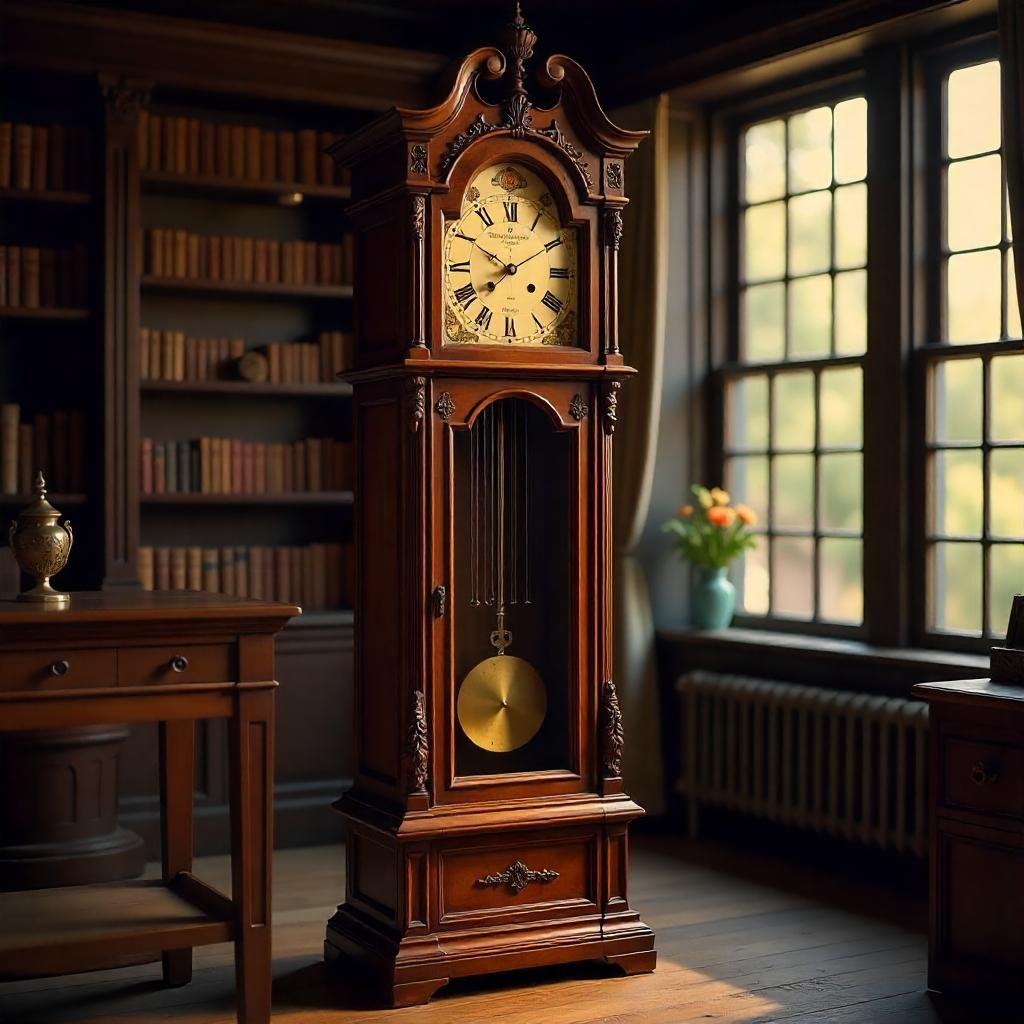
Traditional Grandfather Clocks Timeless Elegance and Masterful Craftsmanship
Traditional grandfather clocks are iconic timepieces that have stood the test of time, symbolizing elegance, craftsmanship, and precise timekeeping. With their towering presence, rhythmic pendulums, and melodious chimes, they have been cherished for centuries as symbols of wealth, sophistication, and family heritage. But what makes them so special? What is their history? How do they work? And why do they continue to captivate collectors and homeowners alike?
I will take you on a journey through the world of traditional grandfather clocks, exploring their history, anatomy, artistic beauty, mechanical brilliance, cultural significance, and tips for maintenance.
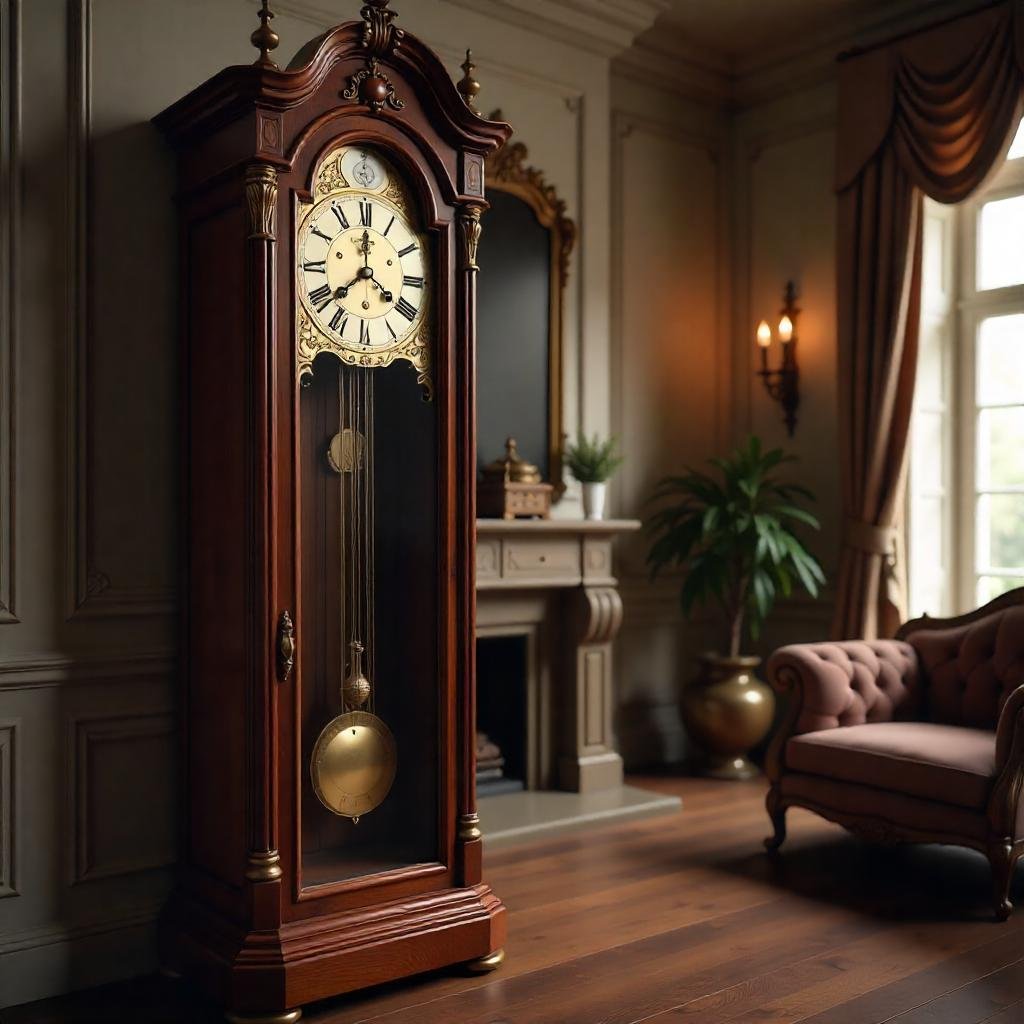
1. The History of Traditional Grandfather Clocks
The story of traditional grandfather clocks is a journey through the evolution of timekeeping, beginning in the 17th century and continuing to the present day. These clocks are direct descendants of early mechanical clocks, which were first developed in the medieval period.
1.1 The Origins of Timekeeping: Sundials, Water Clocks, and Mechanical Clocks
Before the invention of mechanical clocks, ancient civilizations used natural phenomena to measure time. Sundials used the position of the sun’s shadow, while water clocks measured time through the flow of water from one container to another. Hourglasses used the steady trickle of sand to count minutes and hours.
However, these methods were limited by natural conditions, such as daylight or water availability. The invention of mechanical clocks in medieval Europe, powered by weights and controlled by escapement mechanisms, marked a major leap forward in timekeeping.
1.2 The Birth of the Longcase Clock (1670)
The grandfather clock, originally known as the “longcase clock,” was first created in England around 1670 by clockmaker William Clement. Clement’s design took advantage of the newly discovered pendulum principle by Christiaan Huygens. The long, swinging pendulum provided a consistent and accurate measurement of time, making these clocks far more precise than their predecessors.
Key features of these early longcase clocks included:
- Tall, freestanding wooden cases: Often made from fine woods like oak, walnut, and mahogany.
- Weight-driven movements: The clock was powered by descending weights suspended on chains or cables.
- Pendulum regulation: A long pendulum swinging steadily regulated the clock’s timing.
These early clocks were often found in churches and the homes of wealthy aristocrats, symbolizing status and sophistication.
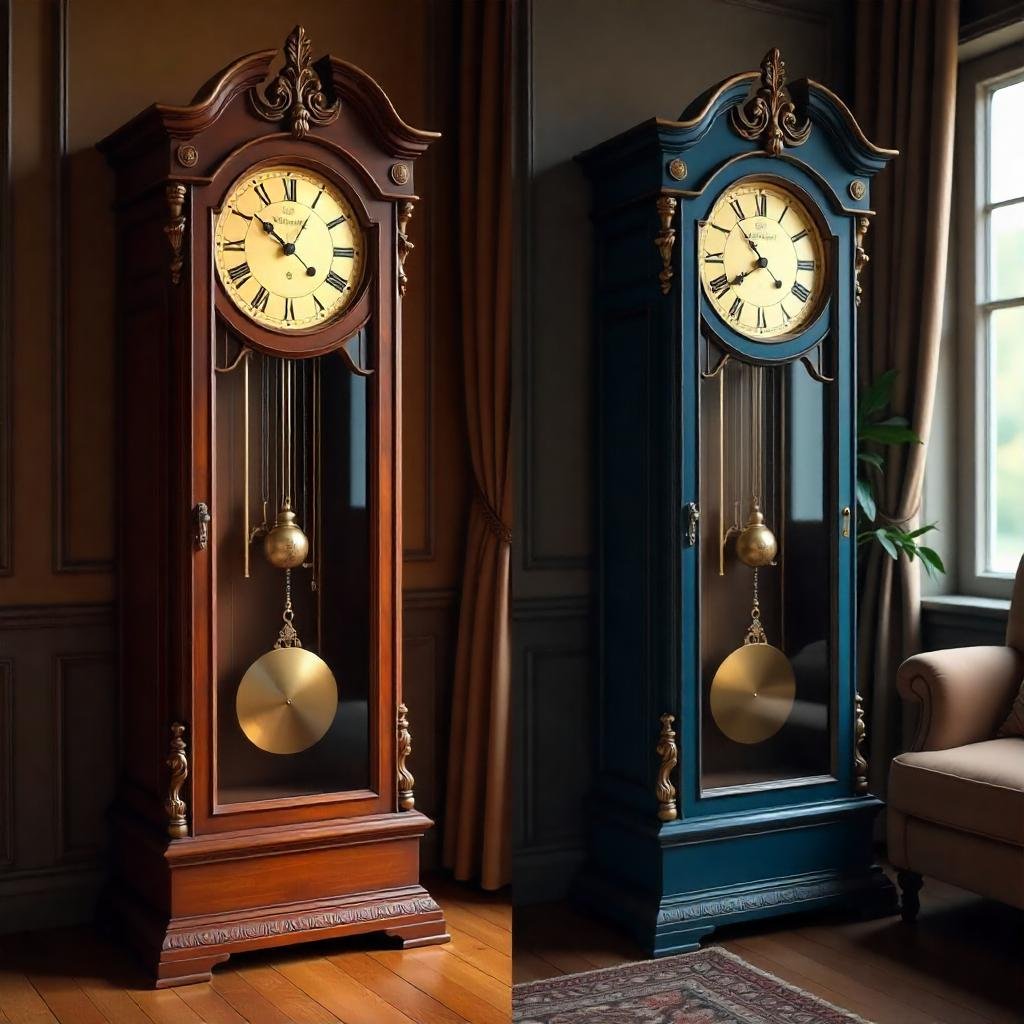
1.3 The Evolution of Traditional Grandfather Clocks
Over the next two centuries, traditional grandfather clocks evolved in design, craftsmanship, and complexity:
- 17th Century: Early designs were simple, with brass dials and floral engravings.
- 18th Century: The golden age of clockmaking saw the introduction of moon phase dials, more ornate cases, and intricate chime mechanisms.
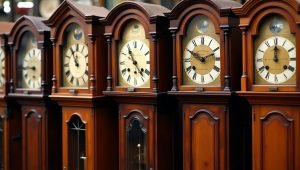
- 19th Century: The Industrial Revolution made grandfather clocks more affordable, leading to mass production and greater variety in styles.
- 20th Century: Despite the rise of quartz clocks, mechanical grandfather clocks remained popular due to their beauty and traditional charm.
2. Anatomy of a Traditional Grandfather Clock
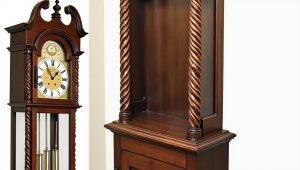
A traditional grandfather clock is a masterpiece of both art and engineering, consisting of several key components that work together to keep accurate time while showcasing elegant design.
2.1 The Case: A Showcase of Craftsmanship
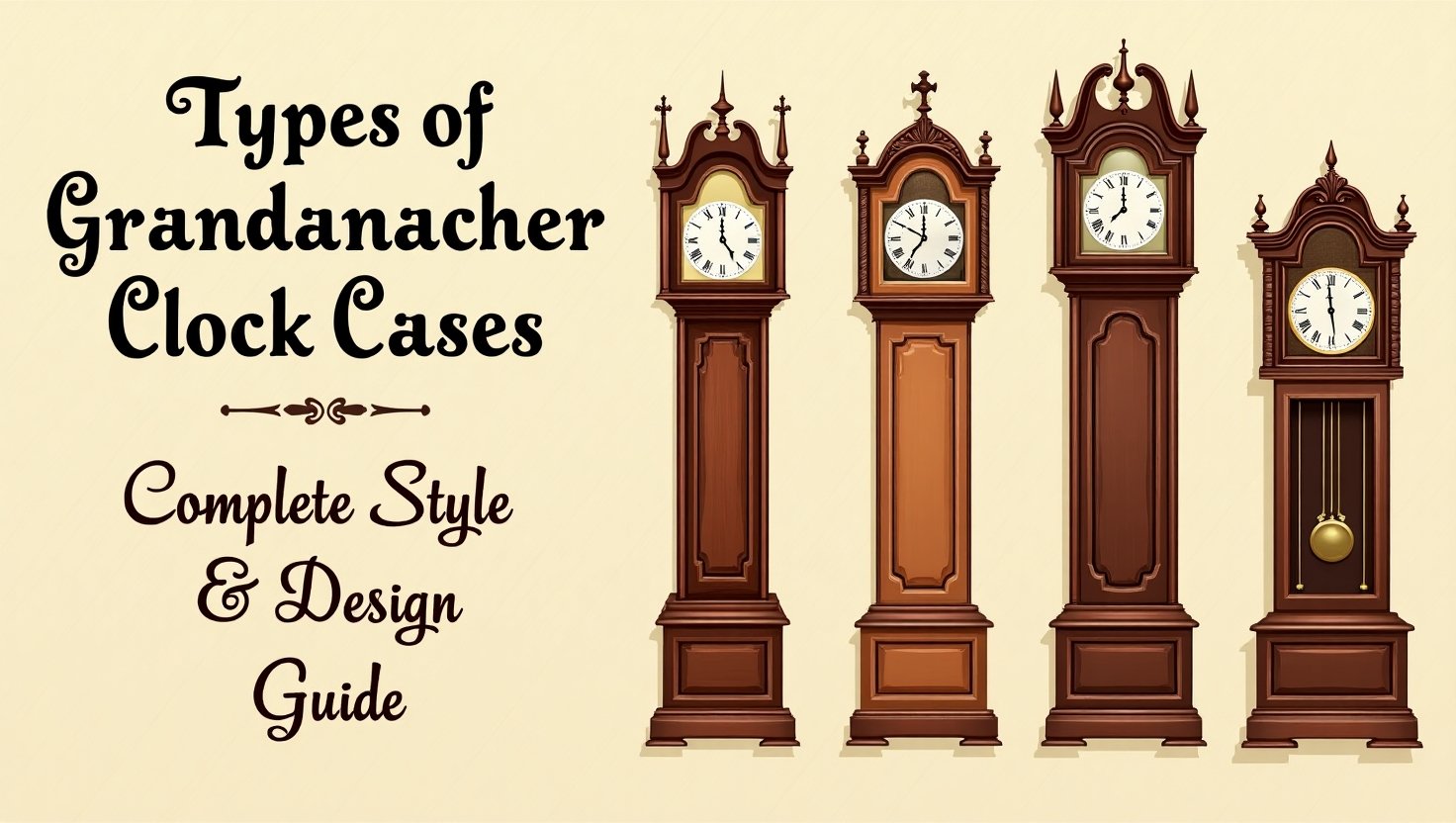
The case is the outer wooden shell that protects the clock’s internal mechanism and gives it its iconic appearance. It is typically divided into three main sections:
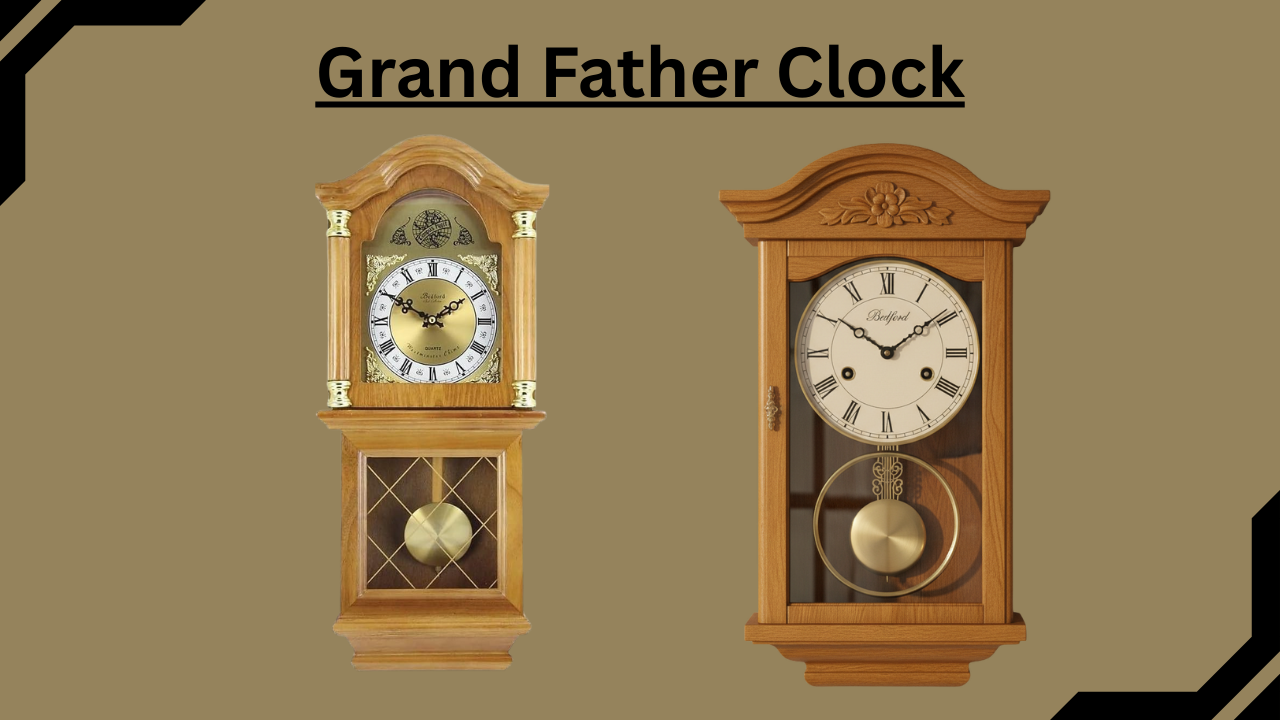
- The Hood (or Bonnet): The upper section, which houses the clock dial and chime mechanism. This part is often adorned with decorative moldings, brass finials, and glass panels for viewing the dial.
- The Trunk (or Waist): The central section containing the pendulum. It may have glass doors for viewing the swinging pendulum, adding to the clock’s visual appeal.
- The Base (or Plinth): The sturdy lower section, which supports the entire clock.
The case is often made from fine hardwoods, including:
- Oak: Known for its strength and rich, grainy texture.
- Mahogany: Valued for its dark, reddish-brown color and smooth finish.
- Walnut: Admired for its warm, brown color and fine grain.
- Cherry: Known for its reddish hue and elegant appearance.
2.2 The Dial: The Face of Time
The dial is the clock’s face, where the time is displayed. Traditional grandfather clocks often feature:
- Roman or Arabic numerals: For easy time reading.
- Ornate hands: Hour, minute, and second hands, often designed with intricate patterns.
- Moon phase indicator: A rotating disk that displays the current lunar phase, adding both functionality and beauty.
- Hand-painted artwork: Some dials are decorated with floral designs, pastoral scenes, or mythological imagery, making each clock a unique work of art.
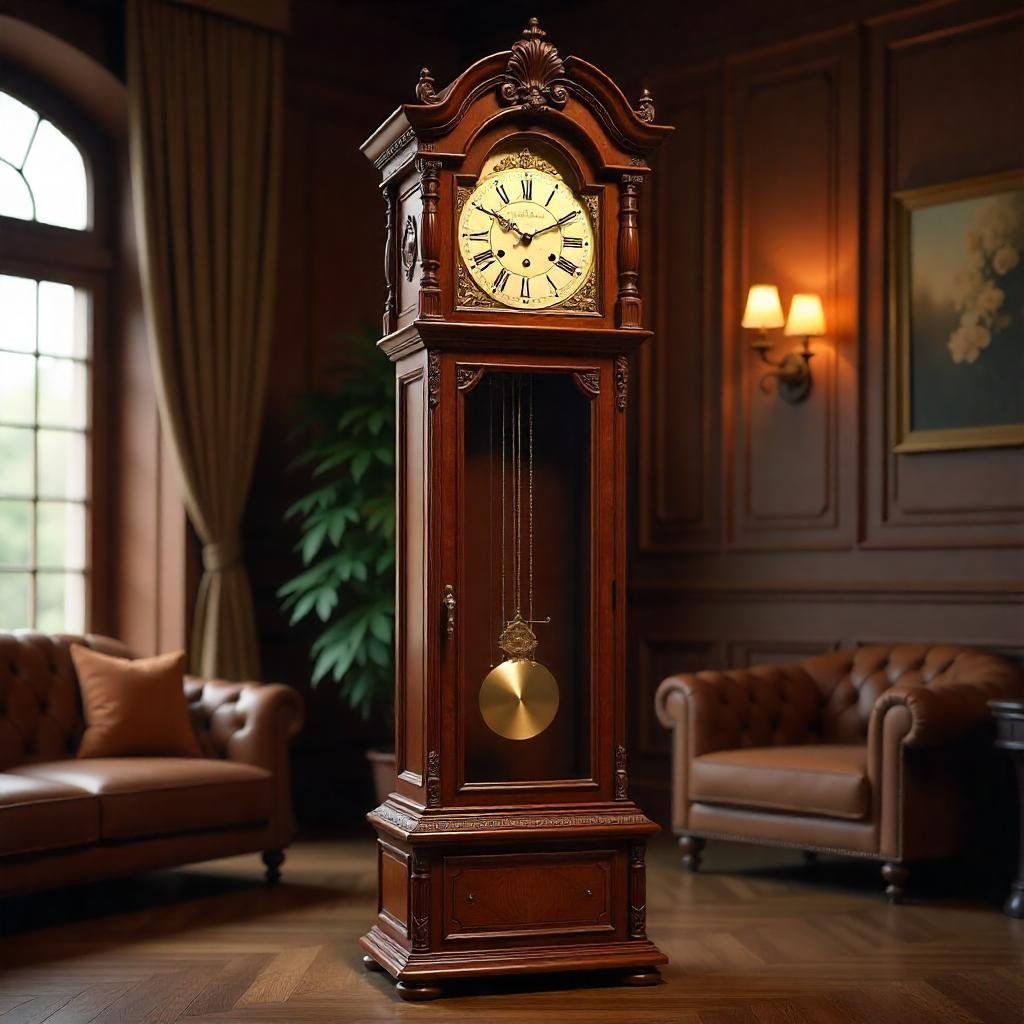
2.3 The Movement: The Heart of the Clock
The movement is the internal mechanism that powers the clock. Traditional grandfather clocks use:
- Weight-driven movement: Powered by descending weights suspended on chains or cables.
- Escapement mechanism: A device that regulates the release of energy, ensuring consistent movement of the gears.
- Pendulum regulation: The swinging pendulum keeps the clock’s timing accurate, with its length determining the clock’s speed.
2.4 The Pendulum: The Beating Heart
The pendulum is a long rod with a weighted bob at the bottom, swinging back and forth to regulate timekeeping. The length of the pendulum can be adjusted to fine-tune the clock’s accuracy. The rhythmic swing of the pendulum is both a functional and visual element of traditional grandfather clocks.
2.5 The Chime Mechanism: A Symphony of Sound
Traditional grandfather clocks are famous for their melodious chimes. The chime mechanism typically includes:
- Chime rods or bells: These produce sound when struck by hammers.
- Chime sequences: Popular chime melodies include Westminster, Whittington, and St. Michael.
- Chime control levers: Allowing users to turn the chimes on or off, or select a specific melody.
3. The Artistic Beauty of Traditional Grandfather Clocks
Traditional grandfather clocks are more than just timekeepers—they are works of art. The beauty of these clocks is evident in their meticulously crafted cases, ornate dials, and decorative details.
3.1 Masterful Woodwork and Carving
- Craftsmen used fine woods like oak, mahogany, and walnut, often carving intricate floral patterns, vines, and mythological scenes.
- Some clocks featured inlays of exotic woods, mother-of-pearl, or ivory for added elegance.
3.2 Ornate Dials and Hand-Painted Designs
- Clock dials were often engraved or painted with intricate designs, ranging from floral motifs to pastoral landscapes.
- Moon phase dials were a popular feature, providing a celestial touch to the clock’s face.
3.3 Decorative Hardware and Finials
- The top of the case was often adorned with decorative finials made of brass, silver, or wood.
- The clock’s weights and pendulum bob were also often engraved or polished for aesthetic appeal.






Post Comment