
Ridgeway Grandfather Clocks A to Z
Ridgeway Grandfather Clocks represent timeless elegance, precision, and masterful craftsmanship. For over sixty years, Ridgeway Grandfather Clocks have combined classic woodworking techniques with advanced clockmaking to create pieces that transcend time. Each Ridgeway Grandfather Clock serves not only as a functional timepiece but also as a centerpiece that enhances interior décor and reflects family heritage. From the graceful motion of its pendulum to the rich, melodic chimes, every Ridgeway Grandfather Clock embodies a legacy of excellence and tradition.
Ridgeway Grandfather Clocks have a long and respected history, known for blending traditional craftsmanship with thoughtful design. In this article, we’ll walk through their journey, explore the wide range of styles they offer, and look at the details that make each clock special. Whether you’re buying your first piece or adding to a collection, Ridgeway Grandfather Clocks offer something truly timeless. With each one, you’re not just choosing a way to tell time—you’re choosing a lasting piece of beauty and heritage.
Ridgeway Grandfather Clocks Value
The value of a Ridgeway Grandfather Clock isn’t just in how much it costs; it’s in what it means to the people who own it. These clocks bring a sense of warmth and tradition into a home, often becoming more than just a timepiece. For many families, a Ridgeway clock marks special moments: the quiet ticking in the background during holiday gatherings, the chimes that signal the start of a new day, and the presence of something steady in a world that’s always changing.
Built with care and classic craftsmanship, Ridgeway Grandfather Clocks are designed to last for generations. That lasting quality adds to their value, not only financially but emotionally. Whether it’s the rich wood finish, the graceful swing of the pendulum, or the familiar sound of the chimes, each detail adds a touch of beauty and comfort that you can enjoy every day.
Over time, these clocks often become part of the family story. They’re passed down, gifted, or restored—not just because they’re valuable, but because they carry meaning. And for collectors or those who appreciate fine furniture, Ridgeway’s reputation for quality makes each clock a smart and timeless investment. Limited editions and vintage models, in particular, can even grow in value.
But perhaps the real worth of a Ridgeway Grandfather Clock lies in the feelings it brings. It has a quiet presence that fills a room, reminding you of simpler times, steady routines, and cherished memories. Whether it’s your first Ridgeway clock or one that’s been with your family for years, its value is something you feel every time you walk by it.
In a world full of fast trends and throwaway products, Ridgeway offers something rare, something that lasts. That’s a kind of value you can’t put a price on.
Ridgeway Tempus Fugit Grandfather Clock
The Ridgeway Tempus Fugit Grandfather Clock is a timeless piece of American craftsmanship that combines classic elegance with historical symbolism. Known for its finely crafted wooden case and the Latin phrase “Tempus Fugit,” which means “Time Flies,” this grandfather clock is more than just a timekeeping device; it’s a statement of tradition and artistry. Ridgeway Clocks, a well-respected brand in the world of horology, has been manufacturing floor clocks since the 1960s and is recognized for its high-quality mechanical and quartz movements. A typical Ridgeway grandfather clock features intricate carvings, brass pendulums, and melodic Westminster chimes that echo through the home every hour.
The Tempus Fugit label often found at the top of the dial is not a model name but a decorative touch reminding owners of the fleeting nature of time. Collectors and antique enthusiasts often seek Ridgeway grandfather clocks for their durability, precision, and aesthetic appeal. These clocks usually feature a triple chime movement, moon phase dial, and beveled glass panels, making them not only functional but also visually striking.
When identifying an authentic Ridgeway Tempus Fugit clock, look for a serial or model number inside the case, which can help determine the year of manufacture and value. These heirloom-quality timepieces are often passed down through generations and are considered valuable furniture and décor items. Whether you’re interested in grandfather clock repair, maintenance, or simply learning how to wind a grandfather clock properly, owning a Ridgeway model means you’re caring for a piece of horological history. Perfect for living rooms, libraries, or entryways, the Ridgeway Tempus Fugit Grandfather Clock adds a touch of vintage charm to any traditional home.
A Storied Heritage
Origins in American Furniture
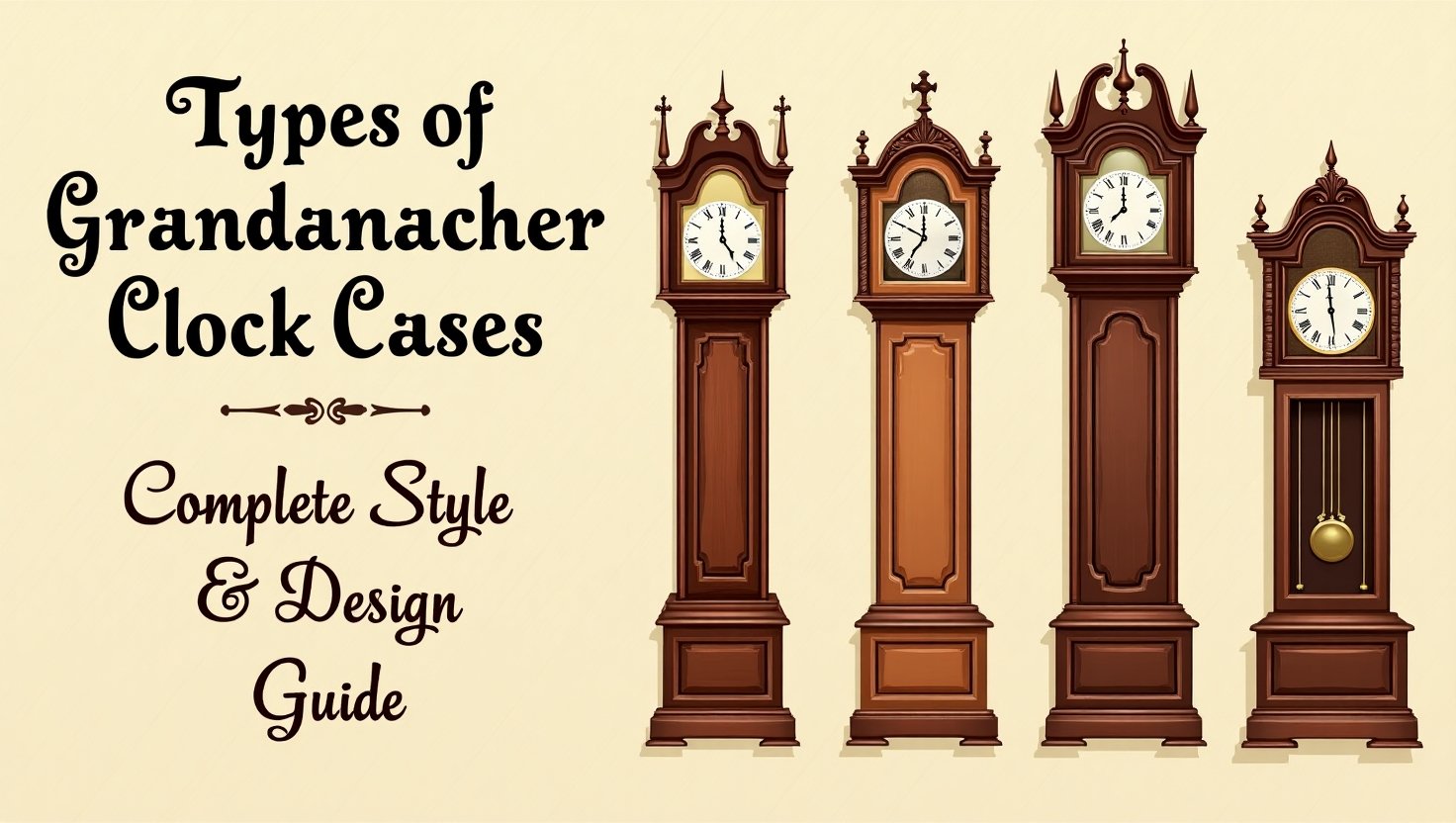
Ridgeway’s journey began in 1960 when the venerable Sligh Furniture Company, renowned for fine cabinetry, ventured into clockmaking. Recognizing a growing appetite for floor clocks that anchored living spaces, Sligh launched Ridgeway as a dedicated line. Early models drew heavily from 18th-century English longcase designs: broad pediments crowned with carved finials, brass moon-phase dials beneath arched hoods, and robust wooden cases echoing heritage furniture styles.
Partnership with German Movement Makers
By the early 1970s, Ridgeway established strategic partnerships with leading German manufacturers such as Hermle and Kieninger. These collaborations introduced eight-day mechanical movements featuring triple-train systems, separate barrels for timekeeping, quarter-hour chimes, and hourly strikes, and offered three-chime selection (Westminster, Whittington, St. Michael), allowing owners to tailor their clock’s melody to personal taste.
Quartz Revolution and Accessibility
Responding to the late-1970s quartz revolution, Ridgeway incorporated high-precision battery-powered movements. These quartz modules emulate authentic chime sequences and opened the brand to a wider audience by offering lower-cost, low-maintenance alternatives to weight-driven mechanisms. By the 1980s, Ridgeway had become one of North America’s largest producers of floor clocks, balancing tradition with contemporary convenience.
Modern Era: Sustainability and Innovation
In the 1990s and beyond, Ridgeway modernized production, introducing automated milling for consistent case components, while preserving hand-applied finishes. The company adopted sustainable forestry practices for its solid hardwoods (cherry, oak, walnut) and shifted to low-VOC lacquer systems. Recent decades have seen innovations such as self-leveling feet for accurate pendulum swing, self-synchronizing chime modules that reset after power interruptions, and even optional Bluetooth audio integration in select contemporary models.
Collections and Design Styles
Traditional Classics
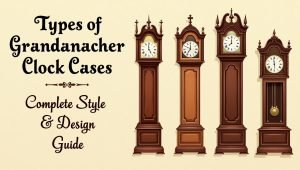
These models evoke formal elegance with fluted columns, rosettes, and detailed crown moldings. Standing up to nine feet tall, finishes include rich cherry, dark walnut, or medium oak, each highlighted by multi-layer lacquer. Dials feature silvered chapter rings, painted moon-phase complications, and pierced hands, all powered by precision German mechanical movements.
Cottage and Casual
For lighter, more relaxed interiors, the Cottage series offers simpler lines and brighter finishes, golden oak, natural maple, or whitewashed stains. Under-curved bonnet tops and arched side-glass panels create an approachable silhouette, while chime options often include Westminster only or three-chime quartz mechanisms.

Metro and Contemporary
Urban lofts and minimalist homes find an ally in the Metro collection. These clocks forgo traditional hoods for one-piece cases with arched or flat tops. Combining wood, glass, and stainless-steel elements, they showcase skeletonized dials and polished metal pendulum rods. Select models integrate hidden Bluetooth speakers, turning a classic timepiece into a modern multimedia centerpiece.
Limited and Collector’s Editions
Anniversary models and small-batch releases highlight exotic species, birds-eye maple, amboyna burl, or hand-rubbed distressing for a vintage patina. Numbered plaques and custom inlays underscore their exclusivity, making them prized by collectors for both their craftsmanship and rarity.
Craftsmanship and Materials
Every Ridgeway clock begins with 100% kiln-dried hardwood, never veneers, ensuring stability against humidity shifts. Artisans employ mortise-and-tenon joinery at load-bearing joints, enhancing structural integrity. After assembly, cases undergo a multi-stage finish: stain, sealer, and multiple coats of catalyzed lacquer, each hand-buffed to a deep, durable sheen.
Internally, Ridgeway sources its mechanical movements from top European makers. These eight-day movements feature separate barrels for timekeeping, chimes, and strikes, with polished brass weights and calibrated pendulum bobs for consistent amplitude. Adjustable beat screws allow fine-tuning of timing. Quartz models, running on C-cell batteries, offer selectable chimes, automatic night-silence, and self-synchronizing modules that automatically reset the chime position after battery changes.
Acoustic engineering plays a vital role: standard models use steel chime rods for clear, bright tones, while high-end editions employ tubular chimes for richer resonance. Internal baffles and soundboards amplify and balance the volume, ensuring the chimes fill a room without overpowering.

Technology and Modern Conveniences
While Ridgeway honors tradition, its innovations address practical modern needs:
- Precision-Leveling System: Spring-loaded feet adjust to uneven floors, keeping the clock perfectly plumb for accurate pendulum swing.
- Self-Learning Chime Module: After any interruption, battery change, or door opening, the clock automatically locates the correct point in its chime sequence, eliminating manual resets.
- Sustainable Practices: All hardwood is sourced from certified forests; wood finishes use low-VOC lacquers; up to 70% of packaging materials are recycled.
- Integrated Multimedia: Select Metro and limited-edition models hide Bluetooth speakers and amplifiers beneath the dial, allowing owners to stream music or spoken-word content through the clock.
Purchasing, Installation, and Care
Selecting the Right Model
Measure ceiling height and floor space, then choose a style and finish that complements your décor. Decide between mechanical movements, valued for ritual and legacy, and quartz for precision and low maintenance.
Dealer Network and Setup
Authorized retailers across North America offer hands-on viewing and expert guidance. Professional delivery teams handle placement, leveling, and initial pendulum setup to ensure optimal performance.
Routine Maintenance
Mechanical clocks require oiling every 5–7 years and a full movement overhaul every 20–25 years. Quartz clocks need only battery replacement every 12–18 months and occasional dusting. Maintain indoor humidity between 40–60% and avoid direct sunlight to preserve wood and finishes.
Warranty and Service
Ridgeway provides a two-year limited warranty covering defects in materials and workmanship, including one year of complimentary in-home service and lifetime technical support. Extended maintenance plans are available for periodic cleaning, lubrication, and adjustment. Certified service centers nationwide handle repairs, movement rebuilds, and restoration.
The Enduring Appeal of Ridgeway
Ridgeway Grandfather Clocks transcend mere functionality to become living artifacts. Their solid hardwood cases link the past to the present, and their precision mechanics ensure reliability for decades. Whether gracing a stately manor, a cozy cottage, or a contemporary loft, a Ridgeway clock enriches any setting with its dignified tick and resonant chime. Selecting Ridgeway means choosing a timepiece that honors tradition, embraces innovation, and promises to stand the test of generations, reminding us, in an ever-changing world, that quality, beauty, and the passage of time truly endure.











Post Comment