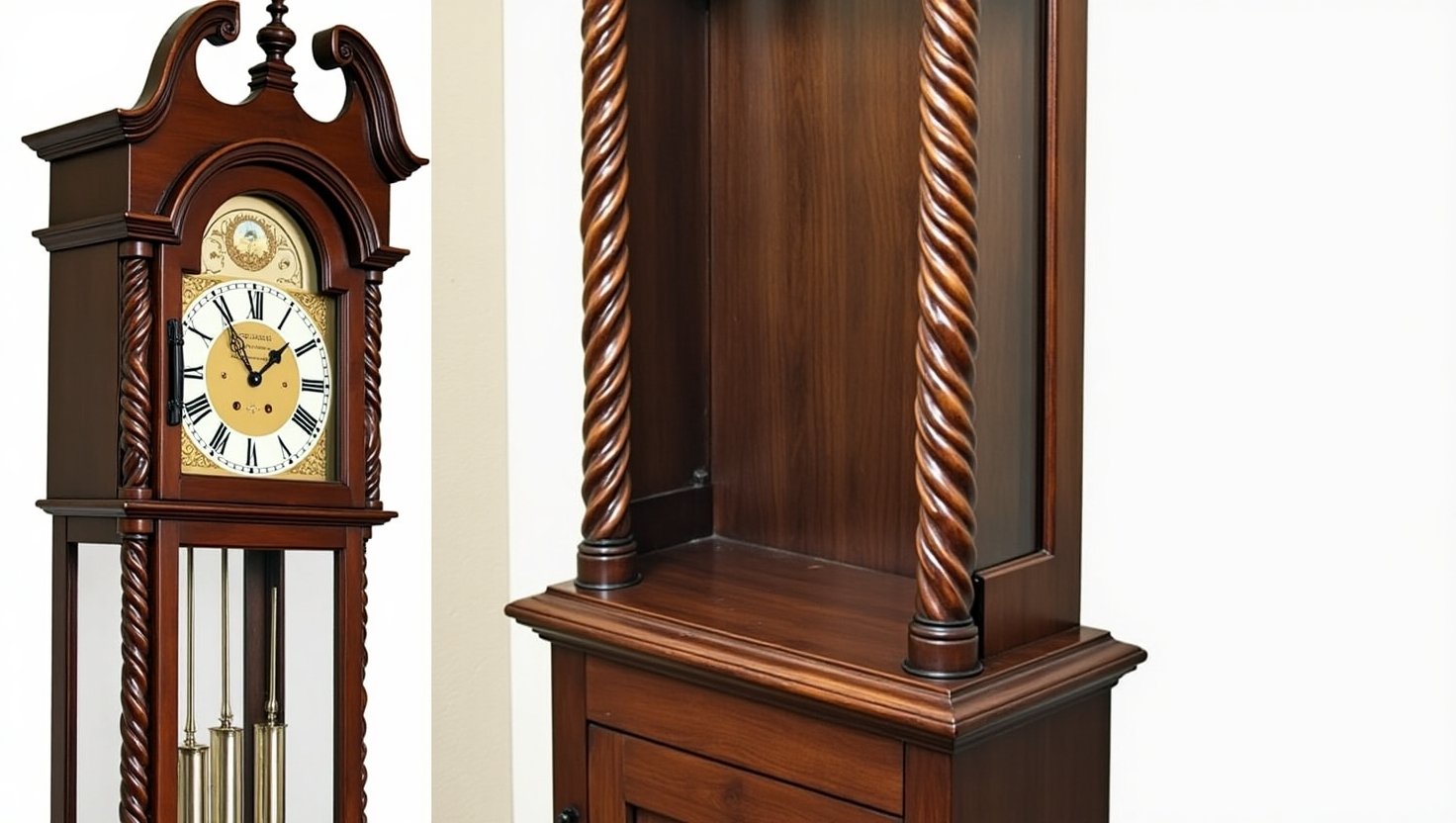
Top 5 Grandfather Clock Models That Are Out of Style
There’s something undeniably special about a grandfather clock, the deep chime, the graceful swing of the pendulum, the way it quietly anchors a room. For generations, these clocks were symbols of elegance and tradition. But just like clothing styles or home décor trends, time doesn’t stand still. What once felt classic and refined can now seem out of place. Whether you’re a long-time collector or just someone who loves beautiful craftsmanship, let’s take a closer look at a few grandfather clock models that, over the years, have gently faded out of style.
1. Ridgeway Traditional Grandfather Clock (Model 136 Westminster)
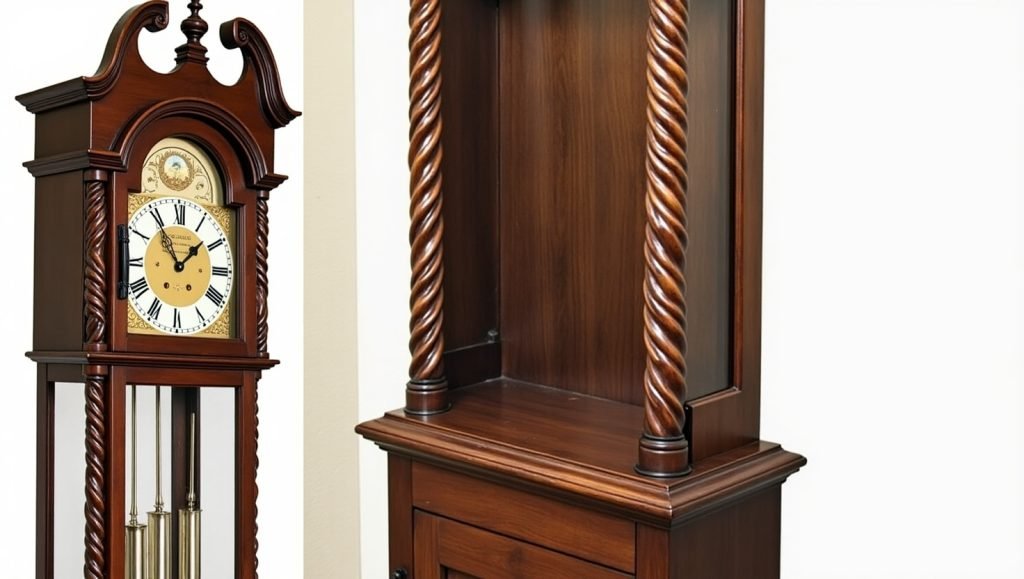
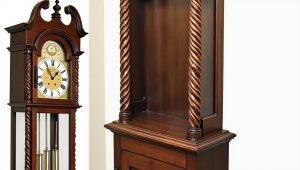
The Ridgeway Traditional Grandfather Clock, Model 136 Westminster, was once a proud centerpiece in many homes. Its tall stature, dark walnut finish, and ornate gold dial were admired in formal living rooms across the country.
Why the Ridgeway 136 Westminster is Out of Style
- Heavy Victorian aesthetics: The carved bonnet, twisted columns, and decorative appliques are far removed from the clean lines of modern design.
- Dark finishes: Contemporary homes now lean towards lighter tones and open spaces; the Ridgeway 136 feels bulky and closed in.
- Too formal: As casual living spaces become the norm, clocks like the Ridgeway 136 Westminster appear too stiff.
Real-Life Example: I recently visited a couple in Ohio who had inherited a Ridgeway Traditional Grandfather Clock from their grandparents. Though the clock worked perfectly, it looked oddly out of place beside their sleek gray sofas and white walls. “It feels like it belongs to another time,” the wife told me.
If You Still Own the Ridgeway 136 Westminster
Benefits:
- A treasured heirloom with emotional and historical value
- Built with strong craftsmanship and long-lasting materials
- Can be restored or modified to match transitional interiors
Drawbacks:
- Difficult to pair with modern decor themes
- Lower market resale value in today’s antique clock trade
- Heavy and awkward to move or reposition
2. Howard Miller Bristol Grandfather Clock (Model 611-132)
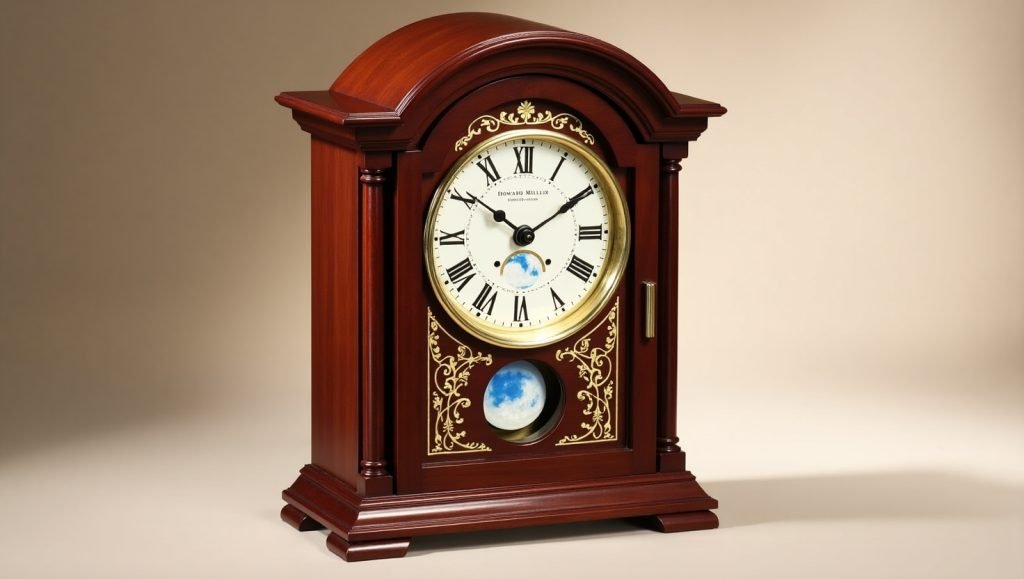
The Howard Miller Bristol Grandfather Clock Model 611-132 was the definition of sophistication in the early 2000s. With its moon phase dial, cherry finish, and triple chime movement, it stood tall in many upscale homes.
Why the Howard Miller 611-132 is Out of Style
- Bulky frame: This clock was built to impress, but modern homes favor compact, space-saving decor.
- Cherry wood finish: Once a popular choice, cherry tones now feel dated and clash with neutral palettes.
- Highly ornamental: The moon phase and brass accents appear overdone in today’s more minimalistic settings.
Real-Life Example: One of my clients in Texas kept their Howard Miller Bristol Grandfather Clock tucked in a hallway. “It was a wedding gift,” he said, “but I can never find the right place for it anymore.” Despite its sentimental value, it remained hidden because it no longer suited the home’s aesthetic.
If You Still Own the Howard Miller 611-132
Benefits:
- Exceptional sound quality and movement
- Great heirloom or collectible if maintained properly
- Adds character to rustic or vintage-themed rooms
Drawbacks:
- Does not complement modern or industrial interiors
- High maintenance cost for internal parts and chimes
- Takes up considerable space in smaller homes
Stay tuned as we explore the next three models that have gracefully aged out of mainstream style. If you own one of these clocks, don’t worry, you’re not alone, and there’s still value in preserving them with care.
3. Sligh Cherry Wood Clock (Model 0971-1-AN)
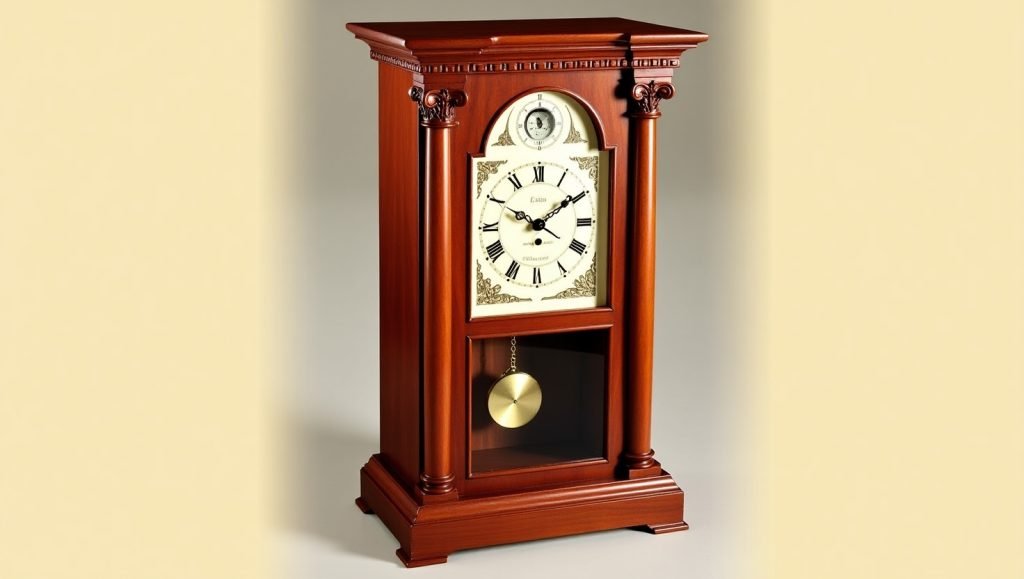
The Sligh Cherry Wood Clock Model 0971-1-AN is a beautifully crafted timepiece, once cherished for its ornate cherry wood and handcrafted columns. During the 1990s and early 2000s, it was a top pick for formal dining rooms and entryways.
Why the Sligh 0971-1-AN is Out of Style
- Cherry wood aesthetic: The red undertones of cherry wood no longer appeal to modern design sensibilities.
- Ornamental carvings: Today’s buyers seek simplicity and minimalism, not the grandeur of fluted columns.
- Feels dated: The traditional pendulum window and dial layout don’t resonate with current interior trends.
Real-Life Example: A retired teacher in New York reached out to me about updating her space. She had a Sligh Cherry Wood Grandfather Clock beside a sleek glass cabinet. “It just doesn’t blend anymore,” she admitted, despite how much she loved it.
If You Still Own the Sligh 0971-1-AN
Benefits:
- Excellent build quality and craftsmanship
- Complements antique or colonial-themed interiors
- Potential collector value due to brand legacy
Drawbacks:
- Doesn’t suit modern minimalist designs
- Difficult to integrate into updated color palettes
- Restoration may require custom work
4. Emperor Model 100M Kit Clock
The Emperor Model 100M Kit Clock was a popular choice among DIY enthusiasts in the 1970s and 1980s. These build-it-yourself grandfather clocks allowed owners to experience the joy of creating their own timepiece.
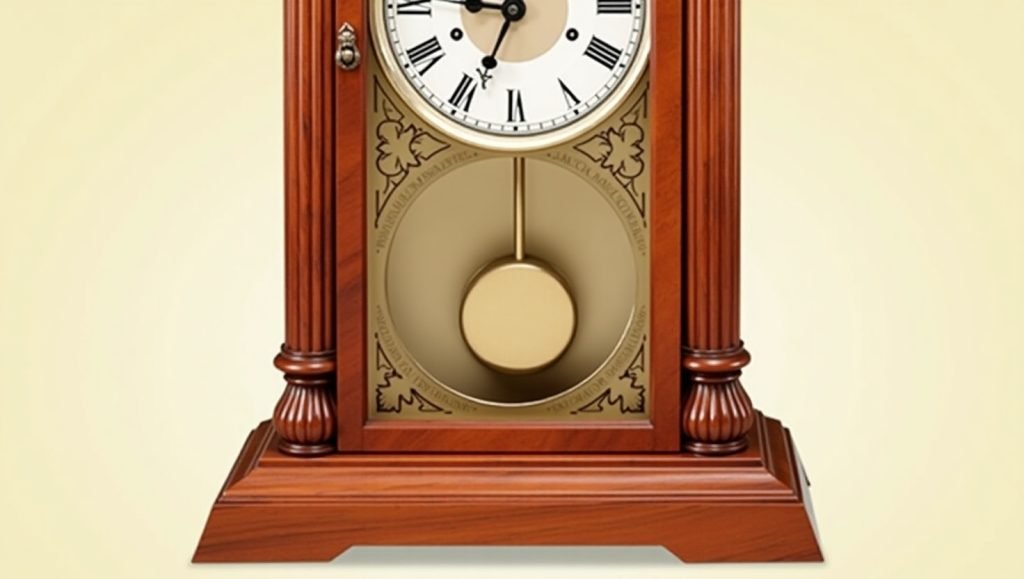
Why the Emperor 100M is Out of Style
- DIY finish: Often lacks the refinement of factory-made models
- Loud chimes and ticking: Seen as intrusive in today’s quieter, tech-oriented homes
- Inconsistent design quality: Each finished clock varied depending on the builder’s skill
Real-Life Example: I worked with a client in Illinois who proudly built his Emperor Model 100M Kit Clock in 1978. He admitted, “It was a fun project, but it doesn’t really fit the house anymore.”
If You Still Own the Emperor 100M
Benefits:
- Sentimental and educational value
- Great project piece for DIY enthusiasts
- A unique and personal history
Drawbacks:
- Lower craftsmanship than premium clocks
- Limited resale or collectible value
- Rare and difficult-to-source replacement parts
5. Herschede Hall Clock (Model 230 Tall Case)
The Herschede Hall Clock Model 230 Tall Case is a stately, premium clock made with grand molding, rich finishes, and deep resonating chimes. In its prime, it symbolized prestige and classic luxury.
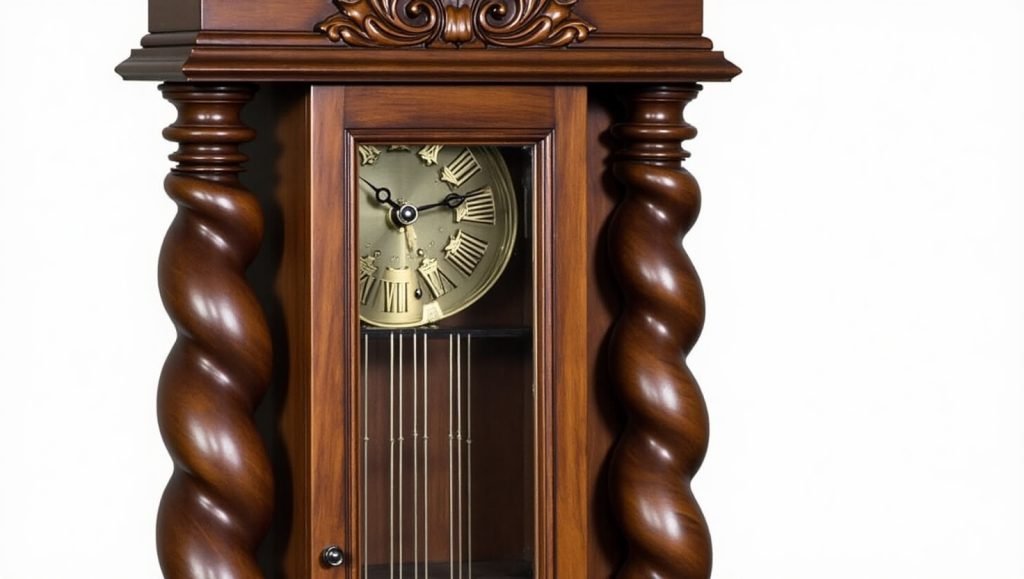
Why the Herschede 230 is Out of Style
- Large and bulky frame: Not suited for today’s smaller apartments or modern homes
- Elaborate brass features: Too ornate for minimalistic aesthetics
- Old-fashioned crown and case design: Feels overpowering in current interior setups
Real-Life Example: I consulted with a designer staging a home for sale in Michigan. The Herschede Hall Grandfather Clock was moved to storage because it “intimidated the room,” as the agent phrased it.
If You Still Own the Herschede 230
Benefits:
- High-end craftsmanship and tonal quality
- Collectible antique with potential investment value
- A statement piece for vintage homes
Drawbacks:
- Extremely heavy and space-consuming
- Not suitable for modern, open-layout homes
- Maintenance and part replacement are costly
Whether proudly displayed or tucked away in a hallway, these grandfather clocks each carry history and beauty. While they may be out of style in today’s design world, they still offer charm and sentimental value to those who own them. As trends change, what matters most is the story your clock tells in your home.
Final Thought
As someone who has spent a lifetime restoring and studying grandfather clocks, I believe every model, no matter how out of style, tells a story worth honoring. Trends may fade, but the craftsmanship, emotion, and family history embedded in these timepieces are timeless. If you own one of these clocks, don’t be disheartened by shifting tastes. Instead, recognize the quiet strength of a well-built clock that has stood the test of time, literally and figuratively. Sometimes, what’s “out of style” today becomes tomorrow’s rare treasure. Keep your clock ticking, and let it keep telling its story.
Frequently Asked Questions (FAQs)
1. Are grandfather clocks completely out of style or just certain models?
Not all grandfather clocks are out of style—only certain models with bulky designs, dark finishes, or ornate carvings have lost favor. Sleeker, minimalist grandfather clocks are still very much in demand and can even elevate a modern space.
2. Can an outdated grandfather clock be modernized?
Yes. Many owners choose to refinish wood in lighter tones, replace dials or pendulums with updated versions, or even convert mechanical movements to quartz for convenience. However, doing so may affect its antique value.
3. Is it worth repairing a grandfather clock that’s no longer in style?
If the clock holds sentimental or family value, absolutely. Repairs can restore functionality and even increase value among niche collectors. But if you’re considering resale, weigh the cost of repair against its current market worth.
4. Do interior designers still use grandfather clocks in home décor?
Yes, but selectively. Designers often incorporate grandfather clocks as statement pieces in vintage-themed rooms or to add contrast in minimal spaces. However, they typically avoid large, overly decorative models.
5. How can I find out if my grandfather clock is valuable despite being out of style?
Consult a certified horologist or antique clock appraiser. Factors like brand, model rarity, craftsmanship, and historical significance can all contribute to value, even if the style is outdated.
6. Is there a market for outdated grandfather clocks?
There is a limited market. Vintage collectors, restoration hobbyists, and even prop buyers for film or stage sets often seek these clocks. Online marketplaces and antique shows are good platforms for selling.
7. What is the best way to store a grandfather clock I’m not currently using?
Disassemble major parts (weights, pendulum), wrap delicate components, and store the clock upright in a dry, climate-controlled space. Never lay it flat—it may warp or damage the case and movement.
8. Can old grandfather clocks be recycled or repurposed?
Yes. Creative DIYers often repurpose clock cases into display cabinets, bookshelves, or even home bars. Others reuse brass components for art or crafts. Just be sure it’s not a historically significant model before altering it.
9. Do outdated grandfather clocks affect home value or staging?
In some cases, yes. In modern or minimalist homes, a bulky, outdated clock can distract buyers or make a space feel crowded. For staging, it’s best to remove or relocate it to avoid clashing with the intended aesthetic.
10. What’s the difference between ‘outdated’ and ‘vintage’ in clocks?
“Outdated” refers to designs that no longer align with current trends, while “vintage” implies value and charm despite age. A clock can be both outdated and vintage, but vintage clocks often gain renewed appreciation over time.



Post Comment