
Grandfather Clock Chimes: Timeless Elegance for Your Home
Grandfather clock chimes can really change your home’s look. These classic clocks have been adding elegance for centuries. They make any room feel more sophisticated.
They don’t just tell time; they bring tradition and heritage to your space. The sound of clock chimes makes your home feel cozy and welcoming.
Adding timeless elegance to your decor can make your home feel more refined. Whether you want classic style or a cozy vibe, a grandfather clock is a great pick.
Key Takeaways
- Adds a touch of sophistication to any room
- Brings a sense of tradition and heritage into your home
- Creates a warm and inviting atmosphere
- Elevates the ambiance of your home
- Provides a sense of refinement and elegance
The Rich History of Grandfather Clocks
Grandfather clocks have a long and interesting history. They have been a key part of home decor for centuries. Their presence brings a sense of nostalgia and elegance.
Origins in 17th Century Europe
These clocks started in 17th century Europe. Skilled clockmakers first made them in England in the 1650s. The anchor escapement mechanism was a big innovation, making timekeeping more accurate.
The innovation of the grandfather clock revolutionized timekeeping. It made timekeeping more precise and available to everyone.
Evolution Through the Centuries
Over time, grandfather clocks changed a lot. They became more ornate with detailed carvings and decorations. They were made from wood, metal, and glass.
The Industrial Revolution helped make them more common. Some important changes include:
- New materials like mahogany and oak were used.
- Advanced clockmaking techniques, like the deadbeat escapement, were introduced.
- They started to have extra features, like chime mechanisms and calendars.
Cultural Significance in American Homes
In American homes, grandfather clocks hold a special place. They symbolize tradition, heritage, and family history. They have been a part of home decor for many generations.
Many families pass down their grandfather clocks. This shows the cultural importance of these clocks. They are popular today, as people want to connect with their past.
Understanding Grandfather Clock Chimes
Learning about grandfather clock chimes can make you appreciate these clocks more. These chimes are not just functional; they add beauty to the clock. The sound they make is elegant and often found in homes.
What Makes Grandfather Clock Chimes Special
Grandfather clock chimes stand out because of their mechanical marvel and craftsmanship. They produce a unique sound that adds to a room’s atmosphere.
The sound comes from hammers hitting tuned rods or tubes. This creates a harmonious sound that’s typical of these clocks.
The Mechanical Marvel Behind the Sounds
The mechanical part of grandfather clock chimes shows off horological engineering. The mechanism includes gears, levers, and hammers working together. This makes the chimes a mechanical marvel.
The clock’s movement comes from weights or a spring. This power drives the gears and activates the chiming mechanism at set times.
Different Types of Chiming Mechanisms
Grandfather clocks have various chiming mechanisms, like Westminster, Whittington, and St. Michael’s chimes. Each has its own melody and features. This variety is great for those looking to buy or restore a clock.
Knowing about these different mechanisms helps you choose the right grandfather clock for you.
Popular Grandfather Clock Chime Melodies
Grandfather clocks are known for their chime melodies, which add to a room’s ambiance. These melodies have been a part of traditional timekeeping for years. They come in various styles to match different tastes and decor.
Westminster Chime: The Classic Choice
The Westminster chime is a favorite among grandfather clock owners. It’s connected to the Westminster Quarters, famous in many iconic clocks worldwide.
History and Recognition
The Westminster chime has a long history, starting in the 19th century. It’s named after the Palace of Westminster, home to Big Ben. This chime is well-known and linked to British culture.
Musical Structure and Pattern
The Westminster chime has a unique pattern, playing notes on the quarter hours. It’s timeless and loved for its familiarity and pleasant sound.
Whittington Chime: A Distinctive Alternative
Looking for something different? The Whittington chime offers a unique melody. It’s named after Dick Whittington, a figure from English folklore.
The Whittington chime has a distinct tune, unlike the Westminster chime. It’s a great choice for those wanting a less common sound.
St. Michael’s Chime: Elegant and Refined
The St. Michael’s chime is elegant and refined. It’s perfect for homes seeking a sophisticated sound.
St. Michael’s chime is known for its harmony. It’s a classic choice among grandfather clock fans.
Ave Maria and Other Specialty Chimes
For a unique touch, consider the Ave Maria chime. These chimes let homeowners choose a melody that suits their taste or decor.
There are many specialty chimes, from traditional to modern. They offer a wide range of options for clock owners.

| Chime Melody | Description | Characteristics |
|---|---|---|
| Westminster Chime | Classic and traditional | Recognizable, timeless, and pleasant |
| Whittington Chime | Distinctive alternative | Unique, refreshing, and different |
| St. Michael’s Chime | Elegant and refined | Sophisticated, harmonious, and classic |
| Ave Maria Chime | Specialty and unique | Personalized, traditional, and beautiful |
Anatomy of Grandfather Clock Chime Systems
Grandfather clock chime systems have many parts that work together. They create the unique sounds we love. Let’s explore the key components that make these melodies.
Chime Rods and Tubes
At the center of the chime system are the chime rods or tubes. They’re usually metal and tuned to specific notes. When hammers hit them, they make the musical tones we hear.
The number and tuning of these rods or tubes can change. This allows for different chime styles.
Hammers and Striking Mechanisms
The hammers are key to making the chime sound. They’re moved by the clock’s gears. As the gears turn, the hammers strike the rods or tubes, creating the sound.
Gears and Movement Components
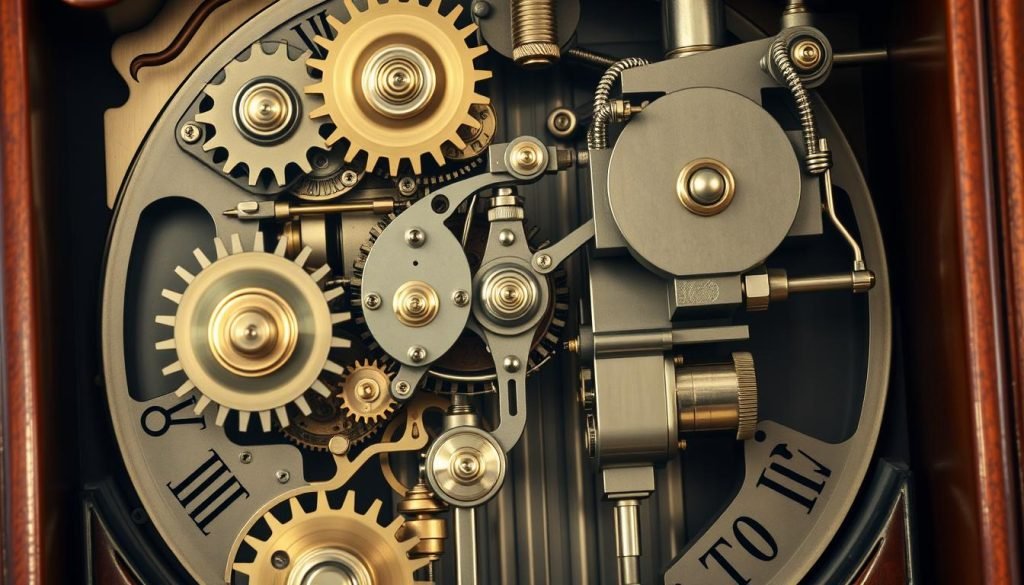
The gears and movement components are the heart of the chime system. They provide the power needed to move the hammers. These parts are designed to ensure the chimes strike at the right time and sequence.
Sound Production and Amplification
Sound production in grandfather clocks is more than just striking the rods. It’s also about amplifying that sound. Many clocks have a sound chamber or are placed to enhance the chimes’ resonance. This makes them more audible and enjoyable.
| Component | Function | Importance |
|---|---|---|
| Chime Rods/Tubes | Produce musical tones when struck | Essential for chime melody |
| Hammers | Strike chime rods/tubes to produce sound | Critical for sound production |
| Gears and Movement | Drive hammers and control timing | Vital for synchronized chimes |
Understanding the anatomy of grandfather clock chime systems shows the craftsmanship and complexity. Whether you’re keeping an old clock or buying a new one, knowing how it works enhances your appreciation. These mechanical marvels are truly timeless.
How to Set Chimes on Your Grandfather Clock
To enjoy your grandfather clock’s chimes, you need to set them right. This means understanding and adjusting the chime control mechanism. You also need to make sure the time and chime sequence match, and that the hour strikes sound good with the chimes.
Accessing the Chime Control Mechanism
The first step is to find the chime control mechanism. It’s often on the clock’s face or inside. You might need to open a small door or panel to get to it. Be careful not to damage it.
Setting the Correct Time and Chime Sequence
To set the time and chime sequence, you need to know how they work together. The chime sequence usually matches the hour, half-hour, or quarter-hour. Move the clock’s hands to the right time, then adjust the chime setting to match.
Here’s a simple guide to setting the time and chime sequence:
| Step | Action | Result |
|---|---|---|
| 1 | Move the clock’s hands to the correct hour | The hour strike is aligned with the correct time |
| 2 | Adjust the chime setting to match the hour | The chime sequence is synchronized with the hour strike |
| 3 | Check the half-hour or quarter-hour chimes | Ensure these chimes are also correctly aligned |
Synchronizing Hour Strikes with Chimes
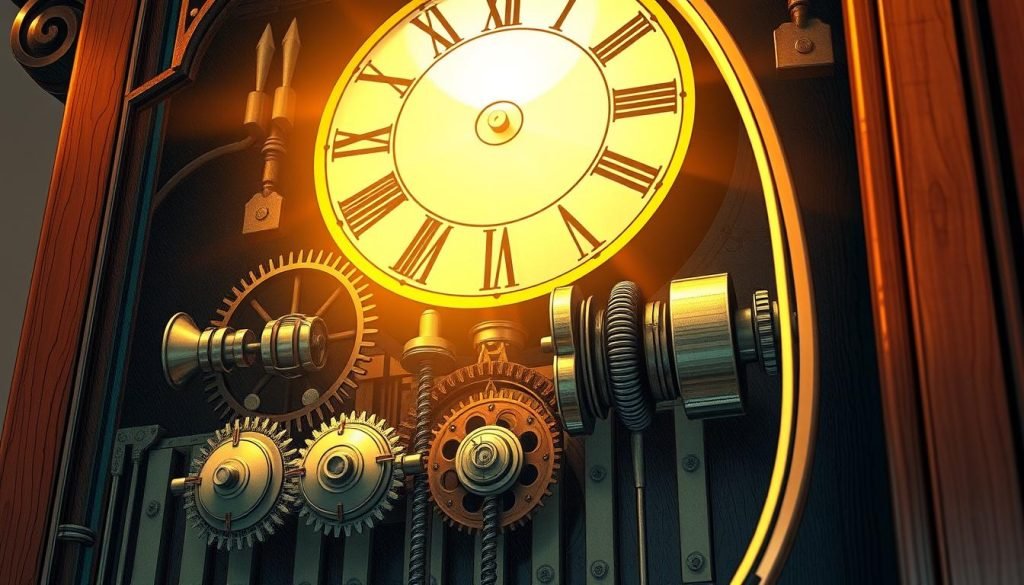
It’s important to make sure the hour strikes and chimes sound good together. If the strikes don’t match the hour, you need to adjust the strike mechanism. This might involve moving a lever or adjusting a dial.
Testing Your Settings
After setting the chimes and hour strikes, test them. Let the clock run for a few hours to check if everything is in sync. Make any needed adjustments for perfect harmony.
By following these steps, you can enjoy the beautiful chimes of your grandfather clock. It will add to the beauty of your home.
Troubleshooting When Your Grandfather Clock Chimes the Wrong Hour
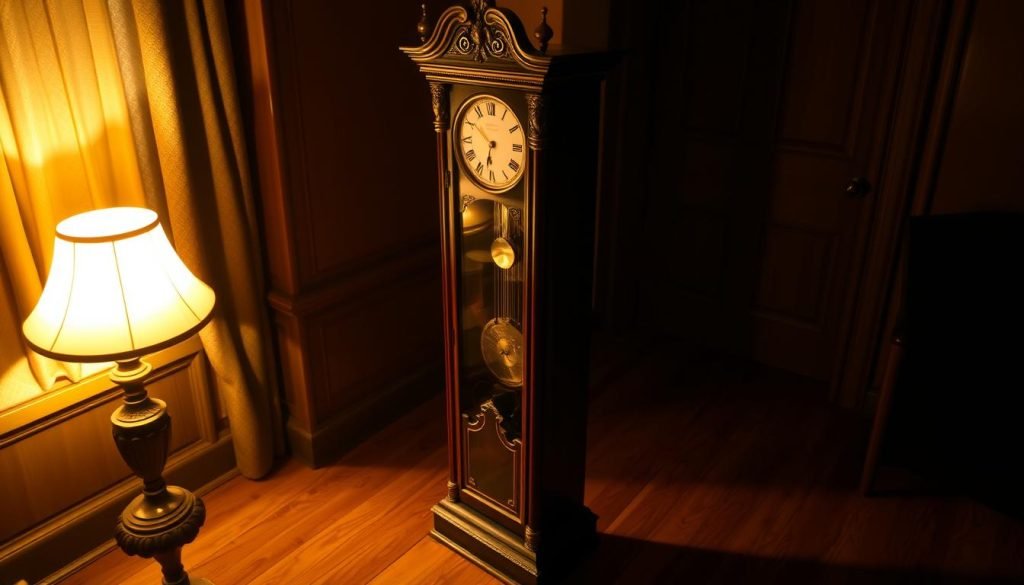
Grandfather clocks are known for their beautiful chimes. But what if they chime the wrong hour? This problem can have many causes, from simple fixes to more serious mechanical issues.
Common Causes of Incorrect Hour Strikes
There are several reasons why your grandfather clock might chime the wrong hour. One reason is if the clock’s hands and its internal mechanism are not in sync. “A grandfather clock’s chime is typically synchronized with its hour hand,” says clockmaker John Smith. “When this synchronization is off, it results in incorrect hour strikes.”
- Misaligned clock hands
- Incorrect chime setting
- Mechanical wear and tear
- Power issues or weight imbalance
Step-by-Step Diagnosis Process
To fix the problem, first check the clock’s time and chime settings. Make sure the hour hand is aligned with the chime sequence. If the problem continues, look for any mechanical wear or damage.
- Verify the clock’s time and chime settings.
- Check for any obstructions or misalignment.
- Inspect the mechanical components.
- Consult the user manual or contact a professional.
Solutions for Howard Miller Clock Models
For Howard Miller grandfather clocks, check if the chime rod is aligned and the hammers are striking right. Look in the user manual for how to adjust the chime mechanism.
“Regular maintenance is key to keeping your Howard Miller grandfather clock in optimal working condition,” advises a Howard Miller representative.
Fixing Other Popular Brand Discrepancies
Other brands like Bulova or Ridgeway might need similar steps to fix. Always check the user manual or the manufacturer’s website for help. If you can’t solve it, a professional clock technician can help.
By following these steps, you can find and possibly fix the problem with your grandfather clock chiming the wrong hour. This will bring back the beauty and elegance it adds to your home.
Why Your Grandfather Clock Won’t Chime and How to Fix It
When your grandfather clock stops chiming, it could be for many reasons. These range from simple blockages to complex mechanical problems. Knowing the cause is key to getting the clock to chime again.
Mechanical Reasons for Silent Chimes
One main reason a grandfather clock might not chime is mechanical issues. The chime mechanism has many small parts that can wear out or get damaged. Regular wear and tear can make the chime hammers not work right or the chime rods get out of place.
Start by checking the mechanical parts. Look for any damage or if the chime hammers and rods are aligned right. If these parts are okay, it might fix the problem.
Checking for Obstructions or Damage
But sometimes, the problem isn’t with the clock’s parts but with things outside. Obstructions or damage to the clock or its area can stop it from chiming.
See if anything is blocking the clock’s movement or chime mechanism. Also, check the clock’s case and around it for any damage that might be affecting it.
Power and Weight-Related Issues
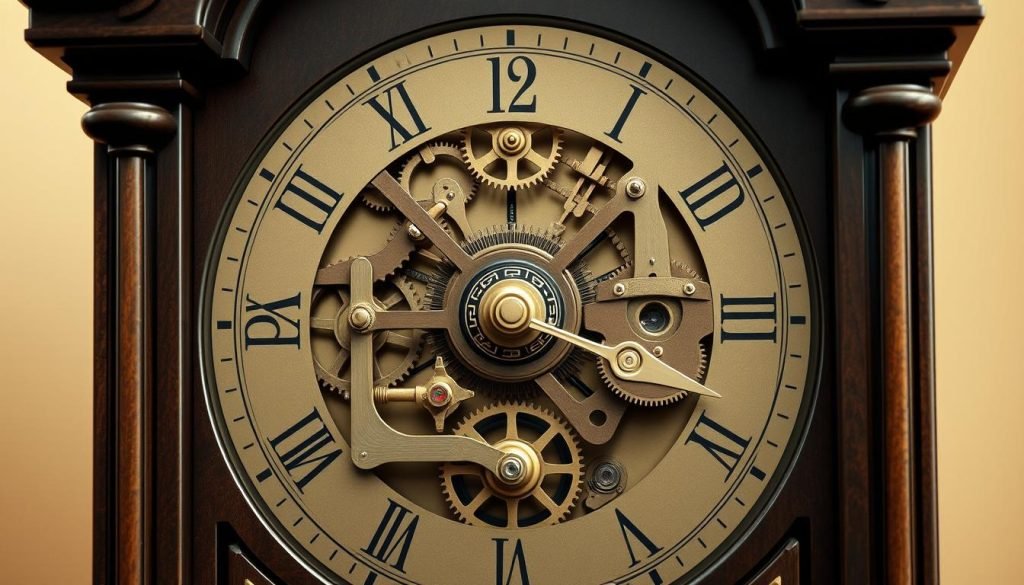
Grandfather clocks run on weights that need to be wound by hand. If the weights aren’t wound right, the clock won’t work, including its chime. Make sure the weights are wound correctly is very important.
Also, if the clock isn’t level or the weights aren’t hanging right, it can mess with the chime. Ensure the clock is on a level surface and the weights are in the right spot.
When to Consider Professional Repair
While you can fix many problems yourself, some need professional help. If you’ve checked for mechanical issues, blockages, and power problems but can’t fix it, it’s time to call a pro.
A skilled clock technician can find and fix complex problems. They’ll make sure your grandfather clock starts chiming again.
How to Reset Chimes on a Grandfather Clock
Resetting your grandfather clock’s chimes is easy if you know the steps. These clocks are amazing, keeping time and adding music to your home. But, their complex parts can sometimes need a reset.
When to Reset Your Clock’s Chimes
You might need to reset your clock’s chimes if they’re off from the real time. This can happen due to power outages, mechanical problems, or if the clock hasn’t been used for a while. Resetting keeps your clock accurate and its chimes in tune.
Step-by-Step Chime Reset Procedure
To reset the chimes, first, open the clock’s back panel or remove the face. Inside, find the chime control. The exact steps can vary, so it’s best to check your clock’s manual.
For most grandfather clocks, you’ll need to:
- Stop the clock and silence the chime.
- Adjust the chime rod or tube to the right position.
- Sync the chime with the hour strike.
- Test the chime to make sure it matches the clock’s time.
Special Considerations for Different Clock Models
Each grandfather clock model has its own way of resetting the chimes. For example, Daniel Dakota Westminster Chime models need careful rod adjustments. Howard Miller clocks, on the other hand, often have a simpler process through their control panels.
Daniel Dakota Westminster Chime Models
Resetting the chimes on Daniel Dakota models requires precise adjustments. This ensures the Westminster chime melody matches the time. You’ll need to fine-tune the chime rods and refer to the manual for specific steps.
Howard Miller Grandfather Clocks
Howard Miller clocks make resetting the chimes easy. Just access the control panel and follow the instructions in the manual. It’s a straightforward process.
| Clock Model | Reset Procedure | Special Considerations |
|---|---|---|
| Daniel Dakota | Adjust chime rods, synchronize with hour strike | Requires precise rod adjustments |
| Howard Miller | Use control panel to reset chimes | User-friendly interface, consult manual |
Adjusting Grandfather Clock Chimes for Perfect Timing
Adjusting grandfather clock chimes is easy once you know the basics. It’s about understanding your clock and making a few tweaks. Keeping the chimes in sync with the time is key to its beauty and function.
Fine-Tuning Early or Late Chimes
If your clock chimes are off by a few minutes, tweak the pendulum. The pendulum’s swing rate controls the clock’s time. To speed up, move the bob up. To slow down, move it down. Make small changes and check the clock over a few days.
Fixing Chimes That Are 5-15 Minutes Off
For bigger time differences, adjust the clock hands or chime setting. Check if your clock has a silent mode or chime sync feature. Some, like Howard Miller clocks, have specific steps. Look in your manual or online for help.
Seasonal Adjustments for Optimal Performance
Temperature changes can mess with your clock’s time. As seasons change, metal parts expand or contract. You might need to adjust the pendulum or mechanism for better accuracy.
Working with the Pendulum to Affect Chime Timing
The pendulum is key for keeping the clock’s time and chimes right. Make sure it swings freely and is aligned. If it’s blocked or not swinging right, the chimes will be off. Check the pendulum often and adjust as needed.
The Complete Guide to Grandfather Clock Chimes Maintenance
To keep your grandfather clock in top shape, regular chime maintenance is key. Proper care ensures the chimes sound great and the clock remains a home centerpiece.
Regular Cleaning Practices
Regular cleaning stops dust buildup, which can harm your clock’s sound. Use a soft, dry cloth to dust the chime rods and tubes. For deeper cleaning, a slightly damp cloth works, but dry it right away to avoid rust.
Don’t forget to clean the clock’s outside too. Use a mild wood polish on wooden clocks and a soft cloth for metal parts. Stay away from harsh chemicals that can ruin the finish.
Lubrication of Chime Mechanisms
Lubrication keeps your grandfather clock’s chime mechanisms running smoothly. Over time, the lubricants dry out, causing friction and possible failure.
Apply a high-quality clock lubricant sparingly to the gear teeth and pivots. If unsure, it’s best to have a professional clock technician do it.
Replacing Worn Chime Parts
Parts of your grandfather clock’s chime system can wear out, like the chime hammers or striking mechanism. Replacing these parts needs precision and expertise.
| Part | Signs of Wear | Replacement Frequency |
|---|---|---|
| Chime Hammers | Dull or off-tune sound | Every 10-15 years |
| Striking Mechanism | Inconsistent striking, missed strikes | Every 5-10 years |
| Chime Rods | Cracked or damaged rods | As needed |
When to Call a Professional Clock Technician
If you’re not sure about maintenance or your clock’s chimes aren’t right, call a pro. A clock technician can fix issues, do complex repairs, and keep your grandfather clock ticking and chiming beautifully.
Regular maintenance keeps your grandfather clock working well and looking great. By following these tips, you can enjoy your grandfather clock’s timeless beauty for many years.
Living with Grandfather Clock Chimes in Modern Homes
Having a grandfather clock chime in your home is a unique experience. It mixes tradition with modern living. You’ll enjoy the elegance and history of these clocks. But, you might need to think about a few practical things too.
Silencing Options for Nighttime or Special Occasions
Managing the chimes of a grandfather clock is important, like during nighttime or special events. Many clocks have a silencing feature. This is great if your clock chimes every hour or every 15 minutes.
Some models have a silent mode button or a lever to stop the chimes. Clock lovers say, “Being able to silence the chimes without stopping the clock is very useful. It’s perfect for those who love the clock’s function but need quiet sometimes.”
“The ability to silence the chimes without stopping the clock’s movement is a valuable feature for those who appreciate the clock’s functionality but need quiet at certain times.”
– Clock Enthuasiast
Managing Chimes That Sound Every 15 Minutes
Some grandfather clocks chime every 15 minutes, which might be too much for some homes. You can adjust the chime settings or use the silencing feature during certain times.
| Chime Frequency | Silencing Option | Adjustment Needed |
|---|---|---|
| Every 15 minutes | Silent mode | Yes, for less frequency |
| On the hour | Chime mute | No |
| Every hour and half hour | Partial mute | Yes, for customization |
Integrating Traditional Chimes in Contemporary Spaces
Adding a grandfather clock with traditional chimes to a modern home is beautiful. It’s about choosing a clock that fits your home’s style while keeping its historical value.
A modern home can be enhanced by a sleek, wall-mounted grandfather clock. It keeps the traditional chime feature. Design experts say, “Mixing antique pieces like grandfather clocks with modern furniture creates a unique and captivating design.”
The Psychological Benefits of Rhythmic Chimes
The rhythmic chimes of a grandfather clock can be soothing. They can make your home feel more peaceful and organized.
Research shows that clock chimes can improve mental well-being. They provide a sense of stability and routine. A study found, “The sound of clock chimes can remind us of time gently. It helps structure our day in a comforting way.”
Selecting a Grandfather Clock with the Perfect Chimes
Choosing the right grandfather clock is more than just picking a beautiful piece. It’s also about finding one with chimes that you love. The chimes of a grandfather clock add to the feel of your home.
Evaluating Chime Quality Before Purchase
The quality of a grandfather clock’s chimes is key. Listen to the chimes to see if they sound clear and nice. Some clocks have different chime melodies, so pick one that you like. The mechanical parts of the clock also affect the sound of the chimes.
- Listen to the chime’s clarity and tone.
- Consider the variety of chime melodies available.
- Understand the mechanical aspects influencing chime quality.
Premium Brands Known for Exceptional Chimes
Some brands are famous for their great chimes. Howard Miller is known for its high-quality clocks with beautiful chimes. Other top brands also have unique chimes that might appeal to you.
- Howard Miller: Known for their rich, resonant chimes.
- Riedel: Offers a variety of chime melodies.
- Other brands like Bulova and Hermle also provide high-quality chimes.
Matching Chime Styles to Your Home’s Aesthetics
The chimes of your grandfather clock should match your home’s style. Whether your home is traditional, modern, or eclectic, there’s a chime for it. For example, a traditional home might look good with a classic Westminster chime, while a modern home could have a more modern chime.
Wall Grandfather Clocks with Chimes: Space-Saving Options
Wall grandfather clocks are great for small spaces. They offer a traditional clock experience without taking up too much room. These clocks come with various chime options and can be a beautiful addition to any room.
- Ideal for smaller spaces.
- Variety of chime melodies available.
- Can be a decorative focal point in a room.
Conclusion: The Timeless Appeal of Grandfather Clock Chimes
Grandfather clocks are more than just timekeepers. Their chimes add a touch of traditional elegance to any room. They create a warm and inviting atmosphere, making your home feel special.
Whether you love the classic Westminster chime or something more unique, these chimes add charm to your space. Learning how to care for and appreciate these clocks ensures their beauty lasts for years.
When thinking about adding a grandfather clock to your home, remember its chimes are more than just a sound. They connect you to the past, show off your style, and add a timeless beauty that will always captivate.









Post Comment