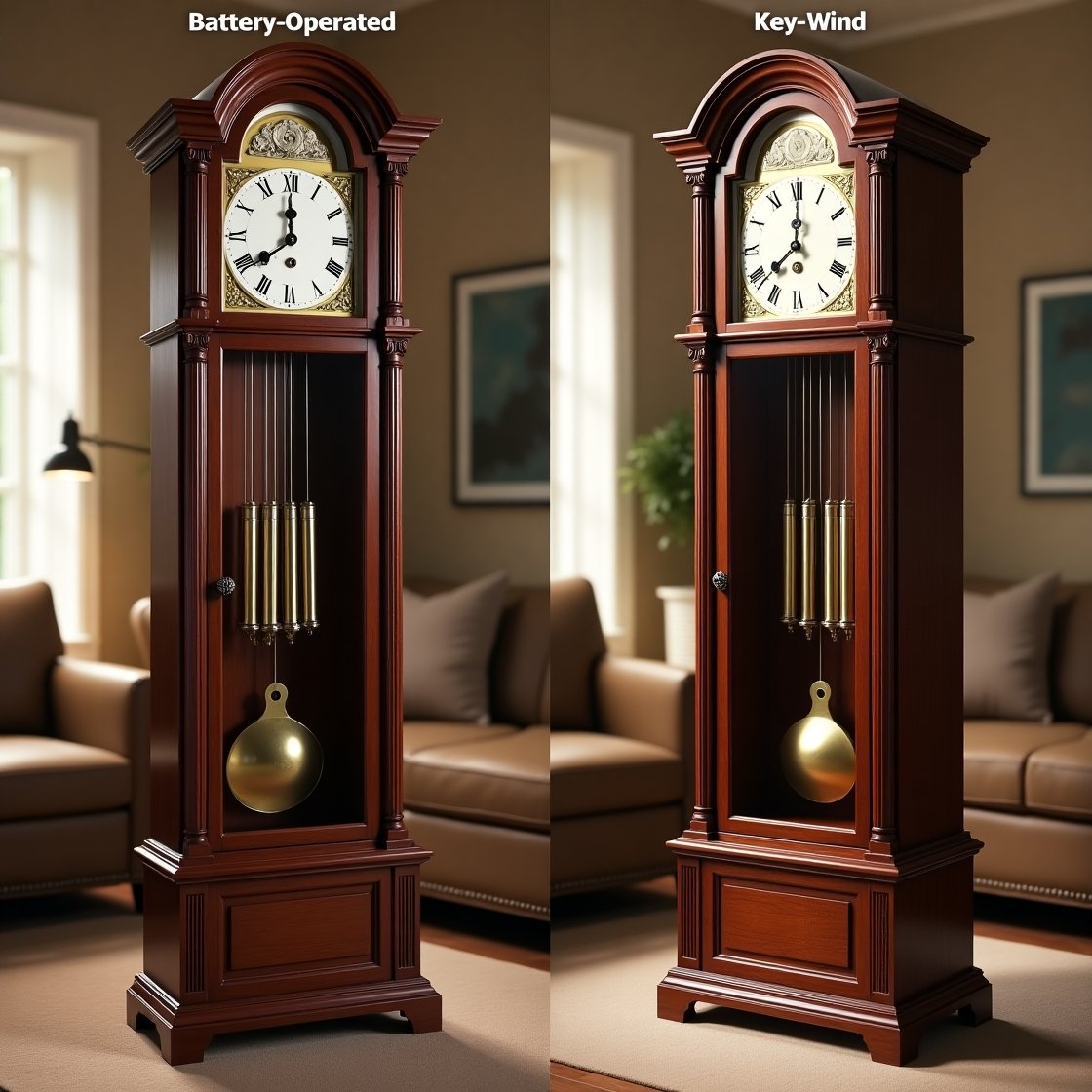
Battery vs Key Wind Grandfather Clocks Which One Suits You Best?
1. Two Worlds of Time – Traditional vs. Modern Grandfather Clocks
▪ The Legacy of Grandfather Clocks
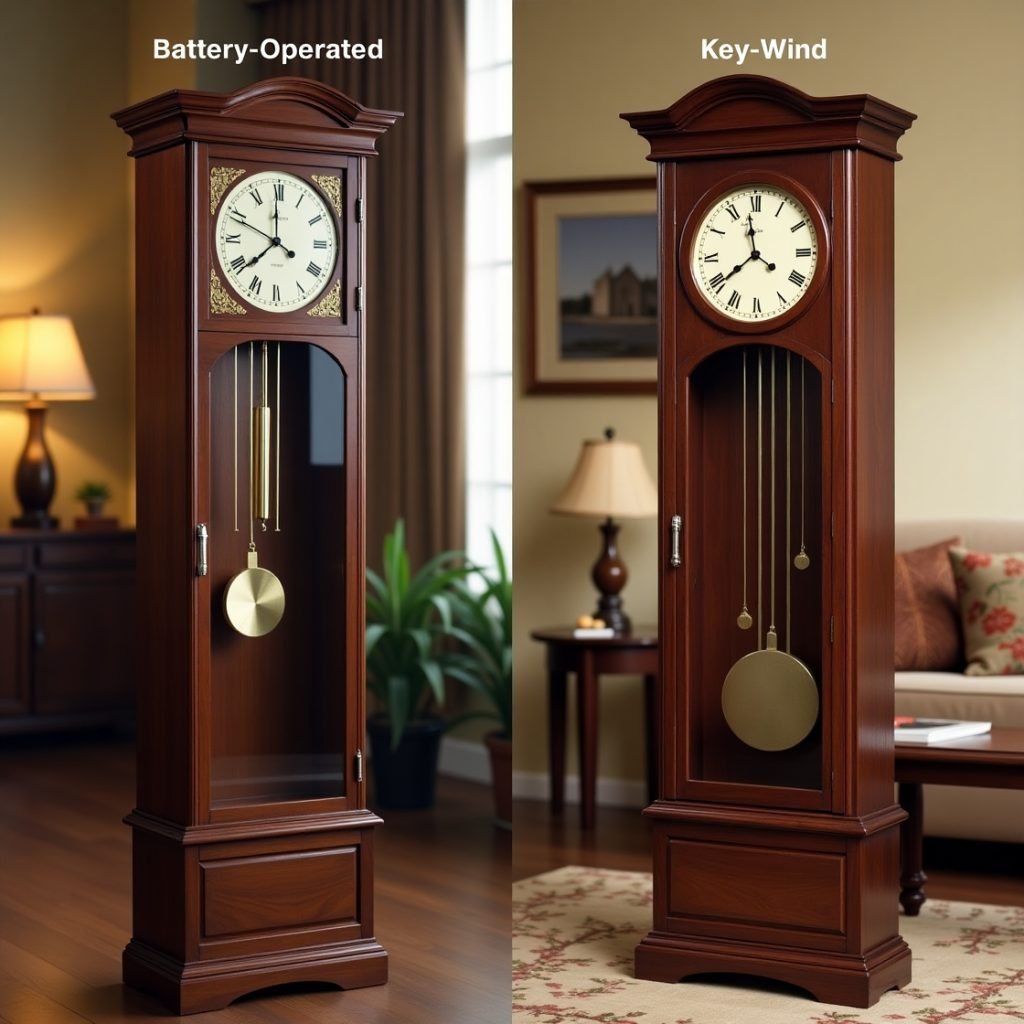
There’s something magical about a grandfather clock standing tall in a room, its wooden frame whispering stories of the past. These aren’t just timepieces; they’re living history. For centuries, mechanical or key-wound grandfather clocks have been passed down as heirlooms. In contrast, battery-operated grandfather clocks represent a shift towards convenience and contemporary design.
But regardless of their mechanism, both types carry emotional and aesthetic value. Whether you love the nostalgic tick of a key-wound clock or the silent elegance of a battery-powered model, choosing the right clock is a personal journey. You’re not just buying a clock, you’re investing in an experience, in a legacy of craftsmanship, or a symbol of modern ease.
▪ Two Styles, Two Experiences
Owning a key-wound grandfather clock is like owning a piece of history. You interact with it weekly, winding it by hand, feeling every gear click into place. It’s ritualistic, even therapeutic. Battery-operated grandfather clocks, on the other hand, are made for today’s fast-paced world. You set the time once and forget about it for months. Both styles tell time, but the way they make you feel is completely different. The key-wind clock pulls you into the moment, while the battery version gives you the gift of time back. This isn’t just a difference in function; it’s a difference in lifestyle and values.
▪ Why This Comparison Matters
People often ask, “What’s better, battery-operated or key-wound grandfather clocks?” But it’s not a matter of better or worse; it’s about what fits you. Maybe you’re someone who appreciates vintage décor, classic interiors, and the sound of chimes echoing through the room. Or perhaps you prefer minimalist design, low-maintenance living, and a clock that simply works. This comparison exists to guide your decision with clarity.
We’ll break down the pros and cons, not just from a technical perspective, but from a real-life user experience. So whether you’re buying your first grandfather clock or upgrading your collection, you’ll walk away informed and confident.
2. Key-Wind Grandfather Clocks – Timeless Tradition
▪ The Winding Ritual – A Bond with Time
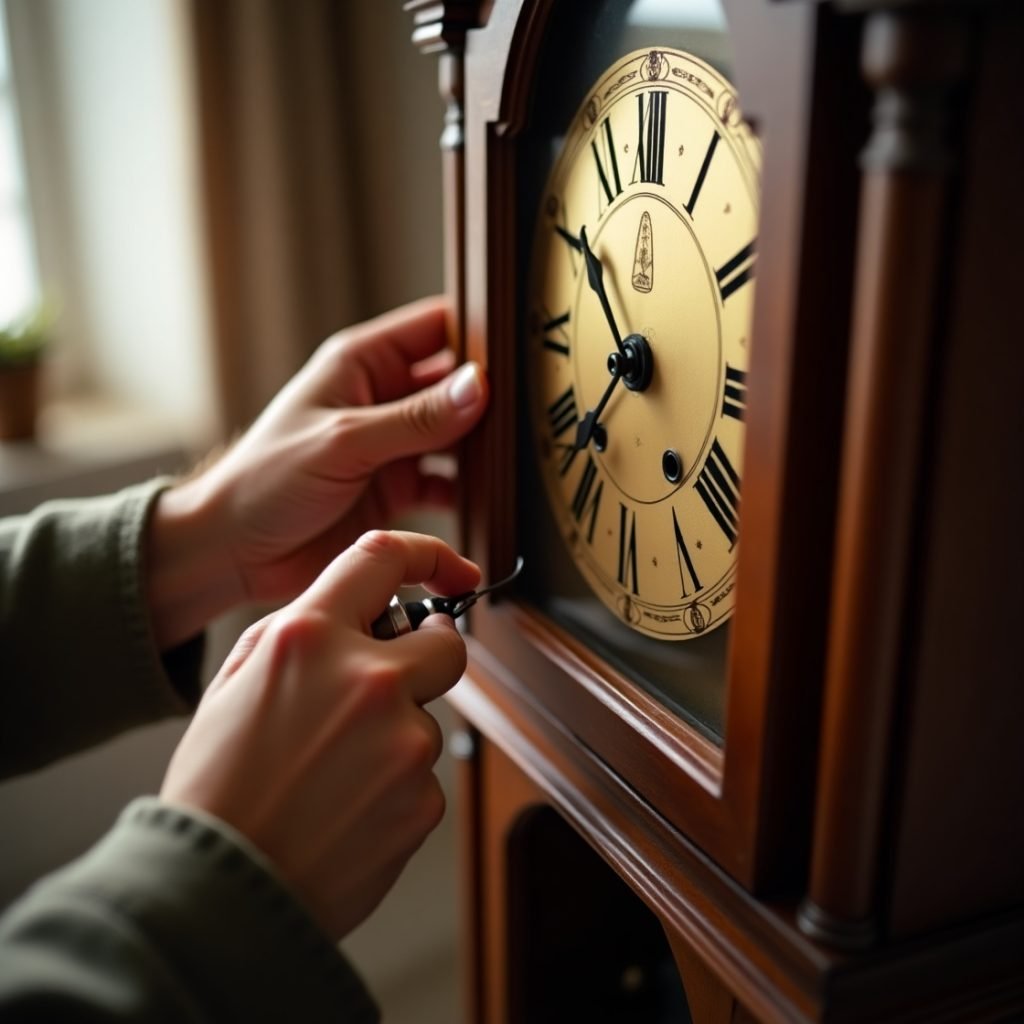
There’s something deeply grounding about winding a grandfather clock. You don’t just turn a key; you pause, reflect, and connect with a slower rhythm of life. In a world where everything is digital, this tactile ritual feels almost sacred. Every Sunday evening, when I wind my own key-wind clock, I’m reminded that time isn’t just numbers on a screen. It’s a movement, a heartbeat, a tradition.
This type of clock doesn’t just tell time, it reminds you to cherish it. The hands on the dial aren’t just turning; they’re dancing to a rhythm that you control. It’s this personal interaction that sets key-wind clocks apart from battery-operated ones.
▪ The Charm of Wood and Chimes
Key-wind grandfather clocks are more than mechanical devices; they’re masterpieces. The rich mahogany wood, the detailed carvings, and the mesmerizing motion of the pendulum add a sense of grandeur to any room. But it’s the sound that steals the show. The deep, resonant chimes mark each passing hour like a musical embrace from the past. In homes where silence often prevails, these chimes fill the space with life. Whether it’s a Westminster chime echoing softly or the rhythmic swing of the pendulum, these clocks create an ambiance that battery clocks simply can’t match. It’s old-world charm reborn in modern homes.
▪ Durable but Demanding
Key-wind clocks are built to last generations, but only if you care for them. That’s the trade-off. These clocks need regular winding, occasional cleaning, and sometimes even professional servicing. They’re not for the faint of heart, but for those who love heritage and tradition, the effort is worth it. I’ve seen key-wind clocks survive world wars and cross continents, still ticking faithfully in family living rooms.
They’re made with brass gears and precision craftsmanship, designed for longevity. But yes, they demand attention, and you need to be ready for that commitment. It’s a relationship, one that rewards patience with timeless beauty.
3. Battery-Operated Grandfather Clocks – Convenience Meets Elegance
▪ Plug and Play Simplicity
In today’s busy world, not everyone has the time, or the desire, to wind a clock every week. That’s where battery-operated grandfather clocks shine. With no winding and minimal setup, you can enjoy all the visual elegance of a traditional timepiece without the maintenance. Just insert the batteries, set the time, and forget it for months. These clocks are especially popular among young homeowners, busy professionals, and even senior citizens who want the aesthetic of a grandfather clock without the upkeep. It’s the perfect blend of form and function. You get the charm without the chores.
▪ Modern Look, Minimal Maintenance
Battery-operated grandfather clocks have come a long way in design. From sleek metal finishes to faux wood grain casings, they complement both traditional and modern interiors. And because they don’t rely on gears and springs, they rarely need repair. No oiling, no winding, no fuss. For many, that’s a huge win. You can place them anywhere, even in hard-to-reach corners, and rest assured they’ll keep ticking. This ease of use and minimal maintenance make them ideal for commercial spaces too, think waiting rooms, offices, or hotel lobbies where elegance matters but effort doesn’t fit the agenda.
▪ Cost-Effective and User-Friendly
Let’s talk budget. Battery-operated grandfather clocks are generally more affordable than their key-wound counterparts. You’ll find a wide range of styles under $300, and some premium models go a bit higher, still far less than handcrafted mechanical clocks. But it’s not just about price. These clocks are user-friendly for everyone. Elderly users love the simplicity; younger folks appreciate the plug-and-play setup. Even when the battery needs replacing (usually once a year), it’s a five-minute task. If you want an elegant clock without the cost or responsibility of maintenance, battery-powered options deliver outstanding value.
4. Power and Performance – How They Function
▪ Energy Sources: Manual vs. Battery
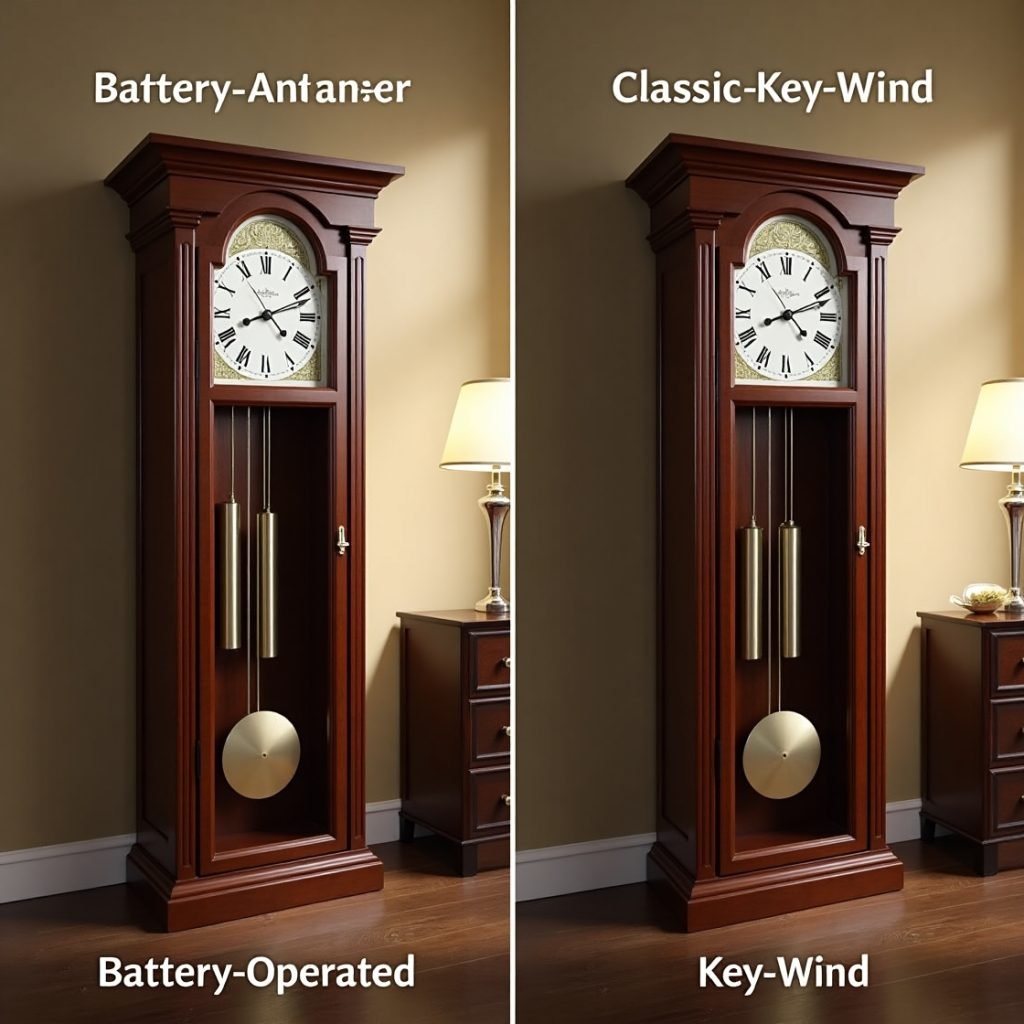
The difference in how key-wind and battery-operated grandfather clocks receive power says a lot about their character. A key-wind clock relies entirely on human input; you wind it, and that energy slowly drives its intricate gears. It’s like partnering with the clock to keep it alive. On the other hand, a battery-operated clock draws consistent energy from AA or D-cell batteries, allowing it to run seamlessly for months. This contrast defines the relationship you build with the clock. While one invites hands-on care and connection, the other offers effortless functionality. Understanding these power sources helps you choose between manual engagement and modern convenience.
▪ Movement Mechanisms
At the heart of each clock lies its movement system, the true engine of time. Key-wind grandfather clocks usually feature mechanical movements like chain-driven or cable-driven systems, crafted with precision. These create a rhythmic and natural tick-tock that many collectors find emotionally comforting. Meanwhile, battery-operated clocks use quartz movements that are more accurate and require no calibration. They also tick silently or with subtle synthetic sounds. So if you’re drawn to traditional horology, mechanical movement is your domain. But if accuracy, silence, and simplicity matter more, quartz battery movements offer a stress-free alternative.
▪ Accuracy Over Time
Let’s be honest, mechanical clocks drift. A key-wound grandfather clock may gain or lose a few minutes over a week and needs occasional adjustments. But that’s part of its charm. It reminds you that time is fluid and human. Battery-operated grandfather clocks, however, are extremely precise; some can run for over a year without needing correction. If you’re a stickler for punctuality or depend on your clock to always be spot-on, battery clocks are the winner here. But if you value ritual, uniqueness, and don’t mind a little drift, the mechanical clock offers something much deeper: personality.
5. Sound and Silence – The Aesthetic Experience
▪ Chimes and Resonance
One of the most beloved features of a traditional key-wound grandfather clock is its resonant chime. When the Westminster or Whittington melody fills the room, it’s not just time you hear, it’s warmth, heritage, and nostalgia. These chimes are powered by actual hammers and rods, offering rich acoustic tones that no speaker can replicate. In contrast, battery-operated grandfather clocks may include electronic chimes, but they often lack depth. Some are surprisingly realistic, but others sound synthetic. If a beautiful hourly melody matters to you, a key-wind clock offers a superior soundscape. It’s not just about telling time, it’s about feeling it.
▪ Silent Operation and Quiet Settings
Not everyone enjoys the hourly chime. For light sleepers or minimalists, silence is golden. Battery-powered grandfather clocks often come with silent modes or volume controls, allowing you to completely mute the chime or adjust it to your preference. This is a game-changer, especially in bedrooms or quiet office spaces. Mechanical clocks, while charming, do not offer this kind of flexibility—once you wind it, the chime is part of the deal. So if you want the beauty of a grandfather clock without the sound, battery-operated models offer the best of both worlds: elegance without interruption.
▪ Living with the Tick-Tock
There’s a rhythm to a key-wind grandfather clock that’s hard to explain until you live with one. The tick-tock is steady, comforting, almost like a heartbeat in the room. It gives life to your space. Some people find it soothing; others may see it as a distraction. Battery-operated clocks are often completely silent, ticking only electronically or with no sound at all. It comes down to personal preference: do you want your clock to be a subtle presence, or do you want it to be part of your home’s character? Either way, your clock’s sound or silence will become part of your daily life.
6. Maintenance and Longevity
▪ Lifespan and Durability
Mechanical key-wind grandfather clocks are built to last generations. With proper care, they can function beautifully for over a hundred years. These are often handcrafted with solid wood, brass gears, and intricate mechanics, making them both durable and repairable. In contrast, battery-operated clocks generally have a shorter lifespan, especially if made with lower-quality materials. While they can still last 10–20 years, they’re often replaced rather than repaired. If you’re looking for a legacy piece to pass down to your children or grandchildren, a key-wind model is a true investment. If you’re focused on style and short-term use, battery models are more practical.
▪ Maintenance Needs
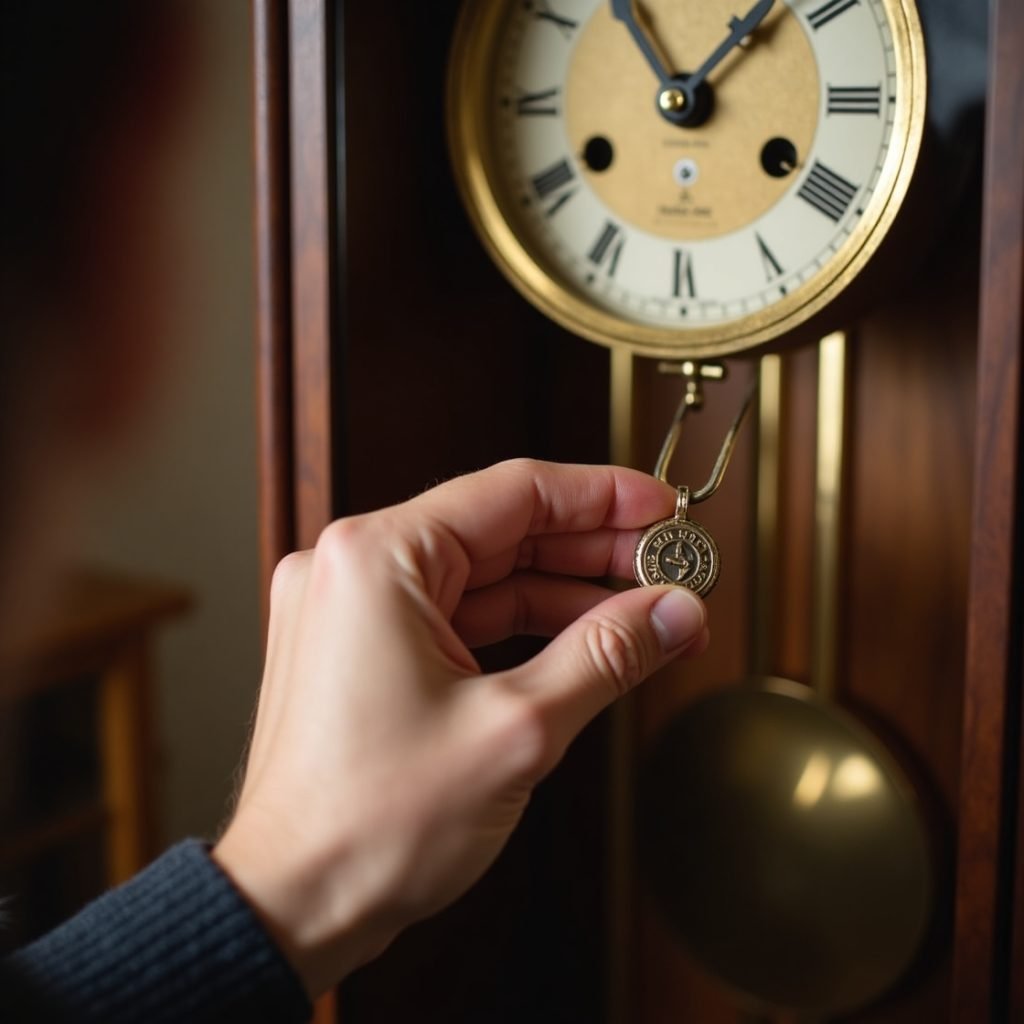
This is where the difference becomes more obvious. Key-wind clocks require regular winding, dusting, and occasional professional servicing. You might need to oil the mechanism or adjust the pendulum. For some, this is part of the charm, like caring for a vintage car. Battery clocks, by contrast, need almost no maintenance. Replace the battery once a year, wipe the case occasionally, and that’s it. For busy households or commercial settings, this low-maintenance factor is a major benefit. If you’re not into mechanical tinkering or don’t want to deal with upkeep, battery clocks are definitely easier to live with.
▪ Repair and Parts Availability
Repairing a mechanical grandfather clock can be both an art and a challenge. Parts for antique or specialized models may be hard to find, and skilled horologists are becoming rarer. Still, the fact that they can be repaired is a major plus, especially for heirloom pieces. On the flip side, battery-operated clocks are often mass-produced, and when they break, they’re usually replaced rather than repaired. If longevity and sustainability are important to you, the key-wind clock offers a more repairable and eco-friendly path. But if a quick, easy replacement is your priority, battery-powered clocks offer that convenience.
7. Cost and Value – What Are You Paying For?
▪ Initial Purchase Price
When you’re shopping for a grandfather clock, the price tag can reveal a lot about what you’re getting. Battery-operated grandfather clocks are generally more affordable upfront. You can find stylish, quartz-powered models for under a few hundred dollars, perfect if you’re decorating on a budget. Key-wind grandfather clocks, especially handcrafted ones, are on the premium end. Their prices start in the low thousands and can go significantly higher depending on craftsmanship, movement type, and brand. But here’s the catch: while battery models offer accessibility, key-wind clocks bring prestige. So it’s not just about price, it’s about what experience and legacy you’re investing in.
▪ Long-Term Value and Appreciation
A well-maintained key-wind grandfather clock doesn’t just hold value—it often appreciates over time. Vintage and antique models are sought after by collectors, and even newer mechanical clocks can become heirlooms. Their value is tied to heritage, materials, and craftsmanship. Battery-powered clocks, though useful and stylish, rarely appreciate. Their mass production and electronic internals don’t hold the same emotional or financial weight. If you’re thinking about long-term value, something to pass on or even resell, a key-wind clock offers enduring worth. In contrast, a battery-operated clock gives you temporary function, not long-lasting financial return.
▪ Ownership Experience
There’s a real emotional difference between owning a mechanical clock and a battery-powered one. With a key-wind grandfather clock, you’re not just buying a timepiece; you’re stepping into a tradition. You wind it regularly, listen to its chimes, and maybe even teach your children how it works. That process creates a bond. On the other hand, battery-operated clocks are more “set it and forget it.” They’re easier, yes, but they don’t offer the same kind of involvement. If you’re the kind of person who enjoys meaningful ownership and interaction, the mechanical route is far more fulfilling.
8. Placement and Design Flexibility
▪ Weight and Installation
One of the first things you’ll notice when moving a key-wound grandfather clock is the weight; it’s a serious piece of furniture. These clocks are often built with solid wood and heavy pendulum mechanisms, requiring stable flooring and careful placement. On the other hand, battery-operated grandfather clocks are much lighter and easier to install. Some even come in modular parts or are wall-mounted. If you’re living in an apartment or frequently redecorate your space, battery clocks offer convenience and mobility. But for those seeking a permanent, stately addition to a room, a key-wind clock delivers that solid, grounded presence.
▪ Matching Modern Interiors
Design plays a major role in clock selection today. While traditional key-wind grandfather clocks boast ornate carvings and classical finishes, they don’t always blend effortlessly with modern interiors. Battery-powered clocks, however, come in a wide range of contemporary styles, sleek, minimalist, industrial, you name it. Some models even mimic vintage designs with a modern twist. If your home follows a clean, updated aesthetic, a battery-operated clock gives you more options without sacrificing function. But if your décor leans toward vintage, rustic, or Victorian, a key-wind piece will feel like it belongs. Choosing the right clock is as much about style as it is about timekeeping.
▪ Mobility and Space
Living in a small space? That’s where battery-operated grandfather clocks shine. Because of their lighter weight and slimmer design, you can move them around with ease or place them in tighter corners. They’re often more adaptable to urban living. Key-wind clocks, by contrast, demand space and planning; they need breathing room to shine and may even require floor stabilization. If your living space is flexible and modern, battery models are practical. But if you’re building a long-term, anchored environment, especially in a home you own, a key-wind clock brings structure and permanence.
9. Emotional and Historical Value
▪ Sentimental Attachments
A key-wind grandfather clock isn’t just a timekeeper; it’s a vessel of memories. Many families associate them with grandparents, childhood homes, or important life events. Winding the clock becomes a ritual, something handed down through generations. That emotional link is hard to replicate. Battery-operated clocks may be functional and stylish, but they rarely hold the same sentimental value. If you’re choosing a clock as a family centerpiece or to carry memories forward, mechanical clocks provide a depth of meaning that goes far beyond their gears. They’re not just objects, they’re storytellers.
▪ Heritage and Tradition
Grandfather clocks have a long-standing place in Western culture. Their chimes marked hours in noble homes, castles, and even town halls. Owning a key-wind clock taps into this centuries-old tradition. It’s about preserving a form of art and engineering that has stood the test of time. Battery clocks, while modern and efficient, don’t carry that same cultural weight. They reflect convenience, not heritage. If you’re passionate about history or enjoy collecting timeless artifacts, a key-wind grandfather clock connects you with generations past in a way no battery clock ever could.
▪ Emotional Connection
There’s something deeply human about interacting with a mechanical clock. The act of winding it, hearing the chime, or adjusting the pendulum builds a unique relationship over time. You become a part of its rhythm, and it becomes part of your space. It’s like having a living presence in the room. Battery clocks are hands-off by design, which makes them more practical but less personal. The question isn’t just which clock tells time, it’s which clock speaks to your time. And that emotional connection often leads people to choose tradition over technology.
FAQs
1. Which is better: battery-operated or key-wound grandfather clocks?
It depends on your lifestyle and priorities. Battery-operated grandfather clocks are low-maintenance, affordable, and ideal for modern living spaces. Key-wind clocks, on the other hand, offer a traditional, handcrafted feel with heirloom value and a richer ownership experience. If you appreciate heritage and don’t mind regular winding, mechanical clocks are unmatched in charm.
2. Are key-wound grandfather clocks harder to maintain than battery-operated ones?
Yes, key-wind clocks require more maintenance. They need to be wound weekly and may need occasional servicing to keep the mechanical movement precise. Battery-operated clocks only require a battery change once or twice a year and rarely need servicing, making them more convenient for everyday users.
3. Do key-wound grandfather clocks last longer than battery-operated clocks?
Absolutely. With proper care, key-wind clocks can last generations and even increase in value over time. Battery-operated clocks, although reliable, have a shorter lifespan due to wear on electronic parts and are generally not built for multi-generational use.
4. Can battery-operated grandfather clocks chime like mechanical ones?
Yes, many high-end battery-operated clocks come with digital or recorded chime features that mimic traditional Westminster or Whittington chimes. However, they often lack the acoustic depth and authenticity of the physical chimes in a mechanical grandfather clock.
5. Are mechanical grandfather clocks more valuable as antiques?
Yes, key-wound grandfather clocks are far more likely to become valuable antiques. Their handcrafted woodwork, pendulum movements, and heritage often make them collector’s items. Battery-powered models, while stylish, rarely hold or increase in value over time.
6. Which type of grandfather clock is better for small apartments?
Battery-operated grandfather clocks are lighter, more compact, and easier to move, making them better suited for apartments and modern spaces. Key-wind clocks are larger, heavier, and usually need a fixed space in the home.
7. What kind of sound difference is there between battery and mechanical clocks?
Mechanical clocks produce a deep, resonant chime due to their weighted hammers striking metal rods. Battery-powered clocks typically use speakers to play recorded chimes, which can sound artificial or too perfect. If you’re drawn to natural, rich acoustics, mechanical clocks win hands down.
8. Do battery-operated grandfather clocks have pendulums?
Yes, many models feature decorative pendulums that swing for aesthetic appeal. However, unlike mechanical clocks, the pendulum in battery-powered models is not functional and doesn’t regulate the clock’s timekeeping; it’s just for show.
9. Is it difficult to learn how to wind a grandfather clock?
Not at all. Most key-wind clocks come with clear instructions, and winding becomes second nature within a few weeks. Some even enjoy the ritual; it’s a calming, nostalgic part of clock ownership that connects you to the rhythm of time.
10. Which type of grandfather clock offers better design flexibility?
Battery-operated clocks offer more variety in modern and minimalist designs, making them ideal for contemporary interiors. Key-wind clocks maintain a classic aesthetic that fits well with traditional or vintage décor themes.





Post Comment