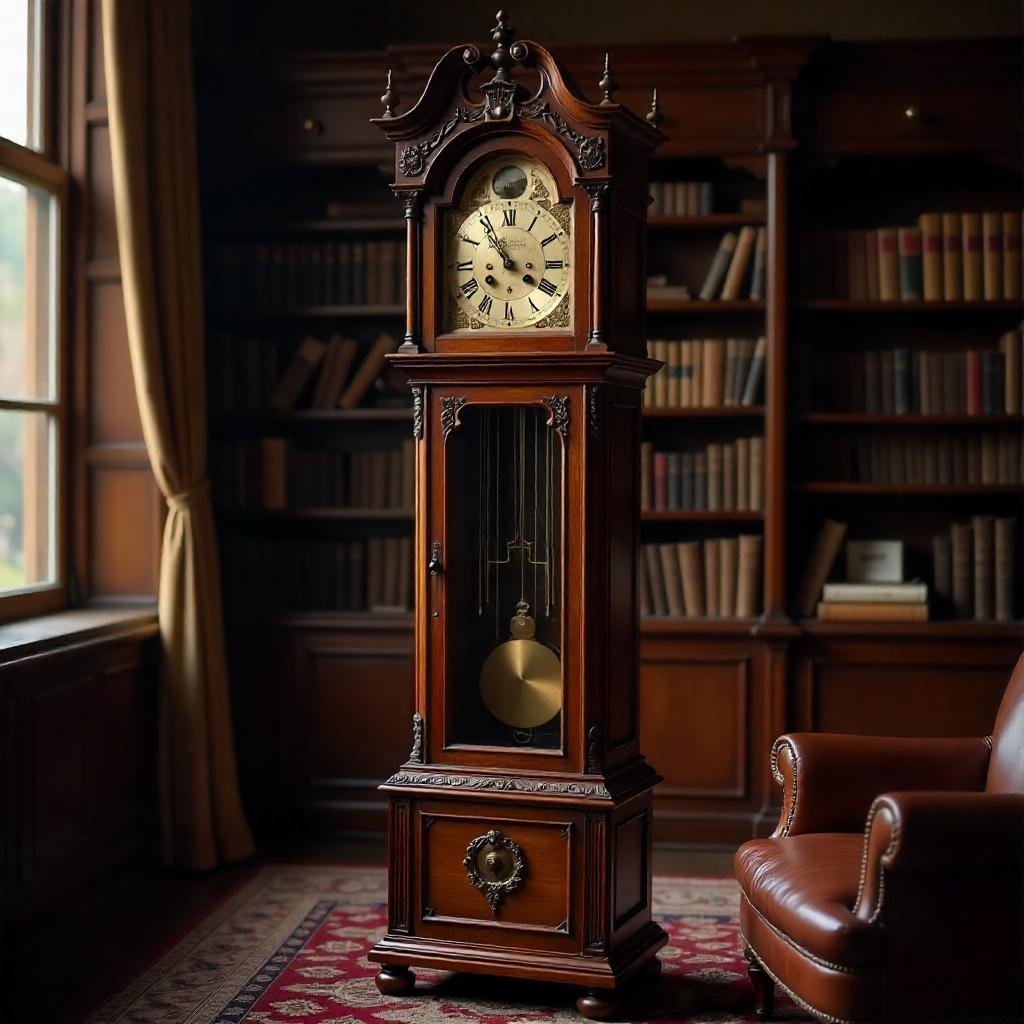
Battery/Quartz Clocks Precision Timekeeping Made Simple
The gentle tick-tock of a grandfather clock has welcomed families home for generations. Yet today’s homeowners face a choice their grandparents never had: the traditional weight-driven mechanical movement or the modern convenience of battery-powered quartz technology.
Sarah, a working mother from Denver, discovered this firsthand when she inherited her grandmother’s beautiful mahogany grandfather clock. The constant winding, occasional timing adjustments, and the need for professional maintenance every few years became overwhelming with her busy schedule. After researching alternatives, she chose a quartz grandfather clock that matched her grandmother’s style but fit her modern lifestyle perfectly.
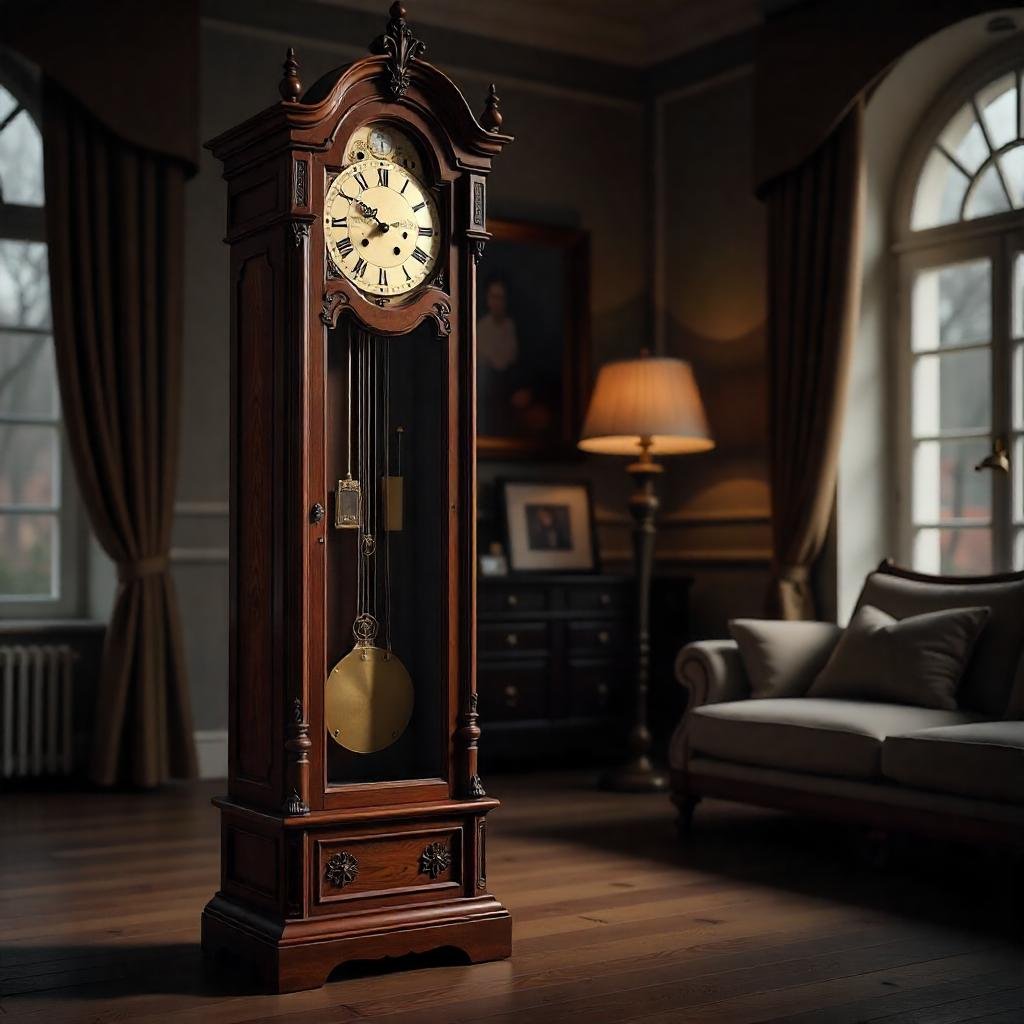
What Makes a Battery/Quartz Grandfather Clock Unique?
A Modern Twist on a Classic Design
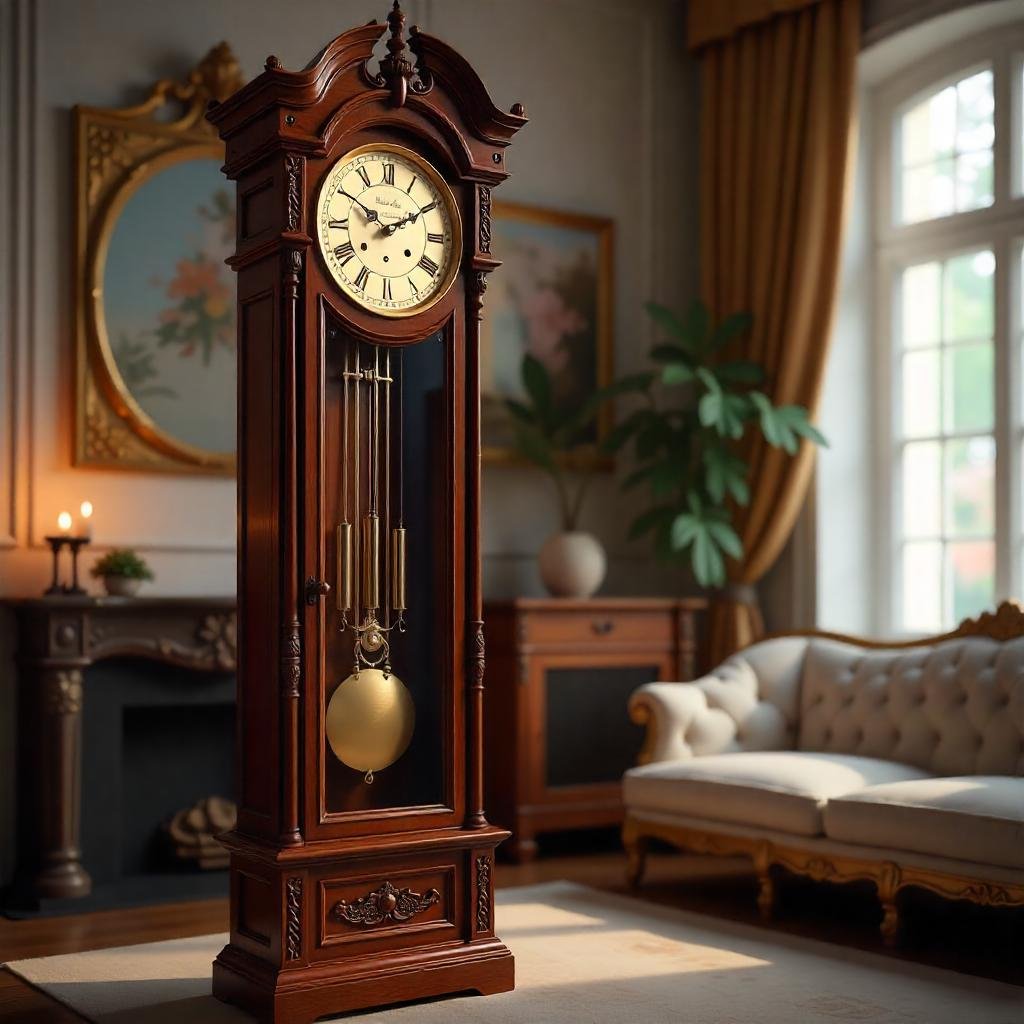
Quartz grandfather clocks preserve the stately appearance and dignified presence of traditional timepieces while incorporating twentieth-century precision technology. The towering case, ornate pendulum, and distinctive chimes remain unchanged, but the internal mechanism operates on an entirely different principle.
Unlike mechanical clocks that rely on weights, springs, and intricate gear systems, quartz movements use electronic circuits powered by standard batteries. This fundamental difference creates a timepiece that honors tradition while embracing practicality.
Key Design Elements That Remain Traditional:
- Classic wooden cases in oak, cherry, walnut, and mahogany
- Swinging pendulum for authentic visual appeal
- Westminster, Whittington, and St. Michael’s chimes
- Roman or Arabic numeral dials with brass accents
- Hand-carved decorative details and moldings
Why More Homes Are Choosing Quartz Over Mechanical
Modern families increasingly prefer quartz grandfather clocks for compelling reasons. Time constraints make weekly winding impractical for many households. Parents juggling work, children’s activities, and household responsibilities find the low-maintenance nature of quartz movements particularly appealing.
Professional couples often travel frequently, leaving traditional mechanical clocks to stop and require resetting upon their return. Quartz movements continue running accurately whether owners are present or away for weeks at a time.
Modern Lifestyle Factors:
Rental properties where permanent installations are problematic
Dual-income households with limited time for maintenance
Frequent business travel and extended vacations
Elderly homeowners who struggle with heavy weight winding
Apartment living with noise restrictions
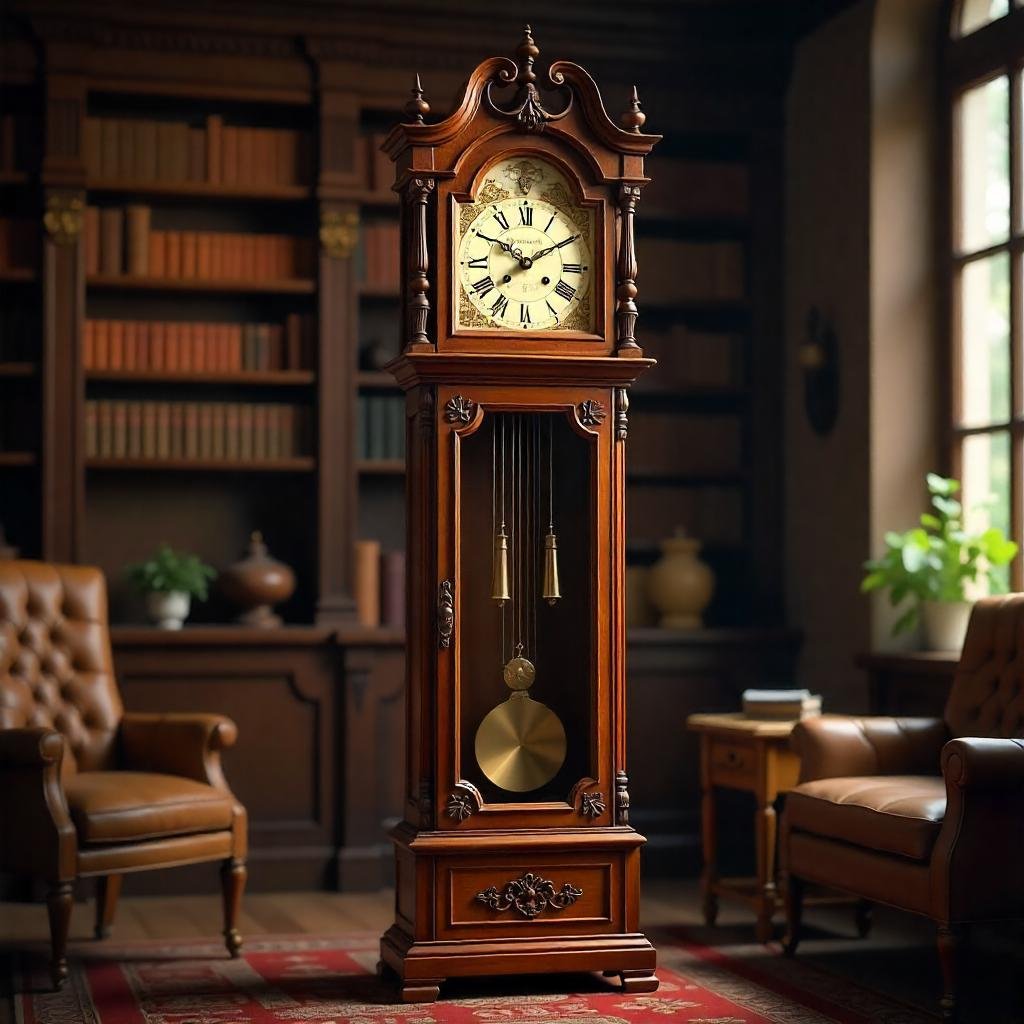
How Quartz Technology Powers a Grandfather Clock
The Science Behind Quartz Timekeeping
Quartz crystals possess a remarkable property called piezoelectricity. When electrical current passes through a quartz crystal, it vibrates at an incredibly consistent rate of 32,768 times per second. This natural frequency becomes the heartbeat of modern timekeeping.
Electronic circuits within the movement count these vibrations and convert them into the familiar one-second intervals that advance the clock hands. This process occurs silently and requires minimal energy, making it ideal for battery operation.
How the Battery Drives the Movement
A standard C or D battery typically powers the entire clock mechanism for 12 to 18 months. The battery supplies electricity to the quartz oscillator, electronic counting circuits, and small motors that move the hands and operate the chiming system.
The power consumption remains remarkably low because quartz movements require energy only for brief moments when advancing the hands or activating chimes. Between these intervals, the clock draws virtually no power, extending battery life significantly.
Power Distribution in Quartz Movements:
- Timekeeping circuit: 60% of total power consumption
- Hand movement motors: 25% of power usage
- Chiming mechanism: 10% during active hours
- Pendulum motor: 5% for decorative swing motion
Key Parts You Should Know About
The quartz movement assembly sits where traditional weight mechanisms once resided. This compact unit contains the quartz crystal, electronic circuits, and small motors in a housing roughly the size of a paperback book.
| Component | Function | Mechanical Equivalent |
|---|---|---|
| Quartz oscillator | Timekeeping source | Escapement mechanism |
| Circuit board | Controls all functions | Gear train system |
| Stepper motors | Move hands | Weight-driven wheels |
| Speaker / Chime rods | Sound production | Bronze tube chimes |
| Pendulum motor | Decorative swing | Gravity pendulum |
Essential Movement Components:
- Quartz crystal: Provides precise timing frequency
- Integrated circuit: Processes timing signals and controls functions
- Stepping motors: Convert electrical pulses to mechanical hand movement
- LED display: Shows battery status and programming options
- Volume control: Adjusts chime loudness for different environments
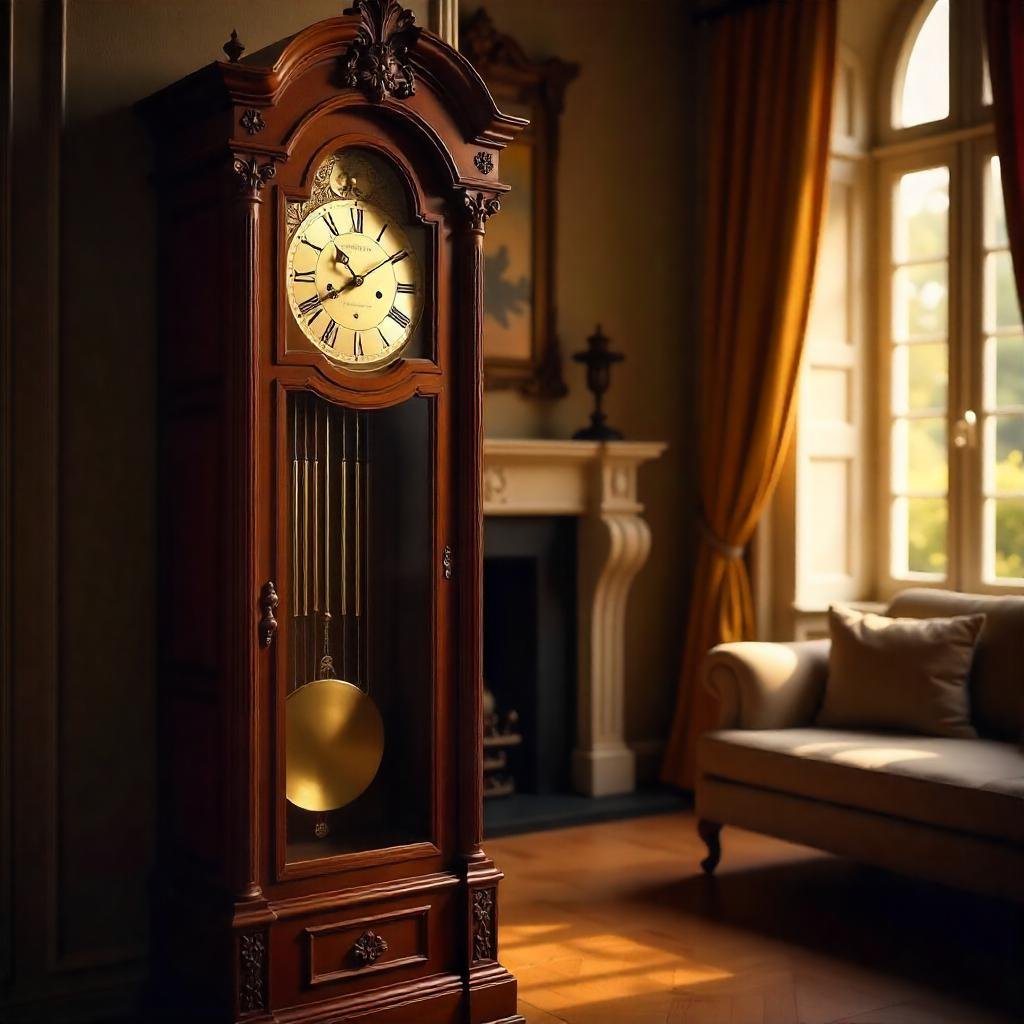
Benefits That Make Battery/Quartz Grandfather Clocks Worth It
Unmatched Timekeeping Accuracy
Quartz technology delivers precision that mechanical movements simply cannot match. While traditional grandfather clocks may gain or lose several minutes per week, quartz models typically maintain accuracy within 15 seconds per month.
This exceptional precision eliminates the frequent adjustments that mechanical clock owners must make. Families can rely on their grandfather clock as a primary timepiece rather than viewing it merely as decorative furniture.
Accuracy Comparison:
| Clock Type | Weekly Variation | Monthly Variation | Annual Variation |
|---|---|---|---|
| Mechanical | ±3–7 minutes | ±12–30 minutes | ±2.5–6 hours |
| Quartz | ±2–4 seconds | ±8–15 seconds | ±2–3 minutes |
Minimal Maintenance, Maximum Reliability
Traditional grandfather clocks demand regular attention that many homeowners find burdensome. Weekly winding, periodic oiling, and professional servicing create ongoing commitments that quartz movements eliminate almost entirely.
| Maintenance Task | Mechanical Clock | Quartz Clock |
|---|---|---|
| Weekly winding | Required | Not needed |
| Oil lubrication | Every 2–3 years | Never required |
| Professional service | Every 3–5 years | Rarely needed |
| Time adjustment | Monthly | Once or twice yearly |
| Battery replacement | N/A | Every 12–18 months |
| Cleaning | Monthly dusting, annual deep clean | Quarterly dusting only |
The simplicity of quartz maintenance particularly appeals to elderly homeowners who may struggle with the physical demands of winding heavy weights or reaching high mechanisms.
Maintenance Benefits:
- No weekly winding schedule to remember
- No risk of weights falling and causing damage
- No need for expensive house calls from clockmakers
- Simple battery replacement anyone can perform
- Dust-resistant sealed movements require minimal cleaning
Lightweight and Easy to Move
Mechanical grandfather clocks often weigh 150 to 300 pounds due to their cast iron weights, dense wood cases, and substantial brass mechanisms. Moving these timepieces requires professional movers and careful planning.
Quartz grandfather clocks typically weigh 60 to 120 pounds, making them manageable for household relocations. Young couples starting their first homes appreciate this flexibility, knowing they can take their clock with them as they move up in housing.
Weight Comparison by Size:
| Clock Height | Mechanical Weight | Quartz Weight | Weight Reduction |
|---|---|---|---|
| 6 feet | 120–180 lbs | 50–80 lbs | 58% lighter |
| 7 feet | 150–220 lbs | 60–100 lbs | 60% lighter |
| 8 feet | 200–300 lbs | 80–120 lbs | 60% lighter |
Perfect for Busy Lifestyles
Jennifer, a nurse working rotating shifts, shares her experience: “My mechanical grandfather clock would stop every time I worked consecutive night shifts and forgot to wind it. Now with my quartz model, it keeps perfect time whether I’m home or pulling double shifts at the hospital.”
This reliability resonates with modern families whose irregular schedules make consistent clock maintenance challenging. Business travelers, shift workers, and busy parents find quartz movements align perfectly with their unpredictable routines.
Lifestyle Advantages:
- Continues running during extended absences
- No special preparation needed before vacations
- Silent operation perfect for nurseries and bedrooms
- Programmable chimes for different daily schedules
- Multiple time zone display options available
Where Quartz Clocks Fall Short
Why They Don’t Offer the Same Charm as Mechanical Models
Purists argue that quartz grandfather clocks lack the soul and character of their mechanical counterparts. The rhythmic tick-tock of a mechanical escapement creates a living heartbeat that electronic circuits cannot replicate.
Traditional clockmakers spent centuries perfecting the intricate dance of gears, springs, and pendulums. This mechanical poetry appeals to those who appreciate human craftsmanship over technological efficiency.
What Enthusiasts Miss:
- The satisfying ritual of weekly winding
- Visible gear mechanisms through glass panels
- Natural variations in timekeeping that create personality
- The connection to centuries-old clockmaking traditions
- Potential for restoration and mechanical repair
Lifespan and Replacement Considerations
Well-maintained mechanical grandfather clocks can function for centuries, becoming treasured family heirlooms passed down through generations. Quartz movements, while reliable, typically require replacement after 10 to 20 years.
| Aspect | Mechanical Movement | Quartz Movement |
|---|---|---|
| Initial cost | $2,000 – $15,000+ | $800 – $3,500 |
| Annual maintenance | $300 – $800 | $50 – $150 |
| Movement replacement | Rarely needed | Every 15–20 years |
| Repair availability | Widely available | Limited after 10 years |
| Heirloom potential | Excellent | Moderate |
Electronic components inevitably fail over time, and replacement quartz movements may not perfectly match original specifications. This creates uncertainty for those hoping to pass their clocks to future generations.
Long-term Considerations:
- Circuit boards become obsolete as technology advances
- Replacement movements may have different chime selections
- Electronic components are not repairable like mechanical parts
- Battery compartments may corrode over time
- Software updates are impossible on older movements
Sound and Chime Limitations
Mechanical chimes produce rich, resonant tones through physical bronze tubes or rods struck by hammers. These natural harmonics create the warm, melodious sounds associated with quality timepieces.
Quartz chiming systems rely on electronic speakers or small mechanical strikers that often sound tinny or artificial compared to traditional chimes. Volume controls provide convenience, but they cannot recreate the authentic acoustic properties of hand-tuned bronze chimes.
Audio Quality Comparison:
| Feature | Mechanical Chimes | Quartz Chimes |
|---|---|---|
| Tone quality | Rich, resonant | Sometimes artificial |
| Volume consistency | Natural variation | Electronically controlled |
| Harmonic complexity | Full harmonic series | Limited frequency range |
| Room acoustics | Responds to space | Fixed speaker output |
| Customization | Physical tuning | Digital programming only |
Choosing the Right Battery/Quartz Grandfather Clock for Your Space
Matching Style to Your Interior Décor
Contemporary homes with clean lines and minimalist aesthetics pair well with sleek, modern grandfather clock cases featuring simple designs and neutral finishes. Traditional interiors benefit from ornate cases with carved details and rich wood stains that complement existing furniture.
Consider your ceiling height when selecting clock proportions. Standard 8-foot ceilings accommodate clocks up to 7 feet tall, while higher ceilings can handle more imposing 8-foot models that create dramatic focal points.
Style Guide by Interior Design:
- Traditional/Classic: Ornate wooden cases with carved details in walnut or mahogany
- Contemporary/Modern: Clean lines, minimal ornamentation in oak or painted finishes
- Transitional: Balanced designs combining traditional and modern elements
- Rustic/Country: Distressed finishes with simpler carved details in pine or oak
- Formal/Luxury: High-gloss finishes with brass accents and detailed craftsmanship
Understanding Movement Quality and Brand Reputation
Not all quartz movements offer equal performance and longevity. German and Japanese manufacturers typically produce superior movements with better accuracy and longer lifespans than generic alternatives.
| Movement Origin | Typical Accuracy | Expected Lifespan | Price Range |
|---|---|---|---|
| German (Hermle, Kieninger) | ±15 seconds/month | 20–25 years | $150–$400 |
| Japanese (Rhythm, Citizen) | ±15 seconds/month | 15–20 years | $100–$300 |
| American (Howard Miller) | ±20 seconds/month | 12–18 years | $80–$250 |
| Generic Asian | ±30 seconds/month | 8–12 years | $50–$150 |
Research manufacturer warranties and the availability of replacement parts before purchasing. Established clock companies typically offer better long-term support than generic furniture retailers.
Quality Indicators:
- Movement manufacturer clearly identified: Look for Hermle, Kieninger, or Rhythm labels
- Warranty length: Quality movements offer 2-5 year warranties
- Replacement part availability: Established brands maintain inventory longer
- Customer service reputation: Research online reviews and company responsiveness
- Technical specifications: Detailed accuracy ratings and feature descriptions
Ideal Placement for Best Visual Impact
Grandfather clocks command attention and should be positioned where they can be appreciated without overwhelming the space. Avoid placing them directly beside televisions or entertainment centers where they compete for visual dominance.
Corners work exceptionally well for grandfather clocks, creating cozy focal points while maximizing floor space efficiency. Ensure adequate clearance for the pendulum door to open fully without hitting furniture or walls.
Placement Guidelines:
- Living rooms: Position away from main seating to avoid overwhelming conversation areas
- Foyers/Entryways: Create impressive first impressions with proper ceiling clearance
- Dining rooms: Corner placement complements formal dining settings
- Hallways: Ensure sufficient width for safe passage around the clock
- Home offices: Choose locations where chimes won’t disrupt work calls
Acoustic Considerations:
- Hard surfaces like tile and hardwood amplify chime sounds
- Carpeted areas and upholstered furniture naturally reduce volume
- Avoid placement near bedrooms if using hourly chimes
- Consider neighbor proximity in apartments and condominiums
- Test chime volume at different times before finalizing placement
Care & Maintenance Made Simple
How Often to Replace the Battery
Most quartz grandfather clocks provide low battery warnings through dim displays, erratic timekeeping, or weak chimes. Replace batteries promptly when these symptoms appear to prevent damage from battery leakage.
High-quality alkaline batteries typically last 12 to 18 months in normal household conditions. Extreme temperatures, frequent chiming, and older movements may reduce battery life to 8-12 months.
Battery Replacement Schedule:
| Usage Pattern | Expected Battery Life | Replacement Frequency |
|---|---|---|
| Chimes on all day | 8–10 months | Every 8 months |
| Chimes daytime only | 12–15 months | Annually |
| Chimes off, time only | 18–24 months | Every 18 months |
| Extreme temperatures | 6–8 months | Twice yearly |
Battery Maintenance Tips:
- Use high-quality alkaline batteries from reputable manufacturers
- Remove batteries if storing the clock for extended periods
- Clean battery contacts with fine sandpaper if corrosion appears
- Keep spare batteries on hand to prevent disrupted timekeeping
- Mark replacement dates on your calendar for proactive maintenance
Quick Cleaning Without Damaging the Finish
Regular dusting prevents buildup that can interfere with moving parts and dull the finish of the case. Use microfiber cloths or soft cotton rags to avoid scratching delicate surfaces.
Wood cases benefit from the application of appropriate furniture polish, applied sparingly every three to six months. Avoid spray cleaners near the movement area, as moisture can damage electronic components.
Cleaning Supply Checklist:
- Microfiber cloths: For dust removal without scratching
- Soft-bristle brush: Reaches carved details and crevices
- Wood furniture polish: Maintains case finish and appearance
- Glass cleaner: For dial and door panels (applied to cloth first)
- Cotton swabs: Detail cleaning around small components
Step-by-Step Cleaning Process:
- Stop the pendulum and remove batteries for safety
- Dust the case using microfiber cloths with light pressure
- Clean carved details with soft brushes to remove embedded dust
- Polish wood surfaces following the grain direction with appropriate products
- Clean glass panels using lint-free cloths and streak-free cleaners
- Reinstall batteries and restart the pendulum after cleaning
Fixing Common Issues Yourself
Most quartz grandfather clock problems involve simple adjustments that homeowners can handle without professional service calls. Understanding basic troubleshooting saves time and money while keeping your clock running smoothly.
Common Problems and Solutions:
| Problem | Likely Cause | DIY Solution |
|---|---|---|
| Clock stops running | Dead battery | Gently push hands firmly onto the spindle |
| Hands move incorrectly | Loose hand assembly | Adjust the volume control knob |
| No chimes | Volume turned down | Replace the battery immediately |
| Weak chimes | Low battery | Follow the manual for rate adjustment |
| Time runs fast/slow | Electronic adjustment needed | Follow manual for rate adjustment |
When to Call Professionals:
- Movement replacement after 15-20 years of service
- Electronic circuit board failures beyond basic troubleshooting
- Physical damage to the case or glass components requires skilled repair
- Chime mechanism failures involving internal mechanical parts
- Warranty work that requires authorized service technician visits
Top-Rated Brands & Models to Consider
Trusted Names in Quartz Grandfather Clocks
Established clockmakers with decades of experience typically produce the most reliable and well-supported quartz grandfather clocks. These companies invest in quality movements and maintain customer service long after purchase.
Premium Manufacturer Rankings:
- Howard Miller: American heritage brand with extensive model selection
- Hermle: German precision engineering with superior movements
- Ridgeway: Traditional styling with modern reliability
- Kieninger: German craftsmanship focused on accuracy and longevity
- Rhythm: Japanese technology leader in quartz movement innovation
Brand Comparison Overview:
| Brand | Country | Price Range | Warranty | Speciality |
|---|---|---|---|---|
| Howard Miller | USA | $800–$4,000 | 2 years | Wide selection, traditional styling |
| Hermle | Germany | $1,200–$6,000 | 3 years | Premium movements, accuracy |
| Ridgeway | USA | $1,000–$3,500 | 2 years | Classic American designs |
| Kieninger | Germany | $2,000–$8,000 | 5 years | Luxury models, superior craftsmanship |
| Rhythm | Japan | $600–$2,500 | 1 year | Innovative features, modern styling |
Best Budget-Friendly Picks
Quality quartz grandfather clocks are available at modest prices for families seeking traditional elegance without premium costs. These models offer reliable timekeeping and attractive styling while maintaining reasonable price points.
Top Budget Recommendations:
- Howard Miller Nicea: Classic oak case with Westminster chimes under $1,000
- Rhythm Crystal Palace: Contemporary design with multiple chime options at $800
- Coaster Furniture Traditional: Simple styling with reliable movement at $600
- Acme Furniture Grandfather: Basic functionality with an attractive case at $500
Budget Shopping Tips:
- Look for end-of-season sales and clearance events
- Consider floor models with minor cosmetic flaws for significant savings
- Compare online retailers with local furniture stores for the best pricing
- Factor in delivery costs for large items when comparing prices
- Check manufacturer outlet stores for discontinued models at reduced prices
Luxury Options That Stand Out
High-end quartz grandfather clocks combine premium materials, superior movements, and exceptional craftsmanship for discriminating buyers who demand the finest quality.
Luxury Feature Highlights:
- Hand-selected wood grains with book-matched veneers
- German Hermle movements with 20+ year lifespans
- Hand-carved decorative elements by skilled craftsmen
- Brass mechanical chimes for authentic sound quality
- Multiple time zone displays and advanced programming features
Premium Model Showcase:
| Model | Brand | Price | Key Features |
|---|---|---|---|
| Hermle Grandfather Clock 01220 | Hermle | $5,500 | German movement, walnut case, mechanical chimes |
| Howard Miller Presidential Collection | Howard Miller | $4,200 | Hand-carved details, premium finish, lifetime warranty |
| Kieninger Harrison | Kieninger | $7,800 | Museum-quality case, 25-year movement warranty |
| Ridgeway Richardson | Ridgeway | $3,800 | Solid hardwood, hand-rubbed finish, premium movement |
Investment Value Considerations:
- Premium brands maintain better resale values over time
- Superior movements reduce long-term ownership costs
- Quality cases withstand decades of use without significant wear
- Established manufacturers provide ongoing parts and service support
- Luxury models often become family heirlooms despite quartz technology
Final Thoughts – Is a Battery/Quartz Grandfather Clock Right for You?
The decision between mechanical and quartz grandfather clocks ultimately depends on your personal priorities, lifestyle, and relationship with timekeeping traditions. Neither choice is inherently superior; each serves different needs and preferences.
Choose a quartz grandfather clock if you value convenience, accuracy, and low maintenance over traditional mechanical charm. Modern families with busy schedules, frequent travelers, and those who view clocks primarily as functional timepieces will find quartz technology perfectly suited to their needs.
Consider mechanical movements if you appreciate the ritual of clock maintenance, enjoy the connection to clockmaking history, and plan to pass your timepiece to future generations. The higher maintenance requirements may actually enhance your relationship with the clock for some owners.
Decision Framework Questions:
- Do you have time for weekly winding and periodic maintenance?
- Is perfect timekeeping accuracy important for your daily routine?
- Are you planning to move residences in the coming years?
- Do you travel frequently or have irregular schedules?
- Is this clock intended as a future family heirloom?
Final Recommendations by Lifestyle:
- Busy professionals: Quartz for reliability and low maintenance
- Retirees with time: Either option is based on personal preference
- Young families: Quartz for safety and convenience
- Clock enthusiasts: Mechanical for traditional experience
- Frequent movers: Quartz for portability and durability
The modern quartz grandfather clock represents a successful marriage of traditional aesthetics with contemporary technology. While purists may prefer mechanical movements, thousands of families have discovered that quartz technology delivers the stately presence and reliable service they desire from their grandfather clocks.
Your choice should reflect your personal values, practical needs, and long-term expectations for this significant addition to your home. Both mechanical and quartz grandfather clocks can provide years of satisfaction when properly selected and maintained according to their specific requirements.










Post Comment