
Atomic Clocks vs Grandfather Clocks Which One Wins?
1. Understanding the Atomic Clock: How It Works and Why It Matters
1.1 What Is an Atomic Clock?
An atomic clock is the most precise timekeeping device ever created, using the natural vibrations of atoms to measure time with extraordinary accuracy. Instead of relying on mechanical gears or pendulums like traditional clocks, atomic clocks operate by monitoring the frequency of electromagnetic radiation emitted or absorbed by atoms, most commonly cesium-133 or rubidium-87. These atoms resonate at highly predictable rates, allowing atomic clocks to measure seconds with an error margin of only one second in millions of years.
The concept of atomic timekeeping has transformed global systems, enabling synchronized operations in GPS navigation, internet data transfer, scientific research, and even financial trading. Terms like “atomic time,” “cesium atomic clock,” “rubidium clock,” and “NIST atomic clock” all stem from the standardization and accuracy that atomic clocks provide. This level of reliability places atomic clocks leagues ahead of mechanical timepieces, including iconic styles like the grandfather clock.
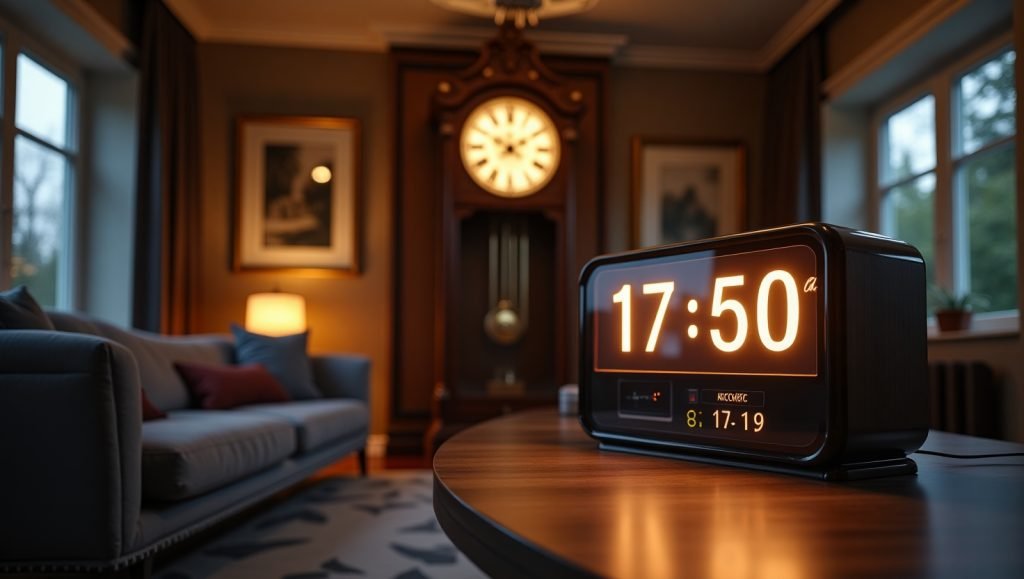
1.2 How Does an Atomic Clock Work?
At the core of every atomic clock is a principle known as atomic resonance. Cesium-133 atoms, when exposed to microwave radiation at a very specific frequency (9,192,631,770 Hz), change their energy state. Atomic clocks generate microwaves and tune them until they perfectly match the resonance frequency of cesium atoms. Each correct match is counted as one second, creating an extremely consistent measure of time.
This process requires a vacuum chamber, a magnetic field, and laser cooling in advanced versions. The atoms are isolated to prevent interference, and the feedback loop ensures the microwaves stay locked on the resonance frequency. Devices like the “chip-scale atomic clock (CSAC)” have miniaturized this technology, making atomic accuracy portable. Compare this to a grandfather clock, which relies on the oscillation of a pendulum and escapement gear; clearly, atomic precision outpaces traditional mechanisms by orders of magnitude.
1.3 Why Accuracy in Timekeeping Is Crucial
The extreme accuracy of atomic clocks has become the backbone of modern civilization. Everything from internet communication to banking, air traffic control to satellite synchronization, relies on coordinated universal time (UTC), derived from atomic clocks. These devices regulate time zones like Eastern Time, Central Time, and even control military operations based on atomic clock central standard time.
With global networks connected across continents, even a microsecond discrepancy can have ripple effects. Atomic clocks eliminate this uncertainty. Whether you’re viewing the “atomic clock time now” online or using a “digital atomic wall clock” in your lab, you’re benefiting from this accuracy. Even comparison clocks like a grandfather clock, though elegant and symbolic, can’t compete with the reliability demanded by today’s technologies.
2. Types of Atomic Clocks and Their Applications
2.1 Cesium, Rubidium, and Hydrogen Clocks Explained
There are various types of atomic clocks, each based on different atomic transitions. The most widely recognized is the cesium atomic clock, which defines the international second. Cesium clocks are the gold standard in institutions like NIST (National Institute of Standards and Technology).
Rubidium atomic clocks are less accurate but more compact and cost-effective, making them ideal for commercial devices like telecommunications or GPS systems. Hydrogen maser clocks, though more complex and expensive, offer high short-term stability and are used in radio astronomy and deep-space navigation.
Each clock type is selected based on its precision, size, energy requirement, and application. Whether embedded in satellites or used in a “sharp atomic clock” or “La Crosse atomic clock” at home, the underlying technology varies, but the core principle of atomic frequency measurement remains the same.

2.2 Commercial Uses of Atomic Clocks
Atomic clocks aren’t just for scientists or government labs—they’ve gone commercial. Devices like “digital atomic wall clocks,” “atomic alarm clocks,” and “atomic projection clocks” are now available for home and office use. Brands such as La Crosse, Sharp, and SkyScan produce these clocks, making atomic precision accessible to everyday users.
These commercial clocks often sync via radio signals from national atomic time centers (e.g., the U.S. Atomic Clock in Boulder, Colorado). This ensures they auto-correct daily and adjust for daylight savings. Compared to a grandfather clock, which may drift several minutes over months, an atomic wall clock remains nearly perfect indefinitely. This reliability has made atomic clocks a staple in environments where precision matters, from schools to hospitals to tech companies.
2.3 Scientific and Industrial Applications
In science and industry, atomic clocks are indispensable. Laboratories rely on atomic timekeeping to run synchronized experiments, GPS satellites use it to triangulate accurate locations, and financial institutions timestamp trades down to the millisecond. Large-scale atomic clocks like those maintained by NIST and NASA are integrated into global networks for time distribution.
Emerging technologies like quantum computing and 6G telecommunications will demand even more precision, likely expanding the use of “chip-scale atomic clocks.” Industries involved in space exploration, like those using “rubidium clocks” on spacecraft, require this pinpoint accuracy. While a grandfather clock serves as a historical reference, it highlights how far timekeeping has evolved to support scientific innovation.
3. Comparing Atomic Clocks with Traditional Timekeepers
3.1 Atomic Clock vs. Grandfather Clock: A Technical Comparison
The atomic clock and thegrandfather clock represent two entirely different philosophies of timekeeping. A grandfather clock operates mechanically using a pendulum and weight-driven gears, where gravity regulates time through oscillation. While this was revolutionary centuries ago, it suffers from environmental influences; temperature, humidity, and even dust can affect its accuracy.
An atomic clock, in contrast, uses atomic vibrations that are unaffected by such variables. It measures time by the electromagnetic frequencies of cesium or rubidium atoms, achieving an accuracy that a mechanical system could never approach. Where a grandfather clock may drift by several seconds per day, an atomic clock might not drift for millions of years. This leap in precision has real-world implications, especially in technology-driven environments.

3.2 Design, Aesthetics, and Cultural Value
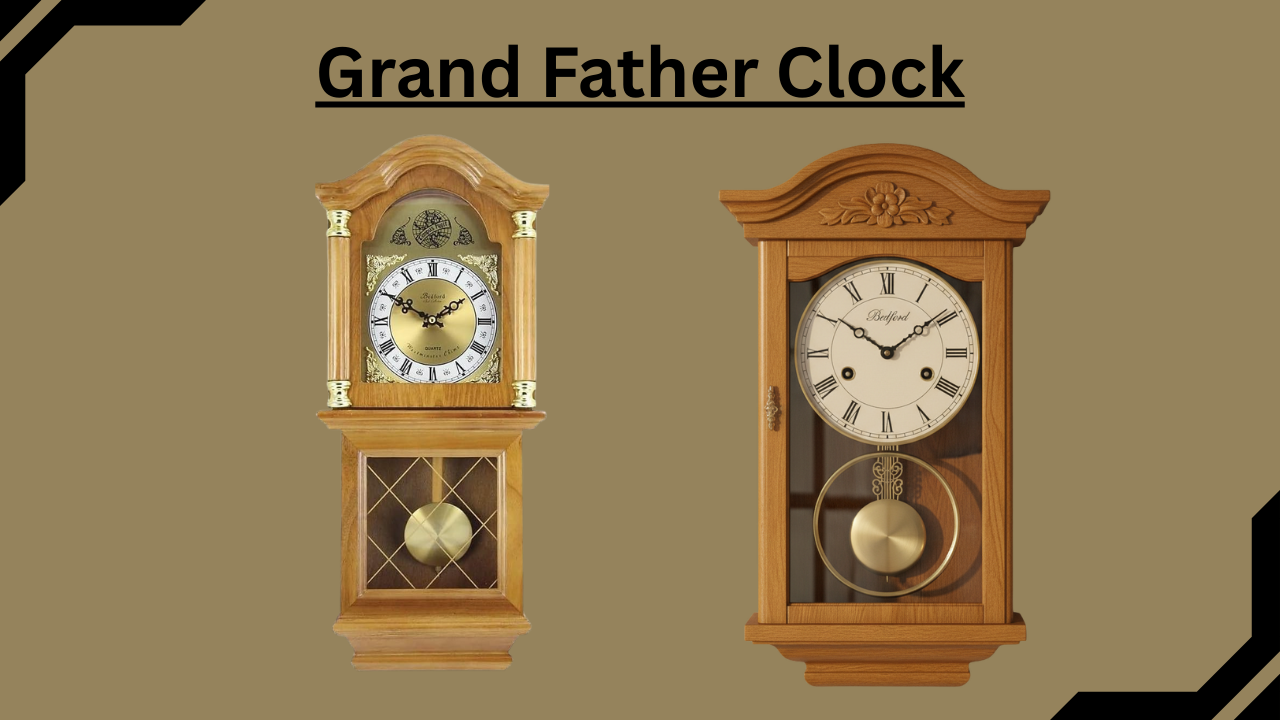
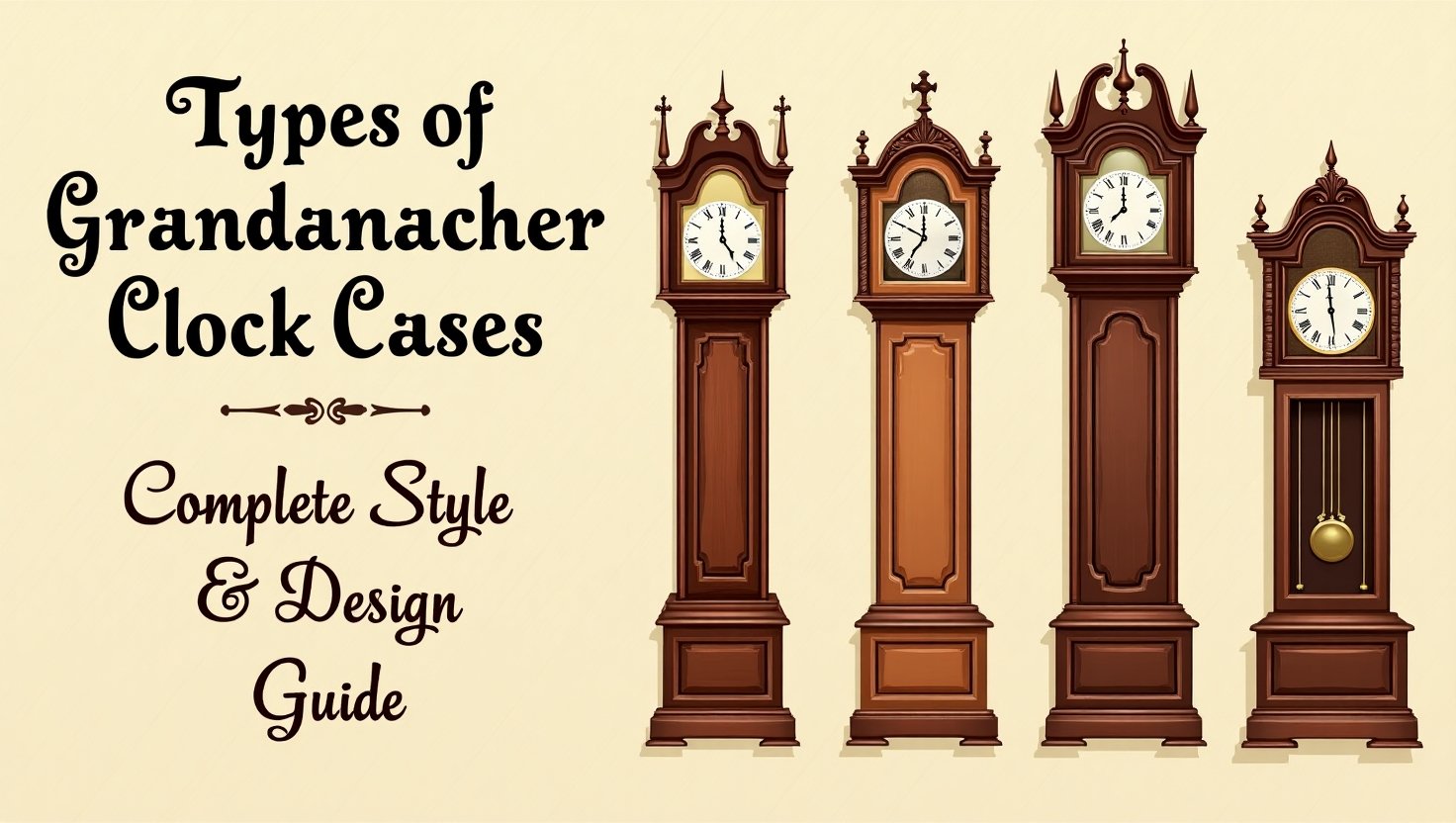
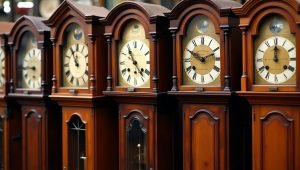
Though atomic clocks win the battle of accuracy, grandfather clocks hold immense aesthetic and cultural value. Their towering wooden frames, chimes, and intricate craftsmanship make them more than timekeepers; they’re heirlooms and symbols of legacy. Interior designers and antique collectors value them for the character they bring to a space.
Atomic clocks, by contrast, prioritize function over form. Whether it’s a sleek “digital atomic wall clock” or a minimal “sharp atomic clock,” the design is often simple and utilitarian. However, recent innovations include stylish smart home versions, combining atomic accuracy with modern design. So while a grandfather clock can’t compete in precision, it surpasses in emotional and decorative appeal.
3.3 Real-World Use Cases: Which One Should You Choose?
Choosing between an atomic and a grandfather clock depends on the purpose. If you’re managing time-critical tasks, like running a tech lab, syncing financial trades, or managing a satellite, only an atomic clock will suffice. For homes, especially in rural areas, devices like a “La Crosse atomic clock” or “SkyScan wall clock” that sync to atomic time are practical.
But if you’re curating a vintage aesthetic or adding a focal point to a traditional room, a grandfather clock remains irreplaceable. It’s about utility versus symbolism. You wouldn’t use a grandfather clock to time a rocket launch, but you wouldn’t replace your family’s heirloom with a plastic digital display either. Both clocks have a place, just in very different contexts.
4. Atomic Clock Accuracy: Measuring Time to the Billionth of a Second
4.1 How Accurate Are Atomic Clocks?
Atomic clocks are the most accurate instruments humanity has ever built for time measurement. The most precise atomic clocks today, such as optical lattice clocks, can maintain time without losing or gaining a second for over 30 billion years, which is longer than the age of the universe itself. These devices use the electromagnetic oscillations of atoms like cesium-133 or strontium, ticking at incredibly high frequencies in the microwave or optical range. Each oscillation is identical to the last, ensuring stable, repeatable intervals of time.
Standard cesium-based atomic clocks, used to define the SI second, operate at 9,192,631,770 transitions per second. Compare this to a grandfather clock, where accuracy is affected by the length of its pendulum, room temperature, and mechanical wear. Even quartz clocks, once thought revolutionary, drift seconds per month. In contrast, atomic clocks measure down to nanoseconds, enabling ultra-precise timekeeping essential for applications like GPS, telecommunications, and data networks.

4.2 Factors Influencing Atomic Clock Precision
Despite their near-perfect performance, several technical and environmental factors influence atomic clock precision. First is atomic transition stability. The more stable the resonance frequency, the better the clock performs—this is why newer clocks use strontium or ytterbium in optical lattice structures, which offer even narrower linewidths than cesium.
Temperature is also critical. Fluctuations can cause atoms to move unpredictably, which is why atomic clocks operate in ultra-high vacuum chambers and are often laser-cooled to just microkelvins above absolute zero. Magnetic fields must also be controlled, as they can shift atomic energy levels. That’s why shielding and magnetic traps are built into precision systems.
Even gravity plays a role. According to Einstein’s theory of relativity, a clock on a mountaintop ticks faster than one at sea level. This “gravitational time dilation” is significant enough that atomic clocks on GPS satellites are calibrated to compensate for altitude. This level of environmental sensitivity is unthinkable in traditional timepieces like a grandfather clock, where such corrections are neither measurable nor manageable.
4.3 Timekeeping Standards: From NIST to International Atomic Time (TAI)
The standardization of atomic time is governed by the top scientific institutions worldwide. In the United States, the National Institute of Standards and Technology (NIST) maintains atomic clocks that contribute to Coordinated Universal Time (UTC). Multiple NIST devices—using cesium fountains and hydrogen masers—work in tandem with similar facilities across Europe and Asia to calculate International Atomic Time (TAI).
TAI is a weighted average of more than 400 atomic clocks in over 80 national labs. These include NIST F2 (a cesium fountain clock), and PHARAO (used in space-based timekeeping). From these calculations, leap seconds are occasionally added to UTC to keep it in sync with Earth’s slightly irregular rotation.
This international system is what makes it possible to have synchronized atomic clocks on Earth, in satellites, and even on spacecraft. When you check the “atomic clock time now” or sync your digital atomic clock at home, you’re tapping into this global time grid. Grandfather clocks, while historically valuable, operate in isolation and cannot participate in this shared standard.
5. Atomic Clocks and GPS: Navigating with Nanosecond Precision
5.1 The Role of Atomic Time in GPS Technology
GPS (Global Positioning System) fundamentally depends on atomic clocks. Each GPS satellite carries at least four atomic clocks, typically rubidium or cesium-based, and broadcasts precise time signals to Earth. Your GPS receiver calculates your location by measuring the time delay between when the signal was sent and when it was received, using trilateration with at least four satellites.
If the clock on just one satellite were off by even one microsecond, your position could be wrong by hundreds of meters. This is why atomic clocks are non-negotiable in satellite systems. Their nanosecond-level accuracy ensures your phone knows whether you’re in your driveway or a block away. Without atomic time, GPS simply wouldn’t work.
This technological marvel has no parallel in legacy clocks like grandfather clocks, which were once used for navigation at sea (marine chronometers), but now stand as ornamental pieces. Where they offered approximate time in hours and minutes, atomic clocks power a positioning network with sub-meter accuracy in real time.

5.2 Time Correction and Synchronization in Satellites
The Earth’s gravity and orbital dynamics introduce complex time distortions, which must be corrected for GPS to remain reliable. Einstein’s general relativity predicts that clocks on satellites run faster than those on Earth by about 45 microseconds per day, while special relativity causes them to tick slower by about 7 microseconds due to their high orbital speed. The net gain of 38 microseconds per day is compensated for before launch by adjusting the frequency of each atomic clock.
Moreover, ground stations continuously monitor satellite clocks, comparing them with Earth-based references like the NIST atomic clock. If any drift is detected, the system issues time correction signals to maintain synchronization.
In contrast, a grandfather clock cannot even detect time drift unless visually checked, and that too in seconds per day. It’s a remarkable testament to how far we’ve come: from weight-driven mechanics to space-based atomic oscillations that keep the world’s location systems functioning seamlessly.
5.3 Real-World Applications of GPS Atomic Timekeeping
The applications of GPS-based atomic timekeeping stretch far beyond simple navigation. In agriculture, precision farming uses GPS to guide tractors within centimeters. In telecommunications, network time protocols (NTP) align data transfer across the internet. Financial markets timestamp trades with nanosecond accuracy, ensuring transaction integrity across global exchanges.
Even electric grids depend on time-stamped data to maintain frequency and load balance. Emergency services use GPS timestamps to coordinate dispatch. These systems would falter with even minor clock discrepancies, highlighting how vital atomic synchronization is.
When you look at a grandfather clock in your living room, it reflects a romantic past, tick-tocking gracefully and chiming hourly. But it’s the atomic clock in a satellite overhead that’s making sure your Uber arrives at the right address, your email goes out at the right second, and your bank transaction is processed correctly, all thanks to a global timekeeping framework invisible to the naked eye.
6. Buying an Atomic Clock: What You Need to Know
6.1 Home Atomic Clocks: Features and Options
Thanks to radio-synchronization technology, home atomic clocks are now widely available and affordable. These consumer-grade devices aren’t true atomic clocks (they don’t contain cesium or rubidium chambers), but instead receive signals from national atomic time sources like WWVB in the U.S., which broadcasts from Colorado.
Popular products include La Crosse Technology atomic clocks, Sharp atomic wall clocks, and SkyScan projection clocks. These clocks auto-adjust for daylight saving time, keep perfect sync with UTC, and often display indoor/outdoor temperature, humidity, and moon phases. Their appeal lies in their set-it-and-forget-it functionality.
Unlike a grandfather clock, which must be manually wound and adjusted periodically, home atomic clocks offer precision with zero maintenance. They’re ideal for homes, offices, schools, and healthcare settings where dependable timekeeping is a must.

6.2 Choosing Between Digital, Wall-Mounted, and Projection Models
The market offers several formats of radio-controlled atomic clocks:
- Digital Atomic Clocks: Great for bedrooms or offices, these typically show large digits and extra info like alarms or weather data.
- Wall-Mounted Clocks: Ideal for common areas or commercial spaces, where visibility and reliability are key.
- Projection Clocks: These cast the time on a wall or ceiling, often used in bedrooms for nighttime viewing.
Before purchasing, verify whether the clock is compatible with your country’s time broadcast signal. Some models sync only with WWVB (U.S.), DCF77 (Germany), or MSF (UK). For remote areas or poor signal zones, these clocks might struggle to update.
A grandfather clock, by contrast, makes a powerful visual and emotional statement but requires space, care, and manual tuning. If your goal is aesthetics and tradition, it’s unmatched. But for accurate, modern timekeeping, atomic clocks deliver practicality with minimal effort.
6.3 Integrating Atomic Time into Your Smart Home
As smart homes become more advanced, integrating atomic time adds a level of synchronization that benefits the entire system. Many atomic clocks today come with Bluetooth or Wi-Fi connectivity, allowing them to interact with smart assistants like Alexa, Google Home, or Apple HomeKit.
When your wall clock syncs to the same time standard as your router, thermostat, and security system, you reduce the chances of automation conflicts and ensure precise event timing. Imagine your home security cameras and door locks timestamping activity with millisecond accuracy—that’s atomic-level peace of mind.
By contrast, traditional clocks—even smartified grandfather clocks—can’t communicate with a digital ecosystem. They stand alone, beautiful but disconnected. Atomic clocks, on the other hand, bridge timekeeping and smart technology in ways that elevate everyday life.
7. The Science Behind Atomic Clock Synchronization
7.1 How Atomic Clocks Stay in Sync Worldwide
Atomic clocks don’t work in isolation. They form part of an intricate, international timekeeping web where synchronization is maintained across hundreds of timekeeping labs. At the core is International Atomic Time (TAI), calculated by averaging over 400 highly precise atomic clocks in more than 80 institutions. The process involves constant data exchange, noise filtering, and clock weighting based on each unit’s stability and drift profile.
NIST (National Institute of Standards and Technology) in the U.S., PTB in Germany, and NPL in the UK are just a few of the key contributors. These organizations submit clock data to the Bureau International des Poids et Mesures (BIPM), which calculates TAI. Once finalized, it’s disseminated as the time standard across the globe via Coordinated Universal Time (UTC).
This level of timekeeping collaboration simply doesn’t exist with traditional mechanisms. A grandfather clock, no matter how well-maintained, cannot synchronize with any other timepiece unless manually adjusted. In contrast, atomic clock networks operate autonomously, with nanosecond alignment ensuring that the same second ticks identically in New York, Tokyo, and Paris.

7.2 The Role of GPS and Radio Signals in Synchronization
The seamless operation of synchronized atomic clocks would be impossible without satellite and terrestrial radio technology. In the U.S., the WWVB radio station in Colorado broadcasts a continuous low-frequency time signal from NIST’s atomic clock. Consumer atomic clocks decode this signal automatically, adjusting themselves for leap seconds, daylight saving time, and drift correction.
More advanced synchronization is achieved through GNSS systems, like GPS, GLONASS, Galileo, and BeiDou. GPS satellites, equipped with on-board atomic clocks, constantly transmit timestamped signals. Ground-based atomic clocks receive and reconcile these signals to maintain global UTC alignment.
This isn’t just about convenience; it’s essential. Power grids, financial systems, and air traffic control depend on ultra-precise time signals. The traditional pendulum-based grandfather clock has no means to receive updates, making it reliable only for decorative and ceremonial purposes, not for any system requiring precision.
7.3 Challenges in Maintaining Synchronization Accuracy
Despite their advanced design, even atomic clocks face synchronization hurdles. Environmental factors like temperature shifts, magnetic interference, and gravitational effects can subtly distort atomic oscillation. For instance, two identical atomic clocks placed at different altitudes will diverge due to relativistic time dilation, as explained by Einstein’s theories.
To counter these variables, atomic clocks are often housed in controlled vacuum chambers, kept at ultra-low temperatures, and shielded from external fields. Additionally, comparison algorithms analyze deviations between multiple clocks and automatically calibrate them against master references.
Another challenge is latency in signal transmission. When synchronization data is sent over long distances, especially via satellite, there’s inherent delay. These systems compensate using time transfer algorithms, calculating propagation delay down to nanoseconds.
Compare this to a grandfather clock: if its pendulum shortens in winter due to contraction, it gains time—there’s no automatic correction. Atomic systems, on the other hand, correct in real-time, demonstrating the sophistication and reliability required for modern civilization’s heartbeat.
8. Atomic Clocks vs. Traditional Clocks: What Sets Them Apart
8.1 Comparing Mechanisms: Atomic vs. Mechanical Pendulum Clocks
At their core, traditional clocks and atomic clocks measure time through oscillations, but the scale and stability of these oscillations couldn’t be more different. In a grandfather clock, the pendulum swings once every second or so, governed by gravity and inertia. Over time, wear, air resistance, and temperature fluctuations degrade its accuracy, requiring regular maintenance.
Atomic clocks, by contrast, rely on microwave or optical transitions in atoms like cesium or strontium. These transitions occur billions of times per second and are completely unaffected by environmental wear. A cesium clock ticks at 9,192,631,770 Hz with stunning regularity, offering a standard so dependable it redefines what we understand as a “second.”
While the grandfather clock embodies craftsmanship and legacy, atomic clocks represent science’s ability to quantify time with near-perfect precision. It’s not a matter of which is “better,” but rather which serves what purpose; one is heritage, the other is infrastructure.

8.2 Accuracy, Drift, and Long-Term Stability
Drift is a clock’s deviation from the correct time, and this is where atomic clocks dominate. A quality pendulum clock may gain or lose a few seconds per week. Quartz clocks are more stable, but still drift milliseconds daily. But an atomic clock? Its drift can be less than one second in 100 million years.
This isn’t just scientific bravado; the consequences of time drift are immense. A few microseconds of discrepancy can cause data packet errors, GPS miscalculations, or network synchronization failures. That’s why systems like financial trading platforms, telecom networks, and defense operations rely on atomic clock accuracy.
A grandfather clock, even with a well-calibrated escapement mechanism, must be corrected manually. It simply lacks the feedback systems that atomic clocks use to detect and correct drift through international time standards.
8.3 Use Cases: Practicality vs. Symbolism
Grandfather clocks are timeless, not in terms of accuracy, but in cultural and aesthetic value. They carry history, often passed down through generations. Their chiming mechanisms, wood-carved cases, and mechanical beauty make them a centerpiece of homes, embodying an era where craftsmanship was king.
But in terms of practicality, atomic clocks are indispensable. Every time you unlock your phone with a fingerprint, stream a video, or tap a contactless card, atomic time is at work. Banks use it to timestamp transactions; internet providers use it to allocate bandwidth; military systems use it for secure communication protocols.
In this comparison, it’s not tradition vs. technology, it’s emotion vs. efficiency. One you wind weekly with care, the other winds the world’s digital core every billionth of a second.
9. The Future of Atomic Timekeeping
9.1 Optical Lattice Clocks: The Next Generation
The frontier of timekeeping has shifted from microwave-based cesium clocks to optical lattice clocks, instruments that use visible light transitions in atoms like strontium, ytterbium, or aluminum ions. These transitions occur at even higher frequencies, in the quadrillion-hertz range, giving these clocks 100 times greater precision than current cesium standards.
Scientists have already demonstrated that optical lattice clocks could eventually replace cesium as the international definition of the second. These clocks can detect minuscule time dilation caused by a 1-centimeter change in altitude, a sensitivity unimaginable a decade ago.
This is light-years beyond what a grandfather clock, or even a quartz one, could ever approach. While mechanical timekeeping has peaked, atomic innovation continues to redefine how we experience and measure time itself.
9.2 Quantum Clocks and Deep Space Navigation
Future generations of atomic clocks will integrate with quantum technology, where quantum entanglement and superposition may lead to clocks that aren’t just accurate, but resistant to all forms of noise and interference. These quantum clocks could maintain perfect time even in deep space, essential for interplanetary navigation.
NASA is already experimenting with Deep Space Atomic Clocks (DSAC) that allow spacecraft to autonomously determine their position without relying on Earth-based updates. This will enable more efficient missions to Mars, Jupiter, and beyond.
While grandfather clocks connect us to Earth’s heritage, quantum-based atomic clocks will connect us to our celestial future. They’re not just keeping time, they’re paving the road to interstellar precision.
9.3 Replacing the Definition of the Second
Redefining the second may sound academic, but it has vast implications. Today’s SI second is based on cesium transitions. However, as optical clocks prove their reliability and reproducibility, the international scientific community is preparing to redefine the second based on optical frequencies.
This change would cascade through science, technology, and communication systems, improving everything from GPS resolution to quantum computing synchronization. Standards organizations like BIPM, NIST, and NPL are already testing consensus models for adoption.
It’s a radical shift, like moving from mechanical to electric, or from analog to digital. Grandfather clocks marked hours in the parlor. These next-gen atomic clocks will anchor humanity’s timekeeping from the edge of time itself.
10. Grandfather Clocks vs. Atomic Clocks (Dedicated Section)
10.1 Which Is Better for Timekeeping: Accuracy vs. Elegance
When it comes to precise timekeeping, atomic clocks stand unrivaled. Their unmatched accuracy relies on the natural oscillations of cesium or rubidium atoms, making errors almost negligible over millions of years. Grandfather clocks, on the other hand, are masterpieces of craftsmanship and tradition. Powered by pendulums and mechanical gears, they symbolize timeless elegance rather than scientific precision. While atomic clocks provide exact time essential for modern technologies like GPS and telecommunications, grandfather clocks offer a warm, nostalgic presence that complements home decor and heritage. Choosing between the two depends largely on the value placed on accuracy or aesthetic appeal. Atomic clocks reflect cutting-edge time measurement, whereas grandfather clocks represent enduring style passed through generations.
10.2 Cost, Maintenance & Lifespan Comparison
Cost and upkeep are significant factors distinguishing atomic andgrandfather clocks. Atomic clocks often come with higher upfront prices, especially models with advanced features like digital displays or radio synchronization. However, they require minimal maintenance due to their electronic components and long-lasting accuracy. Grandfather clocks usually involve lower initial costs but demand ongoing care. Their intricate mechanical parts need regular winding, occasional calibration, and protection from environmental factors such as humidity and temperature shifts. Regarding lifespan, grandfather clocks can last for centuries when properly maintained, often becoming family heirlooms. Atomic clocks, while highly durable, may eventually need electronic repairs or updates. In essence, atomic clocks offer precision with low maintenance, while grandfather clocks require more hands-on care but provide a lasting legacy.
10.3 Choosing Based on Purpose: Precision Tech or Timeless Style?
Deciding between an atomic clock and a grandfather clock ultimately comes down to purpose. If exact timekeeping is critical, whether for scientific experiments, synchronized networks, or personal use where every second counts, an atomic clock is the best fit. These devices deliver unmatched precision, support real-time adjustments, and connect to global time standards. Conversely, if the goal is to enhance living spaces with a piece of history and craftsmanship, grandfather clocks are unrivaled. Their design adds character, warmth, and a rhythmic charm to any room. For collectors and traditionalists, these clocks are more than timekeepers; they’re symbols of patience, artistry, and legacy. Sometimes, a combination of both can enrich a lifestyle, using atomic clocks for accuracy while cherishing grandfather clocks for their timeless beauty.
Conclusion
Atomic clocks and grandfather clocks both hold unique places in the world of timekeeping, each excelling in different aspects. Atomic clocks represent the pinnacle of precision, using advanced scientific principles to provide time with extraordinary accuracy. They are vital for modern technology, scientific research, and any field where exact timing is crucial. On the other hand, grandfather clocks carry a sense of tradition, elegance, and craftsmanship that appeals to those who value history and timeless style. Their mechanical charm and enduring design make them cherished heirlooms in many homes.
Choosing between these clocks depends on what matters most, whether it is the flawless accuracy of atomic clocks or the classic beauty of grandfather clocks. By understanding their features, costs, maintenance needs, and purposes, you can make an informed decision that fits your lifestyle or interests. Both clocks serve as reminders of humanity’s fascination with time, reflecting our desire to measure it perfectly and appreciate it beautifully.
FAQs
What materials are typically used to make grandfather clocks?
Grandfather clocks are usually crafted from high-quality woods such as oak, mahogany, or cherry. These materials contribute to their durability and classic aesthetic. The internal mechanisms often include brass gears and weights, which work together to keep accurate time through mechanical movement.
How often should a grandfather clock be serviced?
To ensure smooth operation and longevity, it is recommended to service a grandfather clock every 5 to 10 years. Regular maintenance includes cleaning, lubricating moving parts, and checking the pendulum and weights. Proper care preserves both the clock’s function and its value as an antique.
Can atomic clocks lose time, and if so, by how much?
Atomic clocks are the most accurate timekeepers available, with an error margin of about one second every million years. However, external factors such as environmental conditions or technical issues might cause negligible deviations. Overall, their precision far surpasses any mechanical clock.
Are there portable atomic clocks available for consumers?
Yes, there are compact atomic clock devices designed for consumer use, such as wristwatches and desktop clocks. These devices synchronize with official atomic time signals to maintain precise time without the need for manual adjustments.
What is the typical price range for high-quality atomic clocks?
Prices for atomic clocks vary widely depending on features and brand. Basic consumer models can start around $50, while advanced scientific-grade atomic clocks may cost thousands of dollars. This price reflects their precision technology and durability.









Post Comment