Top 10 Grandfather Clock Problems & How to Fix Them

1. Pendulum Not Swinging
Problem
If your grandfather clock’s pendulum isn’t swinging or is swinging slowly, it affects the overall accuracy of the clock. The pendulum plays a crucial role in maintaining time, so any interruption in its movement can lead to timekeeping issues.
Cause
This issue usually arises from an imbalance in the pendulum, improper setup, or the pendulum rod becoming loose. Sometimes, dust or debris can also prevent smooth swinging, disrupting the clock’s functionality.
Repair
Carefully inspect the pendulum and make sure it’s properly balanced. If the pendulum rod is loose, tighten it gently. If dust or dirt has built up, clean it off and ensure the pendulum swings freely. This simple adjustment can restore the clock’s accuracy and help the chimes function properly.
2. Clock Losing Time
Problem
If your clock is not keeping time accurately, this could indicate an issue with the internal mechanisms. Over time, grandfather clocks can lose their precision, and timekeeping can drift.
Cause
The most common reasons for this issue are wear and tear of gears, malfunctioning escapement, or improper balancing of the pendulum. If the gears are old or jammed, they cannot transmit motion correctly.
Repair
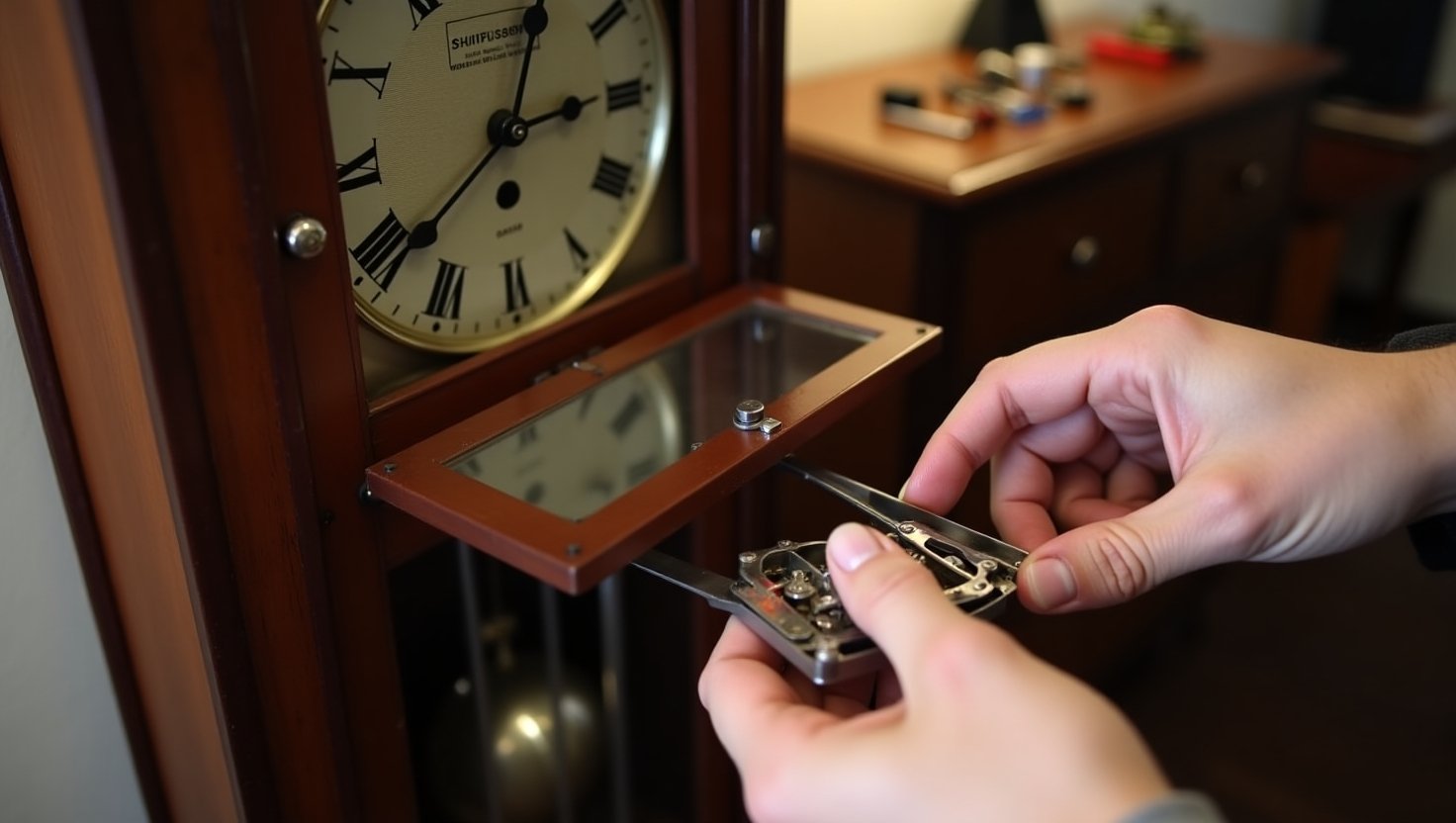
Start by adjusting the pendulum to ensure it’s functioning properly. If the escapement is malfunctioning, it may need to be repaired or replaced. Clean the gears thoroughly to remove any dust or debris, and oil them lightly. If the gears are significantly worn, replacing them may be necessary to restore the clock’s accuracy.
3. Chimes Not Sounding
Problem
If the chimes on your grandfather clock aren’t sounding at the right time, or aren’t working at all, it can be frustrating. The chimes are one of the most appealing features of a grandfather clock, and when they fail, the clock loses much of its charm.
Cause
This problem is often caused by misaligned chime rods or hammer mechanisms. The hammer may not be striking the rods properly, or rust and dirt can interfere with the movement.
Repair
First, inspect the chime rods to make sure they are properly positioned. Tighten any loose rods if needed. Next, check the hammer mechanism to ensure it is hitting the rods as it should. If there is rust or dirt buildup, clean and oil the rods and hammer gently to restore smooth functionality. Regular maintenance can prevent this issue from recurring.
4. Clock Stopping Completely
Problem
If your grandfather clock has stopped completely, with no movement or sound, this could be a sign of a serious malfunction. A clock that stops functioning altogether can be difficult to diagnose and fix.
Cause
This issue is often related to problems with the clock’s weight system. If the weights become jammed, the clock mechanism will stop working. Malfunctioning pendulums can also cause the clock to cease movement.
Repair
Begin by inspecting the weights. If they are improperly set or jammed, reset them. Check the pendulum and make sure it swings freely. If dust or debris has built up in the mechanism, clean it thoroughly and oil the moving parts. After resetting the weights and ensuring smooth pendulum movement, the clock should resume working.
5. Broken or Sticking Clock Hands
Problem
Broken clock hands or hands that don’t move properly can disrupt the functionality of your grandfather clock. If the hands are not moving correctly or are stuck, the time will not be displayed accurately.
Cause
Broken clock hands are usually caused by mechanical stress or external impacts. When the hands become old or are under pressure, they can easily break or become misaligned.
Repair
First, carefully check the clock hands for any damage. If they are broken, replace them with a new set. Ensure the new hands are properly fitted and aligned. If the hands are not moving smoothly, adjust them gently to ensure smooth operation. If internal gears are causing the issue, inspect and repair them as needed.
6. Clock Losing Power (Weight System Issues)
Problem
If your grandfather clock isn’t running as it should, even though everything else seems fine, the problem might lie with the clock’s weight system. This can result in the clock either slowing down or completely stopping.
Cause
The weights of the clock are responsible for providing the power necessary to keep the clock running. Over time, the cords or chains that hold the weights can become worn, frayed, or tangled, preventing the clock from receiving enough power.
Repair
Check the cords or chains that hold the weights to ensure they’re not damaged. If they appear worn or frayed, replace them with new ones. Additionally, inspect the weight system to ensure it is operating smoothly and isn’t obstructed by dirt or debris. Lubricate the moving parts to ensure the smooth descent of the weights.
7. Chimes Playing Incorrectly
Problem
Another frustrating issue is when your grandfather clock’s chimes play the wrong tune, chime at the wrong time, or chime too many times.
Cause
This is often due to misalignment in the chime mechanism or mechanical issues within the clock’s movement. In some cases, the clock may have been improperly set, or the chime sequence may be out of sync due to a malfunction.
Repair
To fix this, start by checking the chime mechanism’s setup and ensuring the gears are properly aligned. You may need to reset the time and chimes on the clock. If necessary, consult the clock’s manual for the proper chime settings. Clean the chime rods and the internal gears to ensure that everything is functioning properly. If the issue persists, it could be time to check for any internal gear damage that may need replacing.
8. Clock Gears Making Noise
Problem
If your grandfather clock is making an unusual noise, such as ticking loudly, grinding, or even squeaking, this indicates that something is wrong with the internal gears or mechanisms.
Cause
This issue is commonly caused by a lack of lubrication, worn-out gears, or debris trapped in the clock’s movement. The noise is usually a sign that the gears are not operating smoothly or that the clock’s parts are rubbing against each other.
Repair
Start by inspecting the clock’s gears and lubricating them with a light oil or clock-specific lubricant. Be careful not to over-oil, as it could attract dirt. Check for any broken or worn gears that may need replacing. If the noise persists, the clock may require a more in-depth cleaning or adjustment to ensure smooth gear operation.
9. Unstable Clock Base or Leaning Clock
Problem
If your grandfather clock is leaning to one side or feels unstable, it can affect its accuracy and even cause damage over time. The clock may not sit properly on the floor or be tilted, which can disrupt its timekeeping.
Cause
This issue can arise from an uneven floor, incorrect positioning, or a warped base. Over time, grandfather clocks can shift or settle, causing them to become unlevel.
Repair
To resolve this, carefully inspect the clock’s base and ensure it is resting evenly on the floor. If the floor is uneven, consider using leveling feet or shims to balance the clock. If the base has become warped, you may need to repair or replace it. Regularly check the stability of the clock to avoid long-term damage.
10. Broken Glass or Cracked Face
Problem
A common problem that can be both aesthetically and functionally annoying is a cracked or broken glass face. This not only impacts the clock’s appearance but can also expose the internal mechanisms to dust and dirt.
Cause
A cracked or broken glass is typically caused by accidental impacts, aging materials, or mishandling during cleaning or maintenance.
Repair
To fix a broken or cracked glass face, carefully remove the broken glass pieces and replace them with a new one that fits the clock’s design. If the clock has a delicate face, take extra care during the replacement process. Consider having the glass professionally cut and installed for a perfect fit. If the internal mechanisms are exposed, clean the clock’s inner parts to remove any dust or debris that may have accumulated.
FAQs About Grandfather Clock Problems and Repairs
Why does my grandfather clock keep stopping randomly?
A clock that stops frequently may be out of beat, not level, or have worn internal parts. Make sure the clock is level on the floor, and the pendulum swings evenly. If it continues stopping, it may need cleaning or mechanical adjustment.
What causes a grandfather clock to chime at the wrong time?
This usually happens when the chime mechanism is out of sync with the hands. Manually advancing the minute hand in hourly increments and allowing the chime to complete can help re-synchronize it.
Can I fix a stuck pendulum at home?
Yes, in many cases. Check for obstructions like dust, an unbalanced base, or incorrect weight placement. If it’s still stuck, the suspension spring might be broken and need replacing.
How often should I oil or lubricate a grandfather clock?
Generally, a grandfather clock should be oiled every 2 to 3 years and professionally cleaned every 5 to 10 years. Use only clock-specific lubricants—never household oils.
What should I do if the clock hands are loose or not moving properly?
Loose or stuck hands can often be adjusted with a gentle touch. Turn the minute hand clockwise only, and never force it. If they keep slipping, the nut securing the hands may need tightening.
Why is my grandfather clock making strange ticking or grinding noises?
These sounds usually mean the gears need lubrication or are misaligned. Clean the mechanism and apply a small amount of clock oil. If the noise continues, a professional inspection is recommended.
How can I fix a leaning or unstable grandfather clock?
Place the clock on a level surface and use shims or adjustable feet if needed. Make sure it’s not touching the wall or carpet unevenly, as that can affect the pendulum swing and timekeeping.
Is it normal for my clock weights to get stuck or not move?
No, this indicates a problem. Weights should move down evenly as the clock runs. Check for tangled chains, worn pulleys, or dirt in the movement. Clean and lubricate if needed.
Can broken or cracked glass on my clock be replaced?
Absolutely. Broken glass can be replaced with a custom-cut piece. If you’re unsure, consult a clock repair shop to avoid damaging other components during the replacement process.
Do I need a professional to repair my grandfather clock, or can I do it myself?
Minor repairs like leveling, hand alignment, or light lubrication can be done at home. However, for internal mechanical issues or complete overhauls, it’s best to consult a professional clockmaker to avoid further damage.









Post Comment