All Parts of Grandfather Clock A Complete Guide
Grandfather clock parts are more than just gears, weights, and wood; they’re pieces of history working in perfect harmony. Since their invention in the 1600s, these iconic timekeepers have amazed owners with their precision, beauty, and rich craftsmanship.
From the graceful swing of the pendulum to the deep, resonant chimes, every part plays a vital role in keeping accurate time. In this guide, we’ll explore each component in detail, so you can understand, maintain, and truly appreciate the timeless art of a grandfather clock.
1. Case / Exterior Parts
Hood (Bonnet)
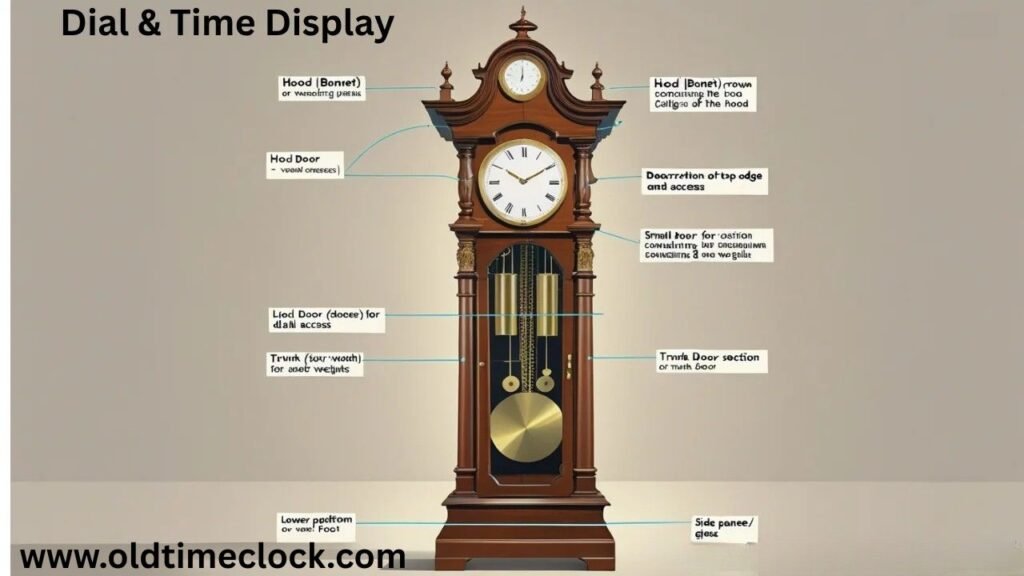
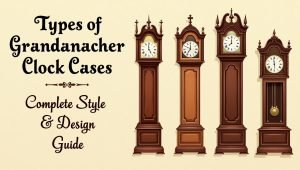
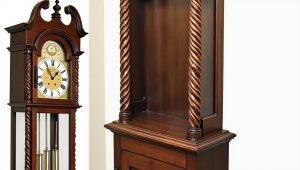
The hood, also called the bonnet, forms the elegant crown of a grandfather clock. It’s the most recognizable part, enclosing the clock’s dial and intricate movement. Crafted with precision, the hood often showcases decorative woodwork, carvings, or moldings that reflect the artistry of its maker. Many feature a front-opening panel, allowing easy access to adjust the time or wind the clock. In fine antiques, the hood is a masterpiece in itself, blending functionality with timeless beauty. This section not only protects the clock’s inner workings but also sets the tone for its overall design.
Crown
Perched atop the hood, the crown gives the grandfather clock its striking silhouette. Depending on the style, it may be gracefully arched, stepped, or finely carved with period-specific details. While purely decorative, the crown enhances the clock’s presence in a room, drawing the eye upward. In heritage pieces, the crown’s design can even help identify the clockmaker’s region and era. Whether simple or ornate, the crown is a signature detail that transforms the clock from a timekeeping device into a statement of craftsmanship.
Finial
Finials are the graceful finishing touches that rise above the crown, adding height and elegance. These decorative ornaments, often turned from wood or cast in brass, can take the form of spires, urns, or spheres. They balance the clock’s design while reflecting the style trends of the period in which it was made. Original finials are highly prized among collectors, as they speak to the authenticity and completeness of the piece. Beyond their decorative appeal, finials symbolize the clockmaker’s attention to even the smallest details.
Hood Door
The hood door provides access to the face and hands of the clock, making it an essential feature for setting the time or winding the mechanism. In many grandfather clocks, the door includes a glass panel, offering a clear view of the dial’s artistry without opening it. Quality craftsmanship is evident in the smooth hinges, secure latches, and precise fit. On high-end models, this door may feature beveled glass or inlaid wood, combining practicality with decorative charm. The hood door protects delicate components while keeping the clock visually inviting.
Trunk (Waist)
The trunk, or waist, forms the central section of the grandfather clock, connecting the hood to the base. This tall, narrow compartment houses the pendulum and weights, often visible through a slender glass panel in the trunk door. The trunk’s proportions are key to the clock’s graceful stance, while its woodwork often matches the hood’s style for a harmonious look. Many antique trunks include subtle embellishments such as fluted columns or marquetry, showcasing the cabinetmaker’s skill. It serves as both a protective housing and a visual anchor for the entire piece.
Trunk Door
The trunk door runs nearly the full height of the waist, allowing easy access to the pendulum and weights for adjustments and maintenance. In many designs, a glass panel lets viewers admire the pendulum’s gentle swing, adding life and rhythm to the clock’s presence. The door may be secured with a lock to protect the mechanism from tampering. Whether framed in fine wood or accented with decorative moldings, the trunk door serves a dual purpose functionality for the owner and beauty for the observer.
Base
The base grounds the grandfather clock, providing stability and visual balance. As the most solid part of the structure, it supports the weight of the entire case and movement. Designers often use the base to echo decorative elements from the hood and trunk, creating a cohesive style. In antique pieces, bases may feature raised panels, shaped skirts, or fine veneer work. A well-proportioned base not only enhances the clock’s beauty but also ensures it stands securely, preserving accurate timekeeping for generations.
Plinth
The plinth is the clock’s foundation, resting directly on the floor and lifting the case slightly to protect it from wear or moisture. Often integrated with the base, it may be shaped simply for practicality or embellished to match the clock’s style. A sturdy plinth is essential for maintaining balance, especially on uneven flooring. In well-made clocks, the plinth is solidly built, helping to distribute weight evenly and keeping the tall case perfectly upright over decades of use.
Side Panels / Glass
Side panels, often glazed with clear or beveled glass, allow light into the case and offer side views of the clock’s movement or pendulum. These panels make it easier to inspect and service the mechanism without opening the front door. In fine clocks, side glass may be subtly etched or framed with delicate molding, adding to the clock’s refinement. Beyond their practical role, side panels create visual depth, inviting viewers to appreciate the craftsmanship from multiple angles.
2. Dial & Time Display
Clock Face (Dial)
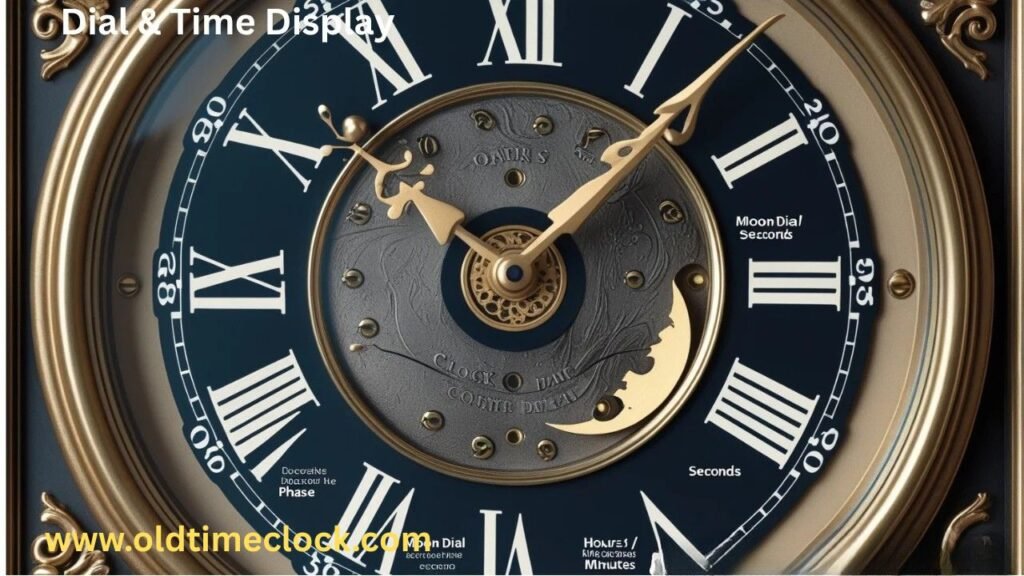
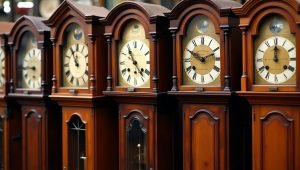
The clock face, or dial, is the central display of a grandfather clock, showing the hours, minutes, and often seconds. Crafted from brass, silvered metal, or painted wood, it serves as both a functional timekeeper and a decorative masterpiece. Antique dials may feature elaborate engraving, hand-painted numerals, or delicate gold leaf details. The dial is designed for clarity while reflecting the artistry of its era. In many heritage clocks, the design of the dial can reveal the clockmaker’s identity and the period in which it was crafted, making it a key feature for collectors.
Chapter Ring
The chapter ring is the circular band around the clock face where the hour numerals are displayed. Traditionally made of brass or silvered metal, it frames the dial and enhances its readability. The numerals may be Roman or Arabic, depending on the clock’s style and period. Beyond function, the chapter ring adds an elegant border that draws the eye to the center of the dial. Its craftsmanship often mirrors the overall quality of the clock, with engraved or embossed markings that stand the test of time.
Hour Hand
The hour hand is the shorter of the two main clock hands, pointing to the hour markers on the dial. While its role is simple, its design is often carefully considered, with shapes ranging from straight and functional to ornate and filigreed. In antique grandfather clocks, the style of the hour hand can help date the piece, as certain shapes were popular in specific time periods. Made from durable metals such as steel or brass, the hour hand moves slowly and steadily, completing a full cycle every twelve hours.
Minute Hand
The minute hand is longer and more slender than the hour hand, sweeping around the dial every hour. It indicates precise minute readings, making it essential for accurate timekeeping. Clockmakers often match the minute hand’s design to the hour hand for visual harmony. In fine grandfather clocks, minute hands are crafted with the same care as the rest of the timepiece, sometimes featuring intricate cutouts or engraved details. Its steady movement, driven by the clock’s gear train, reflects the mechanical precision inside the case.
Second Hand
Found on some grandfather clocks, the second hand adds an extra layer of accuracy to the time display. It moves in small, precise steps, completing a rotation every 60 seconds. The presence of a second hand often indicates a more advanced clock movement, as it requires additional gearing. On decorative models, the second hand may be shaped or colored to stand out, offering both functional precision and a touch of elegance. In horology, it’s a mark of craftsmanship when a tall case clock includes this feature.
Moon Dial / Moon Phase
The moon dial, or moon phase display, is a decorative and functional feature that tracks the lunar cycle. Often painted with stars, clouds, and two alternating moons, it moves gradually to reflect the moon’s position in the night sky. For seafarers and farmers of the past, this was a valuable tool for tracking tides and planting cycles. Today, it adds charm and historical character to the grandfather clock. A well-crafted moon dial is a miniature work of art, blending astronomical accuracy with fine decoration.
Date Aperture
The date aperture is a small window on the clock dial that displays the current date. Usually placed just above or below the center of the dial, it is powered by the clock’s movement and changes automatically at midnight. While not found on all grandfather clocks, it’s a practical addition for those who enjoy functional features. On high-quality timepieces, the date disc may be delicately printed or engraved, matching the clock’s overall design aesthetic.
Spandrels
Spandrels are the decorative metal plates found in the four corners of many grandfather clock dials. Often cast in brass and gilded, they feature motifs such as scrolls, flowers, or mythological figures. Spandrels frame the dial beautifully, drawing attention to the chapter ring and central hands. In antique clocks, spandrel designs can be a clue to the clock’s maker and origin, as certain patterns were unique to specific workshops. They are purely ornamental, yet they play a significant role in the clock’s overall visual appeal.
Dial Center
The dial center is the area enclosed by the chapter ring, often richly decorated. Depending on the clock’s age and style, it might be engraved with intricate patterns, adorned with floral designs, or finished in a polished brass surface. In some clocks, this space includes the winding holes for the key or crank. The dial center is a focal point where craftsmanship meets function, serving as the backdrop for the moving hands and other complications. A beautifully designed dial center elevates the clock from a timepiece to a true work of art.
3. Movement & Internal Mechanism
Clock Movement
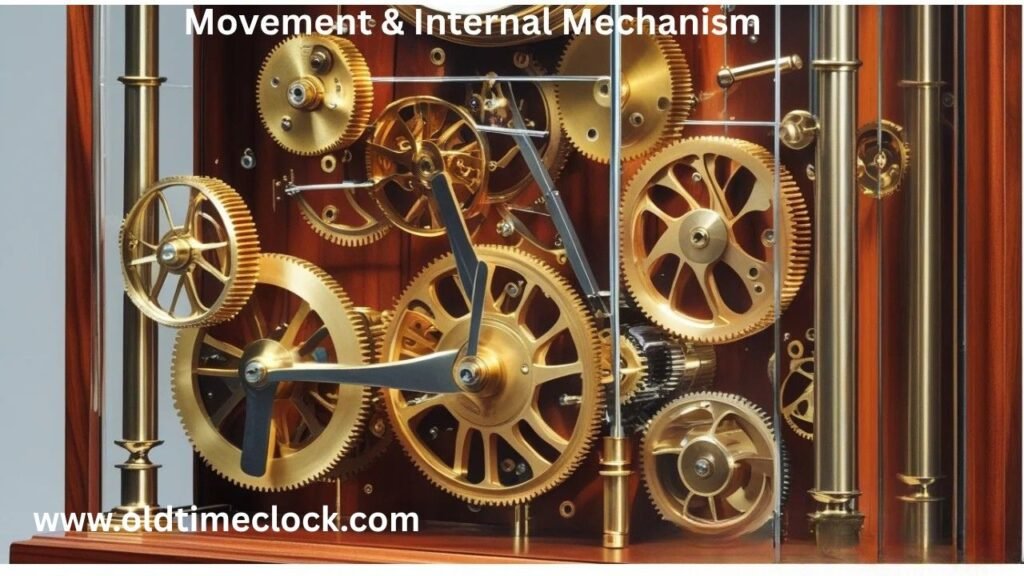
The clock movement is the heart of a grandfather clock, responsible for keeping accurate time and driving all other functions. It is a precise assembly of gears, levers, and springs (or weights) that work in perfect harmony. In mechanical grandfather clocks, the movement is typically made from brass and assembled by hand, reflecting generations of horological expertise. This mechanism powers the hands, chimes, and pendulum, ensuring smooth operation for decades. A well-maintained movement can last for centuries, making it the most critical component for both functionality and historical value.
Main Gears (Wheels)
The main gears, also called wheels, are the driving force behind the clock’s hands. They transfer power from the weights through the gear train to the time display. Each gear is carefully cut to exact specifications, ensuring that the hands move at a consistent and accurate pace. In fine clocks, gears are made from high-quality brass for durability and precision. Their alignment and smooth engagement are vital; any wear or damage can affect timekeeping accuracy. These gears are a testament to the clockmaker’s engineering skill.
Escapement
The escapement is one of the most ingenious parts of a grandfather clock’s movement. It regulates the release of energy from the weights, allowing the gears and hands to move in measured steps. Working in sync with the pendulum, the escapement produces the familiar ticking sound that marks each passing second. Common types in grandfather clocks include the anchor escapement and the deadbeat escapement. Its precision is essential, as even slight irregularities can affect timekeeping. The escapement transforms stored energy into controlled motion, making it the heartbeat of the clock.
Anchor
The anchor is a key part of the escapement, engaging directly with the pendulum. It rocks back and forth, alternately locking and releasing the escapement wheel. This action controls the pendulum’s swing and ensures the clock ticks at a steady rhythm. The shape and weight of the anchor are carefully calculated to maintain timing accuracy. In quality clocks, the anchor is finely machined for smooth operation. Its interaction with the pendulum is a perfect example of mechanical elegance in motion.
Arbor
An arbor is a rotating shaft that holds and supports the gears, wheels, and sometimes the clock hands. Each arbor is precisely fitted to its bearings, allowing the components to spin freely without wobble. In a grandfather clock, there are multiple arbors, each serving a specific function within the movement. Strong and durable, they must be perfectly straight and smooth to avoid excessive wear. Their reliability directly influences the performance and longevity of the clock’s internal mechanism.
Bushings
Bushings are the small bearings in which the arbors rotate. Usually made from brass, they provide a smooth, low-friction surface that reduces wear on both the arbor and the clock plate. Over time, bushings can become worn, causing the gears to misalign or the clock to run inaccurately. Skilled clockmakers can replace or ream bushings to restore smooth operation. Though small and often overlooked, bushings play a critical role in keeping the movement running quietly and efficiently for generations.
4. Timekeeping Components
Pendulum Rod
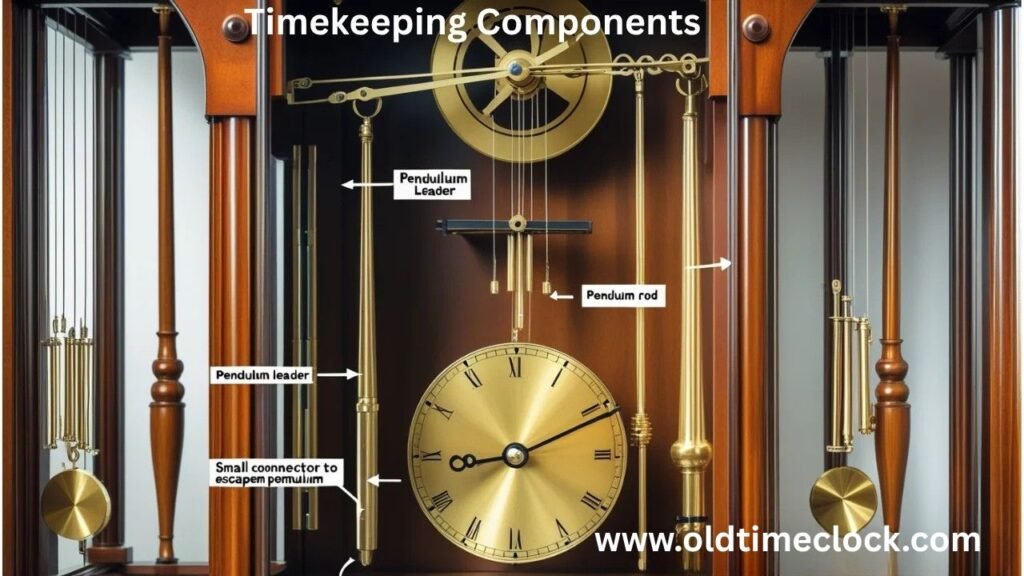
The pendulum rod is the central support of the pendulum assembly, connecting the pendulum bob to the clock’s movement. Usually made from wood or metal, it is designed to be both lightweight and stable, ensuring consistent swings. The length of the rod determines the clock’s timekeeping rate; longer rods slow the clock, shorter rods speed it up. Quality rods are built to resist warping, as even slight bends can affect accuracy. In antique clocks, wooden rods are often chosen for their ability to expand and contract with temperature changes in sync with the rest of the mechanism.
Pendulum Bob
The pendulum bob is the heavy, round disk at the bottom of the pendulum rod. Its weight and position fine-tune the clock’s timing; raising the bob speeds the clock, lowering it slows it down. Traditionally made from brass or a combination of metals, it also serves as a decorative focal point when visible through a glass door. Precision in the bob’s weight and shape is crucial, as it directly influences the pendulum’s rhythm and, by extension, the accuracy of the entire clock.
Pendulum Leader
The pendulum leader is a small but vital part, linking the pendulum to the escapement mechanism. This piece transfers the controlled impulses from the escapement to keep the pendulum swinging at a steady rate. It must be precisely aligned to avoid friction and wear. In many designs, the leader is made from sturdy brass or steel, ensuring durability over decades of movement. Without a properly functioning leader, the pendulum would quickly lose momentum, stopping the clock.
Crutch
The crutch is the part of the movement that delivers motion from the escapement to the pendulum leader. Shaped like a fork or arm, it gently pushes the pendulum to maintain its swing. The crutch’s alignment is essential—if bent or misaligned, it can cause the clock to tick unevenly or stop entirely. Skilled clockmakers adjust the crutch during servicing to ensure the pendulum moves with perfect balance, keeping time accurately.
5. Power Source
Weights
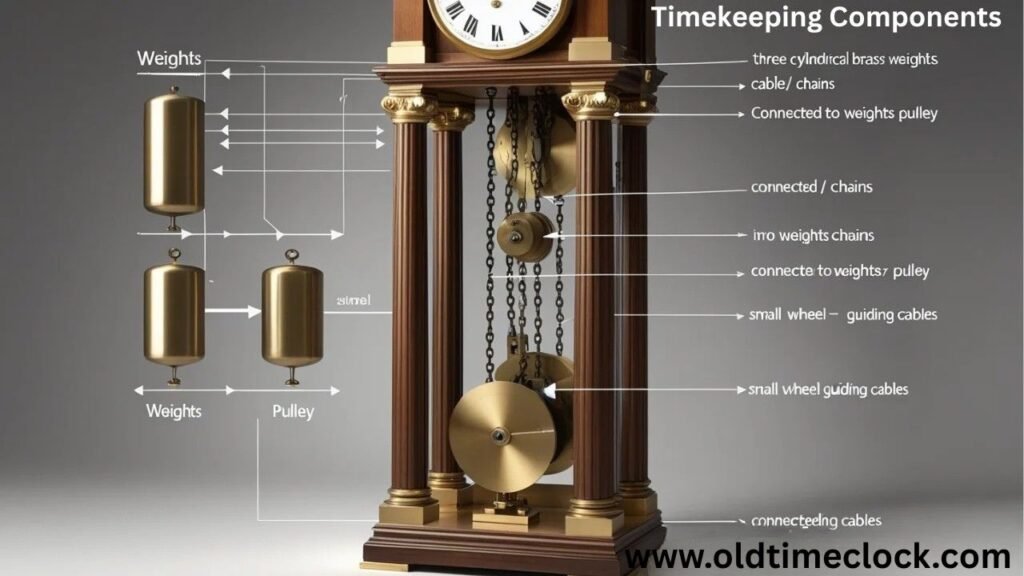
Weights are the driving power behind a mechanical grandfather clock. Typically, there are three: one powers the timekeeping mechanism, one drives the chimes, and one operates the striking function. Made from metal and often encased in decorative brass shells, they descend slowly over the course of a week, requiring periodic winding. Their steady downward pull provides a constant force, ensuring smooth and accurate operation of the clock’s movement.
Cables / Chains
Cables or chains connect the weights to the clock’s movement. In cable-driven clocks, smooth steel cables run over pulleys for quiet, friction-free operation. In chain-driven models, sturdy metal chains are pulled by hand to raise the weights during winding. The quality and condition of these cables or chains are vital for safe and reliable clock operation. Any fraying or stretching must be addressed promptly.
Pulley
The pulley is a small wheel that guides the weight’s cable or chain, allowing it to move smoothly as the weight descends. Well-machined pulleys reduce friction, extending the life of both the cable and the clock’s movement. In high-quality grandfather clocks, pulleys are made from brass or steel for durability. A properly functioning pulley ensures that the weight’s descent is even and steady, preserving both accuracy and longevity.
6. Chime & Strike Mechanism
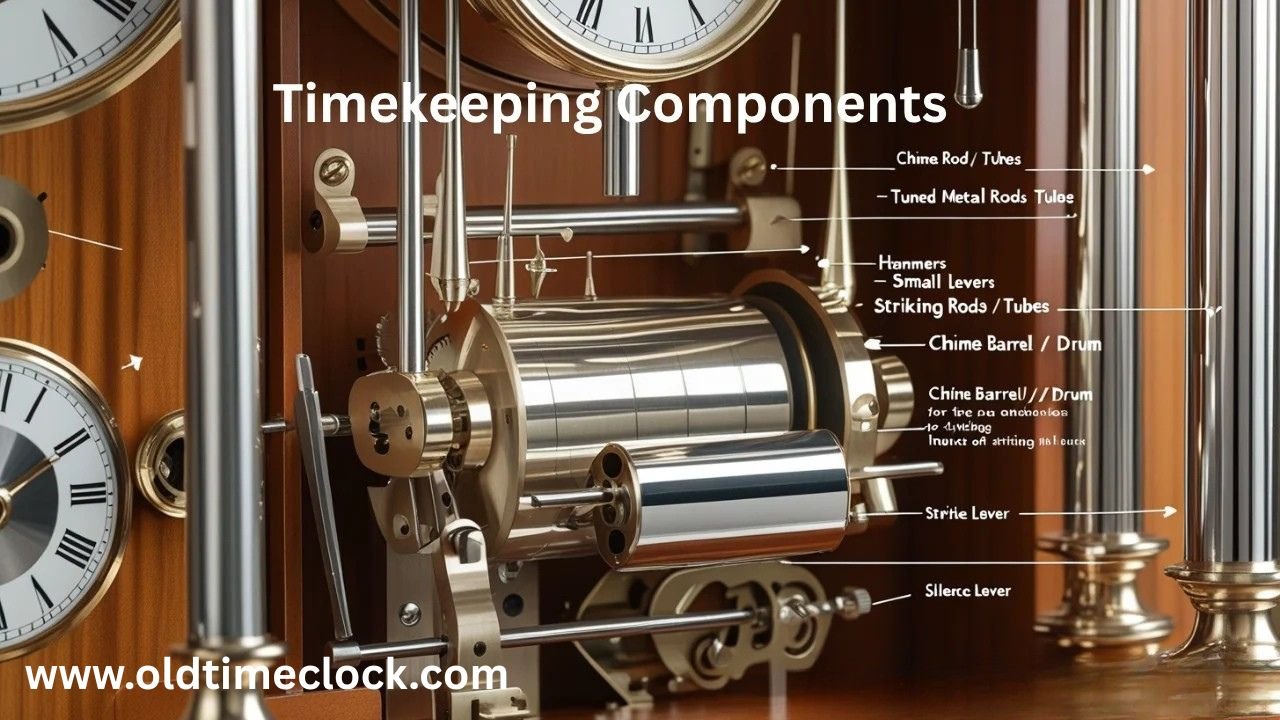
Chime Rods / Tubes
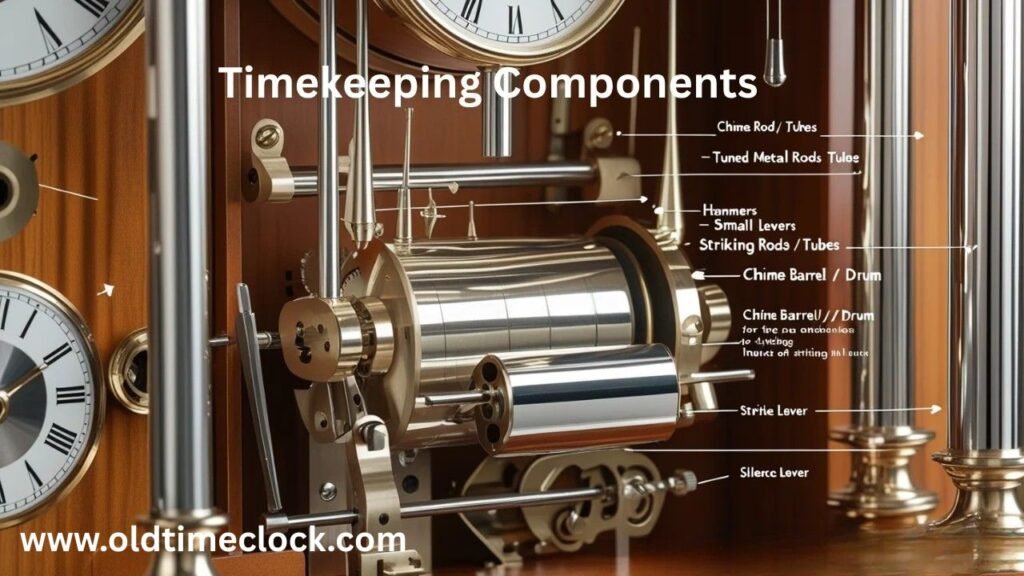
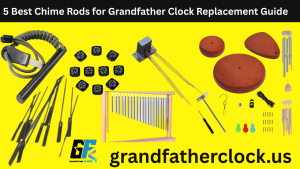
Chime rods or tubes are tuned metal elements that produce musical notes when struck by hammers. Rods are typically mounted horizontally, while tubes hang vertically. Each is tuned to a specific pitch, creating melodies like Westminster, Whittington, or St. Michael’s chimes. The quality of these rods or tubes greatly influences the richness and clarity of the clock’s sound.
Hammers
Hammers are small, spring-loaded levers that strike the chime rods or tubes to produce sound. They are carefully positioned to hit the correct spot for a clear tone. In well-maintained clocks, the hammers strike cleanly without buzzing or muting the note. Their action is synchronized with the clock’s chime sequence, producing melodies at quarter-hour intervals and striking the hour count.
Chime Barrel / Drum
The chime barrel, or drum, is a rotating cylinder with precisely placed pins that lift and release the hammers in sequence. This component controls the order and timing of the chimes, ensuring each melody plays correctly. Much like a music box mechanism, the barrel is a blend of mechanical precision and musical artistry.
Strike Train
The strike train is a part of the movement dedicated to counting and striking the hours. It operates separately from the chime train, ensuring the correct number of strikes for each hour. The strike train includes its own gears, levers, and lifting mechanisms, working in perfect harmony with the rest of the movement.
Silence Lever
The silence lever allows the owner to turn off the chimes or strikes when desired, often useful during nighttime hours. It’s typically located on the clock face or inside the case. This control lets you enjoy the clock’s beauty without the sound, while still keeping accurate time.
Conclusion
A grandfather clock is far more than a piece of furniture; it’s a masterpiece of craftsmanship, engineering, and timeless beauty. Each part, from the elegant hood and polished dial to the precisely balanced pendulum and resonant chime rods, plays a vital role in keeping perfect time while adding character to your home. Understanding these components not only deepens your appreciation for the artistry involved but also helps you care for and maintain your clock for generations to come.
Whether you own a cherished family heirloom or are considering adding one to your collection, knowing how its case, movement, power source, and chime mechanisms work together allows you to preserve both its functionality and historical value. A well-maintained grandfather clock is more than just a timekeeper; it’s a living connection to tradition, craftsmanship, and the gentle rhythm of passing time.







Post Comment