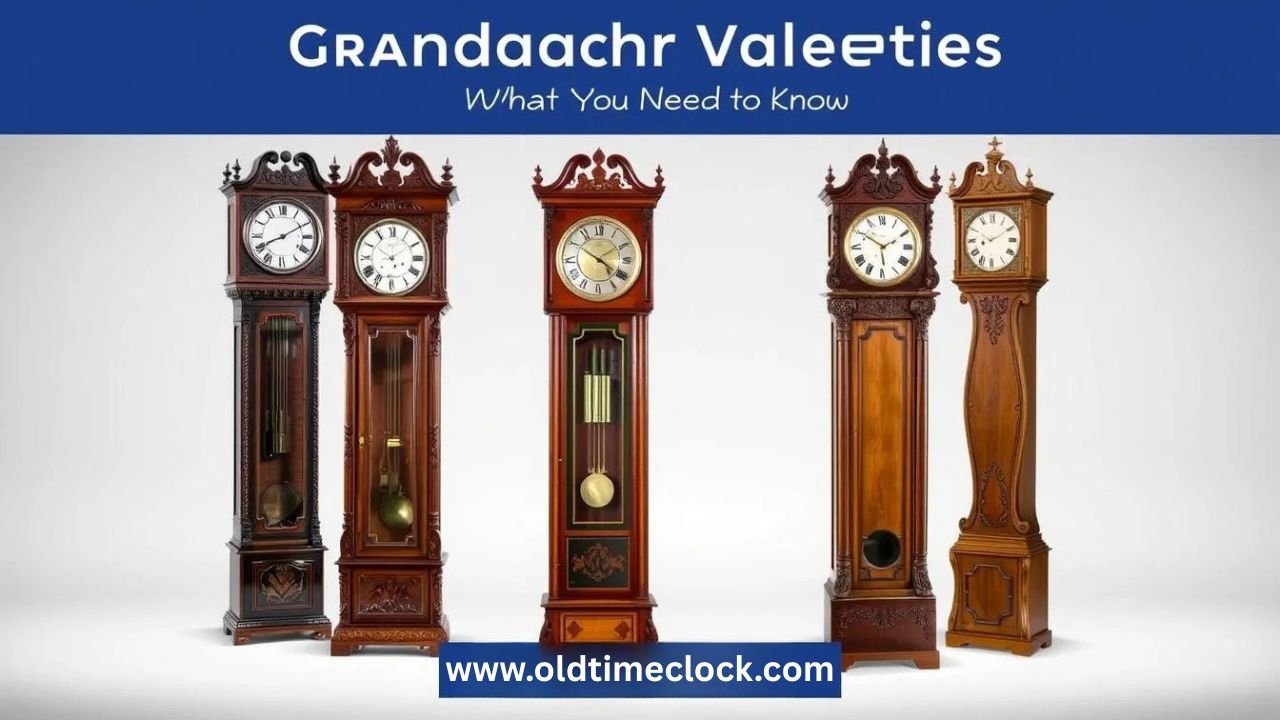
Grandfather Clock Varieties What You Need to Know
Did you know there are many types of grandfather clocks that can make your home look better? They range from classic to modern designs. Grandfather clocks have been a key part of home decor for centuries.
Grandfather clock varieties mix style, function, and history in a special way. With so many grandfather clock styles out there, picking the right one can be hard.
Grandfather clocks include traditional grandfather clocks with detailed carvings and modern grandfather clocks with simple designs. Knowing the different types of grandfather clocks helps you make a smart choice.
Key Takeaways
- Grandfather clocks come in a variety of styles, from traditional to modern.
- The right grandfather clock can enhance the aesthetic of your home.
- Understanding the different types of grandfather clocks is essential for making an informed decision.
- Grandfather clocks offer a unique blend of style, functionality, and historical significance.
- Choosing the perfect grandfather clock requires consideration of several factors.
The Rich Heritage of Grandfather Clocks
Grandfather clocks are symbols of elegance and precision. They have a long history that shows how horology and society have evolved. These clocks have kept time and shaped cultures worldwide.
Historical Significance and Evolution
Grandfather clocks started in the 17th century. They grew from earlier mechanical clocks, becoming taller and more detailed. Their growth shows clockmaking’s progress and changing societal needs.
The evolution of grandfather clocks also mirrors changing tastes in design. Each era left its mark on these timepieces.
The Cultural Impact of Grandfather Clocks
Grandfather clocks have had a big cultural impact. They are more than just timekeepers. They symbolize status, elegance, and tradition.
In many families, these clocks are treasured heirlooms. They are passed down through generations. Their presence in homes brings a sense of continuity and heritage.
The traditional grandfather clock variations show the influence of different cultures and regions. This makes each clock special and unique.
Grandfather clocks also appear in literature, art, and popular culture. They often represent the passage of time and the value of tradition.
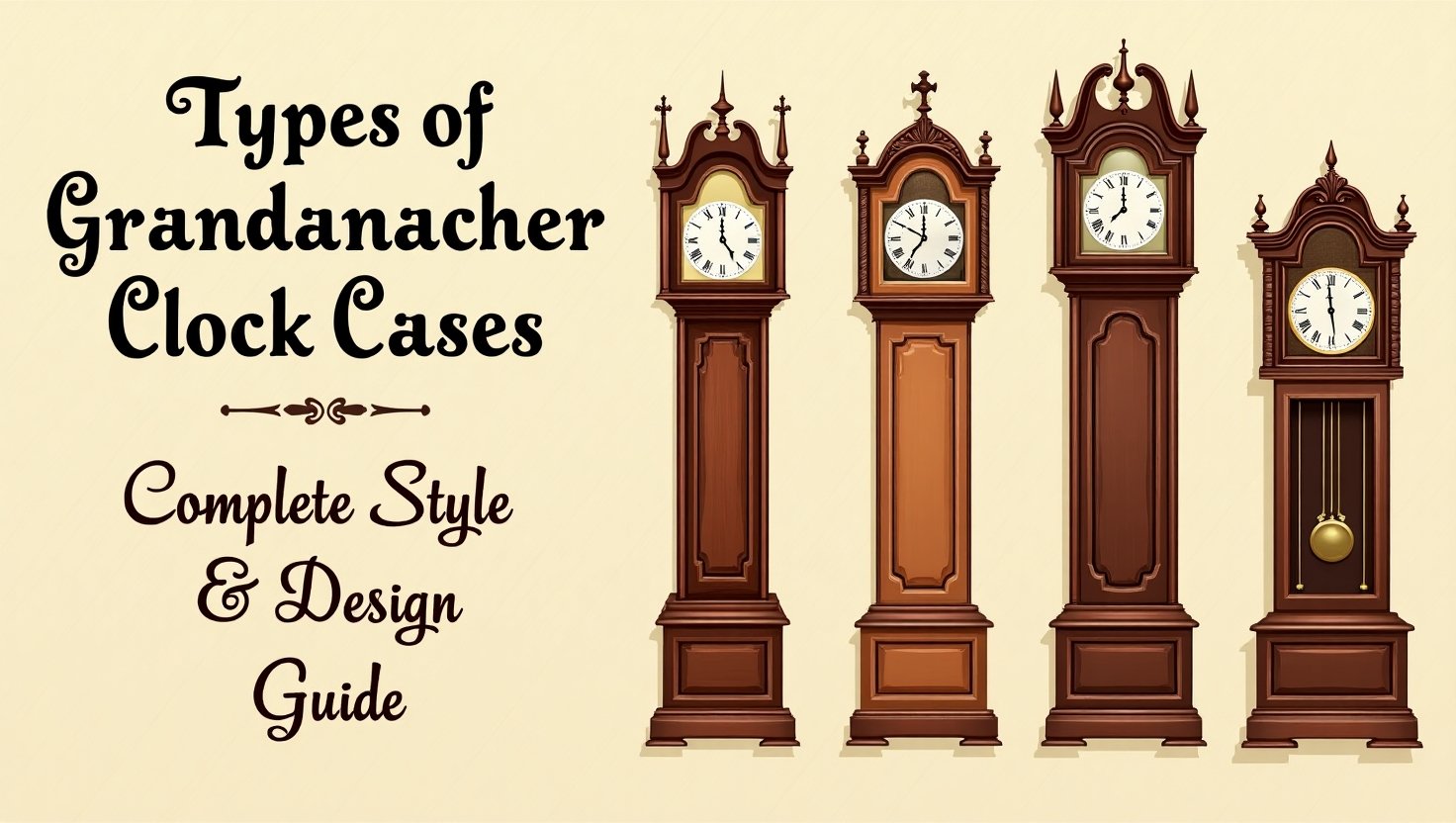
What Are the Main Types of Grandfather Clock
Knowing the different types of grandfather clocks is key to making a good choice or valuing their history. These clocks, also called longcase clocks, have been a part of home decor for centuries. They mix function and beauty.
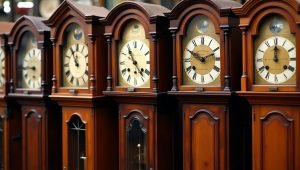
There are many ways to classify grandfather clocks. You can look at their mechanical movement, design, or historical era. This helps us understand the wide range of grandfather clocks out there.
Overview of Classification Methods
Grandfather clocks are sorted by their mechanical movement. This includes weight-driven and spring-driven movements. Also, there are quartz movements in modern clocks, which are more modern.
Design-wise, clocks can be traditional, modern, or antique. Each style shows the craftsmanship and taste of its time. This gives each clock a special character.
Primary Categories at a Glance
The main types of grandfather clocks are:
| Category | Description | Characteristics |
|---|---|---|
| Traditional | Reflects classic designs and historical styles | Ornate carvings, traditional materials |
| Modern | Features contemporary designs and materials | Minimalist aesthetic, innovative materials |
| Antique | Historically significant clocks, often collectible | Rarity, historical value, craftsmanship |
Understanding these categories helps us see the variety in grandfather clocks. It makes it easier to choose a clock that fits our needs.
Traditional Grandfather Clocks: Timeless Elegance
Traditional grandfather clocks are symbols of timeless elegance. They show a deep history and a wide range of designs. These clocks have been a key part of home decor for centuries, combining function and beauty.
English Traditional Designs
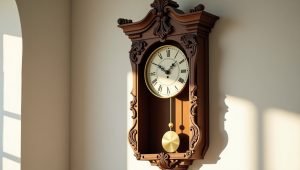
English traditional grandfather clocks are known for their classic looks. They often have detailed carvings and fancy details. These clocks use high-quality woods like oak and mahogany, showing the skill of English clockmakers.
A hallmark of English traditional designs is their attention to detail. This includes the fine carvings on the clock face and the fancy mechanisms that keep time.
American Colonial Styles
American Colonial grandfather clocks are known for their simple elegance. They are influenced by early American design’s focus on simplicity and practicality. These clocks have clean lines, little decoration, and a strong focus on working well.
The clocks often used woods like pine and maple. This was because of the materials available and the tastes of the time.
European Traditional Variations
European traditional grandfather clocks come in many styles. From Germany and Austria’s elaborate Baroque designs to Scandinavian countries’ simpler styles. Each region’s culture and history is seen in its clockmaking.
| Style | Characteristics | Common Woods |
|---|---|---|
| English Traditional | Intricate carvings, ornate details | Oak, Mahogany |
| American Colonial | Simple, clean lines, minimal ornamentation | Pine, Maple |
| European Traditional | Varies by region, e.g., Baroque, minimalist | Varies, e.g., Walnut, Cherry |
Modern Grandfather Clocks: Contemporary Appeal
Grandfather clocks have changed a lot. Now, they come in minimalist and fusion styles. These clocks fit well with today’s home decor and keep their classic function.
Minimalist Designs
Minimalist grandfather clocks are simple and sleek. They often have:
- Simple face designs without too much decoration
- Thin profiles that look good in modern rooms
- Neutral colors that match today’s decor
These features make minimalist grandfather clocks perfect for modern homes that like clean spaces.
Fusion Styles
Fusion-style grandfather clocks mix old craftsmanship with new designs. This mix creates unique pieces that:
- Keep the classic tallcase look
- Use modern materials like glass, steel, or reclaimed wood
- Have new mechanisms like silent or quartz movements
This mix of old and new looks great and appeals to those who love both.
Innovative Materials in Modern Clocks
Modern grandfather clocks use new materials for better looks and durability. Some of these materials are:
| Material | Description | Benefits |
|---|---|---|
| Reclaimed Wood | Wood from old buildings or trees | Unique look, good for the planet |
| Glass | Used for faces, cases, or decorations | Looks modern, easy to clean |
| Steel | Used for mechanisms, frames, or accents | Strong, versatile |
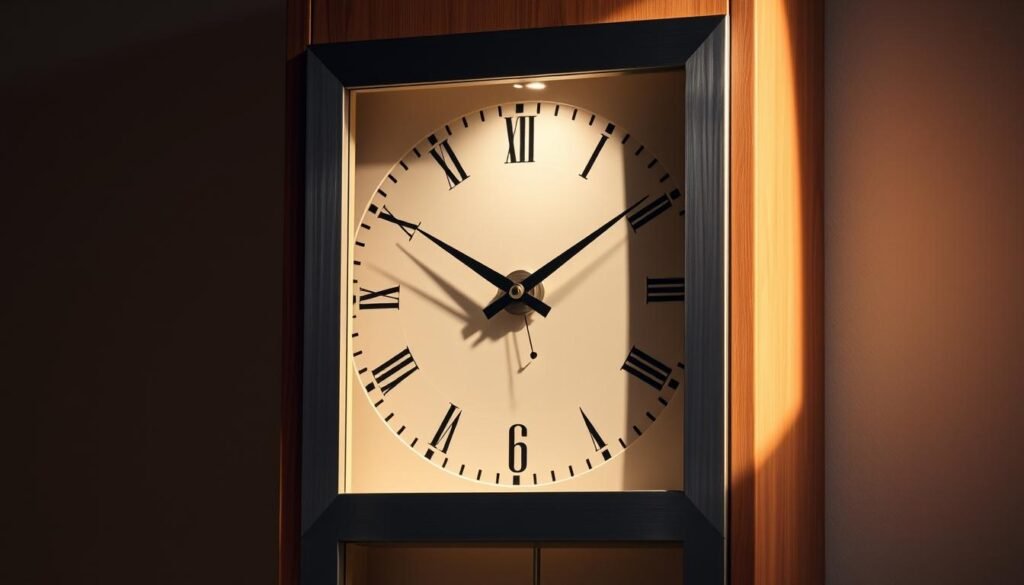
These materials make the clocks work better and look more modern.
Antique Grandfather Clocks: Collector’s Treasures
For collectors, antique grandfather clocks are a special link to the past. They show the skill of old times. These clocks are not just for telling time. They also tell us about history and design from long ago.
18th Century Masterpieces
In the 18th century, grandfather clocks became common in European homes. They were known for their detailed carvings and accurate timekeeping. These clocks were made from fine woods like oak and walnut.
The makers of these clocks were very skilled. They added complex dials and chiming systems to their work.
19th Century Developments
The 19th century saw big changes in clockmaking. Clocks became more accurate and new materials were used. Grandfather clocks from this time had more detailed designs, like Gothic arches and fancy metalwork.
The Industrial Revolution helped make clocks more available to everyone. This made them more common in homes.
Identifying Authentic Antiques
Finding a real antique grandfather clock needs a careful eye. Look for signs of age, like wood patina and worn parts. Also, check the maker’s mark and know when it was made to be sure it’s real.
| Century | Characteristics | Notable Features |
|---|---|---|
| 18th | Intricate carvings, high-quality woods | Complex dials, chiming mechanisms |
| 19th | Elaborate designs, new materials | Gothic arches, ornate metalwork |
Longcase vs. Tallcase: Understanding Terminology
Exploring grandfather clocks, you’ll find many terms. ‘Longcase’ and ‘tallcase’ are key ones to understand.
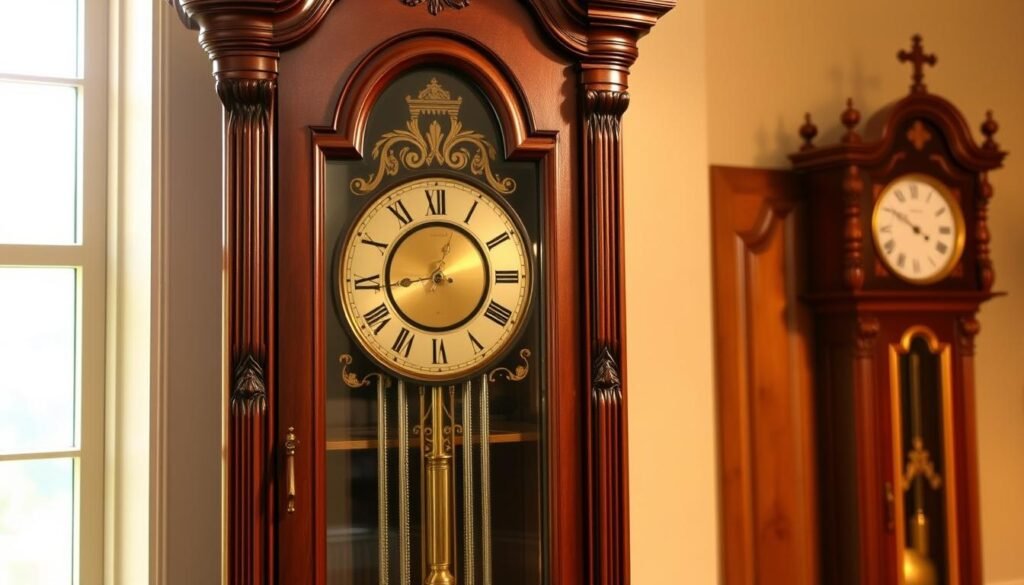
These terms differ based on history and where they’re used. Knowing their origins sheds light on the rich history of grandfather clocks.
Origin of Different Terms
“Longcase” describes the clock’s tall, narrow case. It focuses on the clock’s mechanical side, showing its practical design.
“Tallcase,” on the other hand, is mainly used in American English. It also refers to the same type of clock. This shows how names vary by region.
Key differences in terminology:
- “Longcase” is more common in British English.
- “Tallcase” is mainly used in American English.
- Both terms describe grandfather clocks with tall, narrow cases.
Regional Naming Variations
Grandfather clocks have different names in various places. This reflects local speech and history.
In some European areas, they’re called “standing clocks” or “floor clocks.” This highlights their size and where they’re placed.
Examples of regional naming variations include:
- Standing clocks
- Floor clocks
- Grandfather clocks (the most commonly used term globally)
Knowing these differences helps collectors and fans understand the complex world of grandfather clocks. It shows the rich heritage behind these clocks.
Clock Movements and Mechanisms
The heart of a grandfather clock is its movement. It’s what makes the clock work and look good. There are many types of movements, each with its own charm.
Cable-Driven Movements
Cable-driven movements are classic. They’re reliable and have a nice sound. The movement uses cables to power the clock’s gears smoothly.
Reliability and traditional appeal make cable-driven movements popular among clock lovers.
Chain-Driven Movements
Chain-driven movements use chains and gears. They offer a unique look and feel. These movements often have a rustic charm.
“The mechanical intricacies of chain-driven movements add a layer of complexity and beauty to grandfather clocks.”
Quartz Movements in Modern Designs
Quartz movements bring a modern touch to grandfather clocks. They use battery-powered quartz crystals for accurate timekeeping. This makes clocks easier to care for.
Advantages of Quartz Technology
Quartz technology is accurate and low maintenance. It needs less adjusting and is less affected by temperature changes.
Limitations Compared to Mechanical Movements
Quartz technology, though useful, misses the mechanical charm and historical significance of old movements. This might not appeal to those who love traditional clocks.
Understanding grandfather clock movements is key to enjoying their beauty and complexity. Whether you like traditional mechanical or modern quartz, there’s a clock for everyone.
Chiming Patterns and Sound Variations
Grandfather clocks are famous for their beautiful chimes. These chimes come in different patterns to match various tastes. They add beauty and function to the clock.
Westminster Chimes
The Westminster chimes are very popular. They have a harmonious melody that’s often linked with traditional grandfather clocks. These chimes strike the hour and play a tune on the quarter hours.
Whittington Chimes
The Whittington chimes are a simpler, yet elegant choice. They have a less complex melody. This makes them a favorite for those who find the Westminster tune too elaborate.
St. Michael Chimes
St. Michael chimes offer a unique sound. They are often described as more subdued than Westminster chimes. They’re great for places where a less loud chime is needed.
Custom and Programmable Chimes
Some modern grandfather clocks have custom and programmable chimes. This lets owners choose a sound that suits their taste. It’s perfect for those who want a clock that shows their unique style.
The table below shows the different chiming patterns available for grandfather clocks:
| Chiming Pattern | Description | Preferred By |
|---|---|---|
| Westminster Chimes | Harmonious, complex melody | Those who appreciate traditional sounds |
| Whittington Chimes | Simpler, elegant melody | Those who prefer less complex tunes |
| St. Michael Chimes | Subdued, distinct sound | Those who desire a less prominent chime |
| Custom/Programmable Chimes | Personalized sound | Individuals seeking uniqueness |
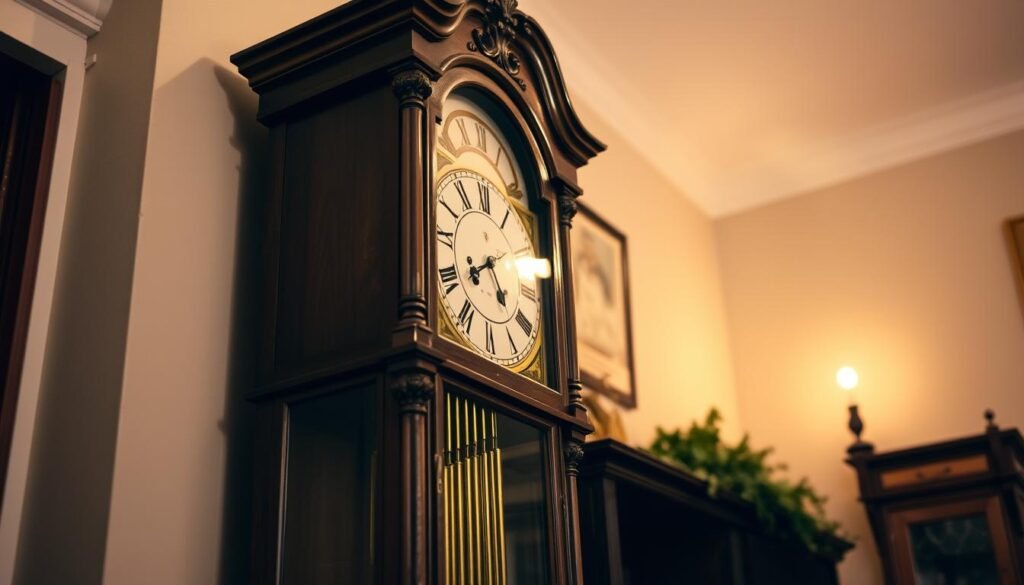
Grandfather clocks come in many chiming patterns and sounds. This means there’s a clock for every taste and decor. They can really enhance the feel of a room.
Materials and Craftsmanship
Grandfather clocks are made from materials that make them elegant and long-lasting. The choice of materials impacts the clock’s look, durability, and how well it works.
Wood Types and Their Characteristics
The wood used in a grandfather clock greatly affects its look and quality. Each wood has its own grain, color, and texture. These features can make the clock’s design stand out.
Oak Grandfather Clocks
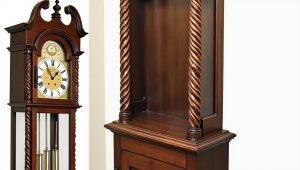
Oak is a top pick for grandfather clocks because of its strength and unique grain. Oak grandfather clocks are known for lasting a long time and looking classic.
Mahogany Variations
Mahogany is also popular, known for its rich, reddish-brown color and fine grain. Mahogany grandfather clocks are seen as luxurious and sophisticated.
Cherry and Other Hardwoods
Cherry wood is loved for its smooth grain and reddish color. Other hardwoods like walnut and maple are used to create beautiful and unique designs.
Metal Elements and Detailing
Metal parts are key to a grandfather clock’s function and beauty. Metals like brass and bronze are used for mechanisms, handles, and decorations. They add to the clock’s beauty and detail.
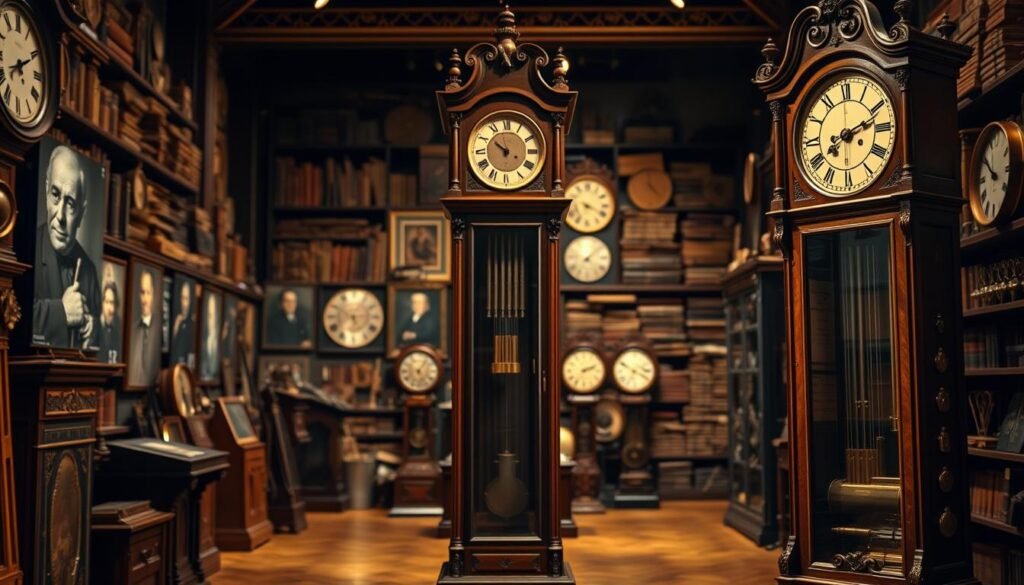
Famous Grandfather Clock Makers and Brands
For centuries, famous grandfather clock makers have been creating timepieces. Their work has left a lasting legacy. Today, we admire the beautiful and detailed clocks they made.
Howard Miller Legacy
Howard Miller is a well-known name in grandfather clocks. They are celebrated for their quality and style. Founded in 1926, they offer a wide range of clocks that mix old-world craftsmanship with new designs.
Ridgeway Traditions
Ridgeway Clock Company is also highly respected. They make grandfather clocks that are both elegant and precise. With a history going back to 1926, Ridgeway is known for its variety of clocks that fit different tastes and decor.
Colonial Manufacturing Excellence
Colonial grandfather clocks are famous for their classic looks and quality. Clock makers who specialize in colonial styles have perfected the art of creating timepieces. These clocks bring a sense of nostalgia and sophistication.
European Master Clockmakers
Europe has a long history of clock making. Master craftsmen there have made grandfather clocks known for their precision and beauty. Their work has greatly influenced the evolution of grandfather clocks, adding detailed designs and new mechanisms.
The legacy of these famous clock makers and brands continues to shape the industry. Their dedication to quality and craftsmanship has led to timepieces that are both functional and artistic.
Selecting the Perfect Grandfather Clock for Your Space
Choosing a grandfather clock is more than picking a design. It’s about size, style, and budget. Think about how it fits your home’s look and needs.
Size Considerations and Room Placement
The size of the grandfather clock is key. A big clock can be stunning in a large room. But, it might be too big for a small space. A small clock might get lost in a big room.
To find the right size, consider these tips:
- Measure the space for the clock.
- Think about the room’s height and width.
- Look at the size of other furniture in the room.
For the best spot, leave enough room around the clock. Aim for 12 to 18 inches of space around it.
Style Matching with Interior Design
The clock’s style should match your home’s design. Whether your home is traditional, modern, or a mix, there’s a clock for you.
Here are some style tips:
- Traditional clocks have detailed carvings and classic looks.
- Modern clocks are sleek and simple.
- Match the clock’s color and finish to your home’s colors.
For example, a traditional English-style clock can add elegance to a classic home. A modern clock with a metallic finish can bring sophistication to a modern space.
Budget Planning for Different Types
Grandfather clocks come in various prices. Prices depend on materials, craftsmanship, and brand. Setting a budget helps you choose.
Here are some budget tips:
- Look for clocks made from less expensive materials.
- Choose simpler designs to save money.
- Shop during sales or look for discounts.
By thinking about size, style, and budget, you can find the perfect grandfather clock. It will keep time and make your home more beautiful.
Maintenance and Care for Different Clock Types
Keeping a grandfather clock in good shape is more than just cleaning it. It needs a detailed care plan. Regular upkeep not only keeps the clock ticking right but also makes it last longer.
Routine Maintenance Schedule
Having a regular maintenance plan is key for a grandfather clock’s smooth running. This includes dusting the clock’s outside, checking and adjusting the pendulum, and oiling the mechanical parts. Dust the clock weekly, and do a deeper check every six months.
Key Maintenance Tasks:
- Weekly dusting
- Six-monthly inspection and lubrication
- Annual professional servicing
Special Care for Antique Pieces
Antique grandfather clocks need extra care because of their historical value and delicate parts. When handling these clocks, it’s important to steer clear of harsh chemicals and big changes without expert advice.
| Care Aspect | Antique Clocks | Modern Clocks |
|---|---|---|
| Cleaning | Gentle dusting, avoid chemicals | Can use mild cleaning products |
| Mechanism Handling | Avoid DIY adjustments | Can perform basic adjustments |
Professional Servicing vs. DIY Maintenance
Some upkeep tasks you can do yourself, but others need a pro. For complex jobs like overhauling the mechanism, it’s best to call a professional.
Knowing what your grandfather clock needs, whether it’s old or new, helps it stay a beautiful and functional home piece for many years.
Investment Value and Collectibility
Grandfather clocks are loved for their beauty and history. They also have a special investment value. These clocks can grow in value over time, making them great for any collection.
The market for antique grandfather clocks changes based on several things. Rarity, condition, and where they came from are key. Knowing these trends helps collectors and investors make smart choices.
Market Trends for Antique Clocks
The interest in antique grandfather clocks keeps growing. Their historical importance and beauty drive this interest. Collectors are ready to pay high prices for rare and well-kept clocks, making them a good investment.
Factors Affecting Valuation
Many things affect how much a grandfather clock is worth. Its age, condition, and how well it was made matter a lot. The clockmaker’s reputation and where it came from also matter. Plus, special features like chiming patterns can make a clock more valuable.
Building a Valuable Collection
To create a valuable collection of grandfather clocks, focus on rare and high-quality ones. It’s important to research the market and work with trusted dealers. Also, taking care of your clocks is key to keeping their value and working order.
Common Issues and Troubleshooting
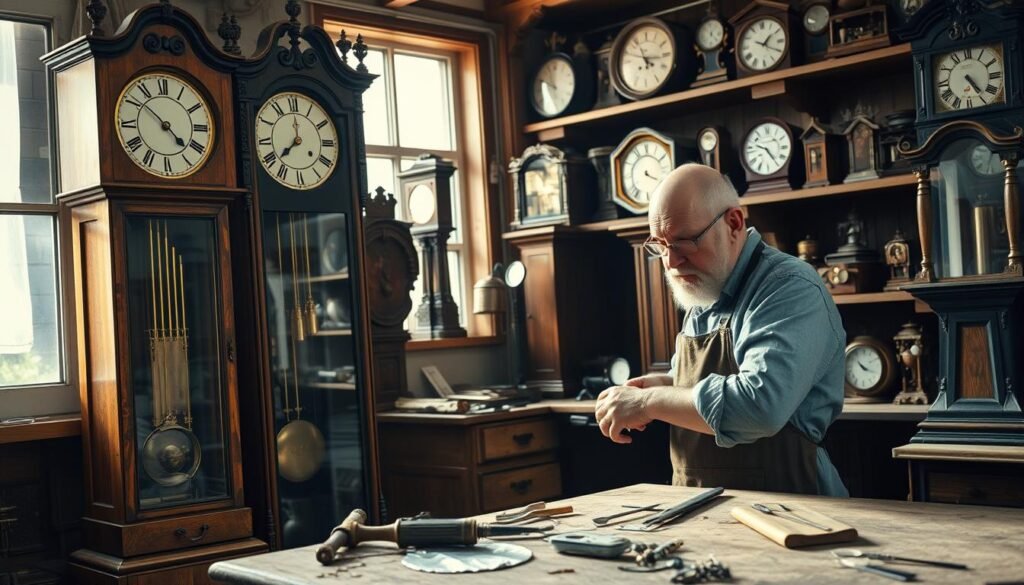
Fixing common problems with grandfather clocks keeps them working well and lasting long. These clocks are tough but can face issues that need fixing. Keeping them in good shape helps avoid big repairs.
Addressing Timing Problems
Grandfather clocks can have timing issues due to misalignment, worn-out parts, or poor maintenance. Finding the main cause is key. Adjusting the clock’s level and checking its feet can fix timing problems. Also, replacing old parts like bushings or gears might be needed.
Chiming Mechanism Repairs
The chiming mechanism in grandfather clocks is complex and fixing it can be tricky. Problems like wrong chiming or silence often come from chime rods, hammers, or the movement. Fixing these parts needs care and a deep understanding of the clock’s inner workings.
Case Restoration Techniques
The case of a grandfather clock is more than just a cover; it’s also a key part of its look. Over time, it may need fixing due to wear. Techniques like repolishing, revarnishing, or replacing damaged wood can bring back its beauty. It’s important to use the right materials and methods to keep the clock’s look and value.
By tackling these common issues and doing regular upkeep, grandfather clock owners can keep their clocks ticking right and looking great. This way, they can be cherished for many years to come.
Conclusion
Exploring the world of grandfather clocks is rewarding, whether you’re buying or keeping one. There are many types, like traditional, modern, and antique. Each offers a unique style and function to match your taste and home.
Choosing the right grandfather clock means thinking about size, material, and movement. You might love the classic look of traditional clocks or the modern feel of newer ones. There’s a clock for everyone’s style.
Keeping your grandfather clock in good shape is key. Regular checks and care keep it running well and looking great. This way, it becomes a valuable family treasure for years.
Learning about different grandfather clocks helps you see their craftsmanship and history. It’s a way to appreciate these special timepieces even more.




Post Comment