Westminster Chime Grandfather Clocks: Complete 2026 Guide (History, Sound & Care)
Westminster chime grandfather clocks represent the pinnacle of horological artistry, combining mechanical precision with melodic beauty. These timepieces have graced homes for over two centuries, offering not just accurate timekeeping but an auditory experience that connects us to clockmaking traditions. Whether you’re considering purchasing your first grandfather clock or maintaining a family heirloom, this comprehensive guide covers everything you need to know.

Understanding Westminster Chimes
What Makes Westminster Chimes Special?
Westminster chimes create a distinctive four-note melodic sequence that plays every quarter hour, followed by an hour strike. This isn’t just random musical notation—it’s a carefully crafted sequence that has become synonymous with quality timekeeping worldwide.
The Westminster Quarter Sequence:
- First Quarter (15 minutes): Four notes
- Half Hour (30 minutes): Eight notes
- Third Quarter (45 minutes): Twelve notes
- Full Hour: Sixteen notes plus hour count
The Musical Structure Explained
The Westminster chime follows a specific musical pattern based on variations of the phrase from Handel’s “I Know That My Redeemer Liveth.” The notes create a harmonious progression that’s both memorable and soothing:
Quarter Hour Progression:
- E, C, D, G (1st quarter)
- G, D, E, C + E, C, D, G (2nd quarter)
- C, E, D, G + G, D, E, C + E, C, D, G (3rd quarter)
- Full sequence + hour strikes (top of hour)
Why Westminster Chimes Became the Gold Standard
The Westminster chime gained popularity due to several factors:
Acoustic Properties: The four-note sequence creates natural harmonies that are pleasant to hear repeatedly throughout the day.
Cultural Association: The connection to prestigious institutions like Cambridge University and later Big Ben elevated its status.
Technical Reliability: The quarter-hour chiming system provides regular confirmation that the clock mechanism is functioning properly.
Emotional Resonance: Many people associate these chimes with comfort, tradition, and the peaceful passage of time.

The True History Behind Westminster Chimes
The Cambridge Connection: Setting the Record Straight
Contrary to popular belief, Westminster chimes did not originate at Westminster Abbey. The true birthplace of this iconic melody is St. Mary the Great Church in Cambridge, England.
Timeline of Westminster Chime Development
1793-1794: The original chime was composed for the new clock at St. Mary the Great Church, Cambridge University. While William Crotch is often credited, recent scholarship suggests the composition may have been a collaborative effort or drawn from existing musical sources.
1859: The chime was selected for the new Palace of Westminster clock tower (now known as Big Ben), cementing its association with the Westminster name.
1860s-1890s: American and European clockmakers began incorporating Westminster chimes into grandfather clocks, recognizing their commercial appeal.
1900-1920: Westminster chimes became the standard for premium grandfather clocks worldwide.
The Big Ben Connection
When the Palace of Westminster was rebuilt after the 1834 fire, the clock committee chose the Cambridge chime for the new tower clock. This decision gave the chime its “Westminster” name and global recognition. The association with British parliamentary tradition added gravitas to any timepiece featuring these chimes.
Evolution in Grandfather Clock Manufacturing
Early Westminster chime grandfather clocks required significant mechanical complexity. Each chime needed its own train of gears, making these clocks expensive and requiring skilled craftsmen. As manufacturing techniques improved, Westminster chimes became more accessible while maintaining their premium association.
How Westminster Chime Mechanisms Work
The Three-Train Movement System
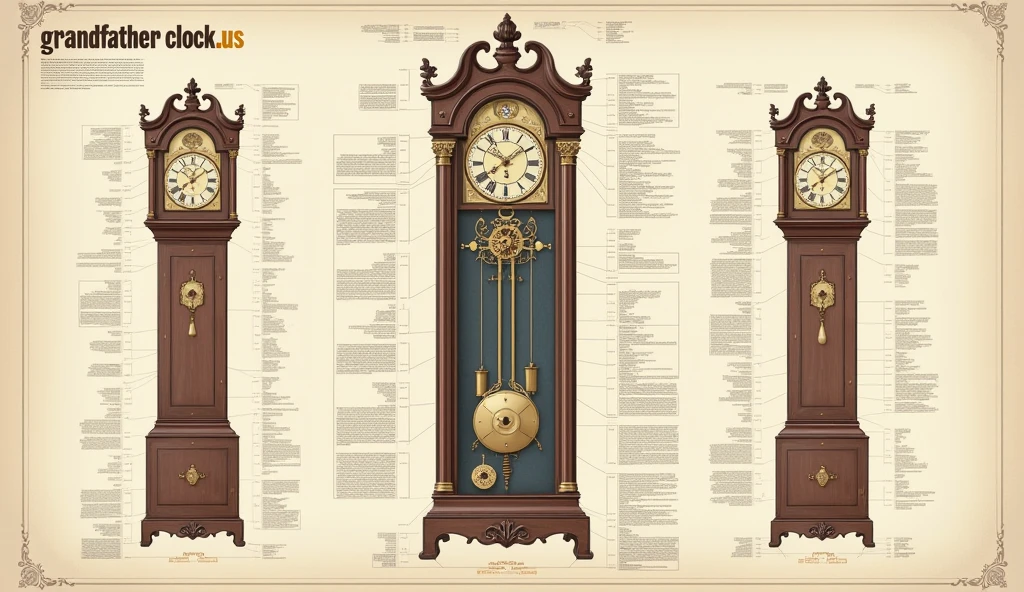
Westminster chime grandfather clocks operate on a three-train system, meaning three separate mechanisms work together:
Time Train: Controls the basic timekeeping function through the escapement and pendulum.
Strike Train: Manages the hour striking mechanism.
Chime Train: Operates the Westminster quarter-hour chiming sequence.
Mechanical Components Breakdown
Chiming Rods or Tubes: These produce the actual sound. Rods create a more crystalline tone, while tubes produce deeper, more resonant notes.
Chiming Hammers: Spring-loaded mechanisms that strike the rods or tubes. The timing and force of these strikes determine the chime quality.
Programming Cam: A specially shaped wheel that determines the chiming sequence. Different sections of the cam correspond to different quarter hours.
Lift Wires: Connect the programming cam to the chiming hammers, translating the cam’s rotation into hammer strikes.
Gathering Pallet: Ensures the correct number of chimes play for each quarter hour.
Weight and Pendulum System
Chime Weight: The heaviest of the three weights, typically 10-15 pounds in floor clocks. This weight powers the chiming mechanism and must be wound regularly.
Time Weight: Usually 6-8 pounds, powers the basic timekeeping function.
Strike Weight: Approximately 8-10 pounds, powers the hourly striking.
Pendulum Regulation: The pendulum’s length determines timekeeping accuracy. Even small adjustments (1/8 inch) can change the clock’s rate by several minutes per day.
Modern Adaptations
Cable-Driven Systems: Many contemporary clocks use cables instead of chains, providing smoother operation and easier maintenance.
Automatic Night Silence: Some modern Westminster chime clocks include mechanisms to silence chimes during nighttime hours automatically.
Adjustable Volume: Premium models may include volume adjustment mechanisms, allowing customization of chime loudness.
Types of Westminster Chime Grandfather Clocks
Traditional Mechanical Chime Clocks
Weight-Driven Systems:
- Authentic mechanical movement
- Require regular winding (typically every 7-8 days)
- Produce the most authentic chime sound
- Higher maintenance requirements
- Price range: $2,000-$15,000+
Key Features:
- Brass movement plates
- Hand-cut gears
- Adjustable pendulum bob
- Multiple chiming options
Quartz Westminster Chime Clocks
Battery-Powered Convenience:
- Electronic Westminster chime reproduction
- Minimal maintenance required
- Consistent timekeeping accuracy
- Lower initial cost
- Price range: $500-$3,000
Advantages:
- No winding required
- Automatic daylight saving time adjustment (some models)
- Volume control options
- Night silence features
Hybrid Systems
Best of Both Worlds:
- Quartz timekeeping with mechanical chimes
- Electronic striking mechanism with traditional appearance
- Moderate maintenance requirements
- Price range: $1,500-$8,000
Size Classifications
Full-Size Grandfather Clocks (72-84 inches):
- Complete Westminster chime sequence
- Multiple chiming rod sets
- Full pendulum swing
- Maximum acoustic impact
Grandmother Clocks (60-70 inches):
- Compact Westminster chimes
- Space-efficient design
- Lighter weight requirements
- Suitable for apartments
Granddaughter Clocks (Under 60 inches):
Entry-level pricing
Simplified Westminster sequence
Decorative focus
Limited chiming options
Choosing the Right Westminster Chime Clock
Factors to Consider Before Purchase
Space Requirements:
- Ceiling height (minimum 8 feet for full-size clocks)
- Floor space (3×3 feet minimum clearance)
- Acoustic considerations (sound reflection in room)
- Traffic patterns (avoid high-traffic areas)
Budget Planning:
- Initial purchase price
- Delivery and setup costs ($200-$500)
- Annual maintenance ($150-$400)
- Potential repairs
- Insurance considerations
Sound Quality Assessment
Chiming Rod Materials:
- Brass: Warm, mellow tone
- Steel: Bright, clear sound
- Bronze: Rich, deep resonance
- Tubular Chimes: Cathedral-like depth
Room Acoustics Impact:
- Hard surfaces amplify chimes
- Carpeted rooms soften sound
- Cathedral ceilings enhance resonance
- Consider neighbors in apartments
Movement Quality Indicators
Signs of Quality Mechanical Movements:
- Solid brass plates (not plated)
- Hand-finished gear teeth
- Jeweled bearings at wear points
- Substantial pendulum bob (2+ pounds)
- Multiple adjustment points
Red Flags to Avoid:
- Plastic components in movement
- Lightweight construction
- Poor finishing on visible parts
- Limited warranty coverage
- Unclear manufacturer information
Brand Recommendations by Price Range
Premium Brands ($5,000+):
- Howard Miller (American heritage)
- Hermle (German precision)
- Kieninger (Traditional craftsmanship)
- Ridgeway (Classic American styling)
Mid-Range Options ($2,000-$5,000):
- Bulova (Reliable mechanisms)
- Seiko (Japanese precision)
- Coaster Home Furnishings (Value-oriented)
Entry-Level Choices ($500-$2,000):
Simplified movement options
Contemporary manufacturer offerings
Refurbished vintage pieces
Installation and Setup Guide
Pre-Installation Preparation
Site Selection Criteria:
- Level floor surface (check with bubble level)
- Away from heat sources (radiators, vents)
- Protected from direct sunlight
- Minimal vibration exposure
- Easy access for winding
Tools Required:
- Bubble level (at least 24 inches)
- Screwdriver set
- Soft cloth for handling
- Small flashlight
- Pliers for minor adjustments
Step-by-Step Installation Process
Step 1: Unpacking and Inspection
- Remove all packaging materials carefully
- Inventory all components (weights, pendulum, key)
- Inspect for shipping damage
- Locate instruction manual and warranty information
Step 2: Case Positioning
- Position case in desired location
- Check level front-to-back and side-to-side
- Adjust leveling feet until perfectly level
- Ensure case doesn’t rock when touched
Step 3: Movement Installation
- Install pendulum according to manufacturer instructions
- Attach weights to proper chains/cables
- Verify chiming rods are properly positioned
- Check that nothing touches case sides
Step 4: Initial Setup
- Start pendulum with gentle push
- Allow clock to run for several minutes
- Set correct time when minute hand reaches 12
- Test chiming sequence at next quarter hour
Timing and Regulation
Setting the Correct Time:
- Only move minute hand forward
- Stop at each quarter hour to allow chimes to play
- Never force hands past resistance
- Set time when chimes finish playing
Pendulum Regulation:
Keep adjustment records for future reference
Clock running fast: Lower pendulum bob
Clock running slow: Raise pendulum bob
Allow 24 hours between adjustments
Maintenance and Care
Daily and Weekly Care
Daily Observations:
- Check that pendulum is swinging freely
- Listen for irregular sounds
- Observe weight positions
- Note timekeeping accuracy
Weekly Maintenance:
- Wind all three weights completely
- Dust case with soft cloth
- Check that clock is still level
- Verify chimes are synchronized
Monthly Deep Care
Movement Inspection:
- Check for dust accumulation
- Inspect weights and chains/cables
- Look for signs of wear or damage
- Test all chiming sequences
Case Maintenance:
- Polish wood surfaces with appropriate products
- Clean glass panels inside and out
- Vacuum around base for dust removal
- Check that case remains stable
Annual Professional Service
What Professional Service Includes:
- Complete movement disassembly and cleaning
- Lubrication of all pivot points
- Adjustment of chiming mechanism
- Pendulum regulation and timing
- Case inspection and minor repairs
Cost Expectations:
- Basic service: $150-$250
- Major repairs: $300-$800
- Movement overhaul: $800-$1,500
- Antique restoration: $1,000-$3,000+
DIY Maintenance Tasks
Safe DIY Activities:
- Regular winding
- Dusting and cleaning
- Minor pendulum adjustments
- Chime volume adjustment (where available)
Leave to Professionals:
Major timing issues
Movement disassembly
Spring replacement
Chiming rod adjustment
Escapement regulation
Common Problems and Solutions
Timekeeping Issues
Clock Running Fast:
- Cause: Pendulum bob too high
- Solution: Lower bob by turning adjustment nut counter-clockwise
- Expected Change: 1/8 turn = approximately 1 minute per day
Clock Running Slow:
- Cause: Pendulum bob too low
- Solution: Raise bob by turning adjustment nut clockwise
- Note: Make small adjustments and wait 24 hours to assess
Clock Stops Running:
- Immediate Checks:
- Verify weights are wound
- Ensure pendulum is swinging
- Check that clock is level
- Look for obstructions in movement
Chiming Problems
Chimes Don’t Play:
- Check chime weight position
- Verify chime/silent switch setting
- Inspect lift wires for disconnection
- Ensure programming cam is engaged
Wrong Number of Chimes:
- Cause: Minute and chime hands out of synchronization
- Solution: Move minute hand to next quarter hour and count chimes
- Correction: Adjust minute hand position to match chime count
Chimes Play at Wrong Time:
- Stop pendulum
- Move minute hand to 12 o’clock position
- Allow chimes to finish completely
- Restart pendulum and monitor
Mechanical Issues
Weights Fall Too Quickly:
- Cause: Gear train needs cleaning or lubrication
- Immediate Action: Avoid overwinding
- Professional Service: Required for internal cleaning
Pendulum Stops Swinging:
- Check for level installation
- Inspect for case contact points
- Verify proper pendulum suspension
- Look for obstructions in swing path
Unusual Noises:
- Grinding: Usually indicates need for lubrication
- Clicking: May suggest gear wear
- Rattling: Check for loose components
- Any Unusual Sound: Stop clock and consult professional
Investment Value and Market Trends
Factors Affecting Value
Appreciation Factors:
- Manufacturer reputation and heritage
- Movement quality and complexity
- Case craftsmanship and materials
- Age and historical significance
- Rarity and production numbers
Depreciation Factors:
- Poor maintenance history
- Modification from original specifications
- Damaged or replaced components
- Mass-produced versus handcrafted construction
Market Segments
Antique Westminster Chime Clocks (Pre-1950):
- High collector interest
- Appreciation potential: 3-7% annually
- Requires expertise for authentication
- Price range: $2,000-$25,000+
Vintage Clocks (1950-1990):
- Stable market value
- Good functionality with character
- Moderate appreciation: 1-3% annually
- Price range: $800-$8,000
Contemporary Clocks (1990+):
- Depreciation in first 10 years
- Stabilization after 15-20 years
- Focus on functionality over investment
- Price range: $500-$15,000
Current Market Trends (2025)
Growing Demand:
- Millennials rediscovering traditional timepieces
- Home decoration and personalization trends
- Interest in mechanical versus digital technology
- Appreciation for craftsmanship and heritage
Supply Considerations:
- Fewer skilled clockmakers entering the field
- Limited production of high-end mechanical clocks
- Increasing restoration and maintenance costs
- Growing market for quality used clocks
Frequently Asked Questions
General Questions
How long do Westminster chime grandfather clocks last?
With proper maintenance, a quality mechanical grandfather clock can function for 100+ years. Many antique clocks from the 1800s still operate perfectly today. The key is regular professional service every 3-5 years and proper daily care.
Are Westminster chimes the same on all grandfather clocks?
While the basic melody is consistent, variations exist in tempo, tone, and implementation. Some clocks play all four quarters, while others may play simplified versions. The quality of chiming rods and hammers also affects the sound character.
Can I silence the chimes at night?
Most Westminster chime grandfather clocks include a chime silence switch. Modern clocks may have automatic night silence features. Some allow you to silence chimes while maintaining hourly strikes, or silence everything completely.
Technical Questions
Why does my clock chime at the wrong time?
This usually indicates the minute hand and chiming mechanism are out of synchronization. The solution involves carefully moving the minute hand to align with the actual chime count. Never force the hands or move them backward.
How often should I wind my clock?
Most mechanical Westminster chime grandfather clocks require winding every 7-8 days. Establish a regular schedule (same day each week) to ensure consistent operation. Mark your calendar or set phone reminders.
What causes the chimes to sound different over time?
Several factors can affect chime quality: dust accumulation on rods, wear in hammer mechanisms, changes in room humidity affecting wood resonance, or loose components. Annual professional cleaning helps maintain optimal sound quality.
Maintenance Questions
Can I move my grandfather clock myself?
Moving a grandfather clock requires specific procedures to prevent damage. Remove weights and pendulum, secure internal components, and keep the case upright during transport. For valuable or antique clocks, professional moving services are recommended.
What should I do if my clock stops working?
First, check basics: ensure weights are wound, clock is level, and pendulum has clearance. If these don’t resolve the issue, contact a qualified clockmaker. Avoid attempting internal adjustments yourself, as this can cause additional damage.
How do I know if my clock needs professional service?
Signs include: timekeeping accuracy declining, chimes playing incorrectly, unusual sounds during operation, weights falling too quickly, or difficulty winding. Annual professional inspection is recommended even for well-functioning clocks.
Purchasing Questions
What’s the difference between mechanical and quartz Westminster chime clocks?
Mechanical clocks use traditional weight and gear systems, requiring regular winding but offering authentic operation and sound. Quartz clocks use electronic movements for convenience and accuracy but may lack the character of mechanical chimes. Hybrid systems combine quartz timekeeping with mechanical chiming.
Should I buy new or antique?
New clocks offer warranty protection and modern conveniences but may lack character and investment potential. Antique clocks provide history and potential appreciation but require more expertise to evaluate and maintain. Consider your priorities: functionality, investment, or historical interest.
What size room do I need for a grandfather clock?
Full-size grandfather clocks (72-84 inches) need at least 8-foot ceilings and 3×3 feet of floor space. Consider acoustic impact in smaller rooms—chimes will be more prominent. Grandmother clocks (60-70 inches) work well in more compact spaces while still providing authentic Westminster chimes.
Conclusion
Westminster chime grandfather clocks represent a perfect marriage of mechanical precision, musical artistry, and traditional craftsmanship. From their origins at Cambridge University to their status as symbols of refined timekeeping, these clocks continue to enchant owners with their melodic reminders of time’s passage.
Whether you choose a traditional mechanical movement or a modern quartz system, the key to long-term satisfaction lies in understanding your clock’s needs and providing appropriate care. Regular maintenance, proper installation, and appreciation for the engineering involved will ensure your Westminster chime grandfather clock remains a cherished timepiece for generations.
The investment in a quality Westminster chime grandfather clock extends beyond mere timekeeping—it’s an investment in tradition, craftsmanship, and the daily pleasure of hearing one of horology’s most beloved melodies. As you embark on your journey with these magnificent timepieces, remember that each chime connects you to centuries of clockmaking heritage and the countless homes where these melodies have marked the hours of daily life.












Post Comment