Top 5 Tempus Fugit Grandfather Clocks in World
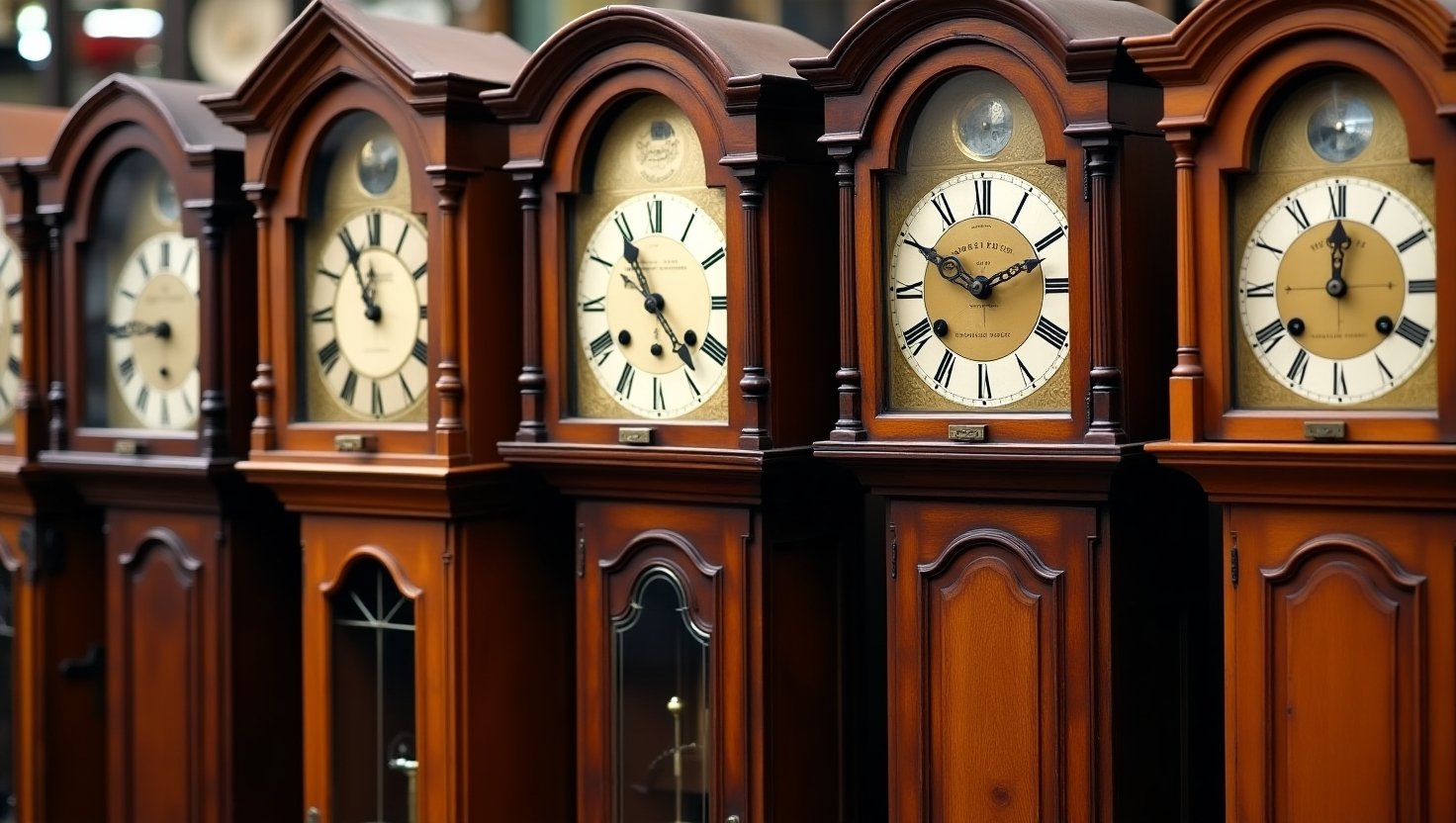
I still remember the first time I saw a Tempus Fugit grandfather clock; it stood taller than me and echoed history with every tick. Turns out, some of these beauties have fetched over $5,000! They’re not just clocks, they’re heirlooms, full of charm, character, and timeless value for your home.
1. Howard Miller Tempus Fugit
I wasn’t really a “clock person” until I came across a Howard Miller Tempus Fugit grandfather clock at an estate sale in Dayton, Ohio, somewhere near West Third Street, if I remember right. The seller said it hadn’t worked in years, but it still looked proud, like it was waiting for someone who actually knew what it was. I paid $450 and took it home in a borrowed pickup. That was five years ago. It still chimes on the hour, every hour.
That’s what these clocks do. They last. And they carry a certain kind of character with them, like they’ve been watching generations come and go. You’ll find Tempus Fugit Howard Miller clocks in homes where family dinners still happen, where grandkids play on old carpets, and time doesn’t feel rushed.
What Makes the Design Special
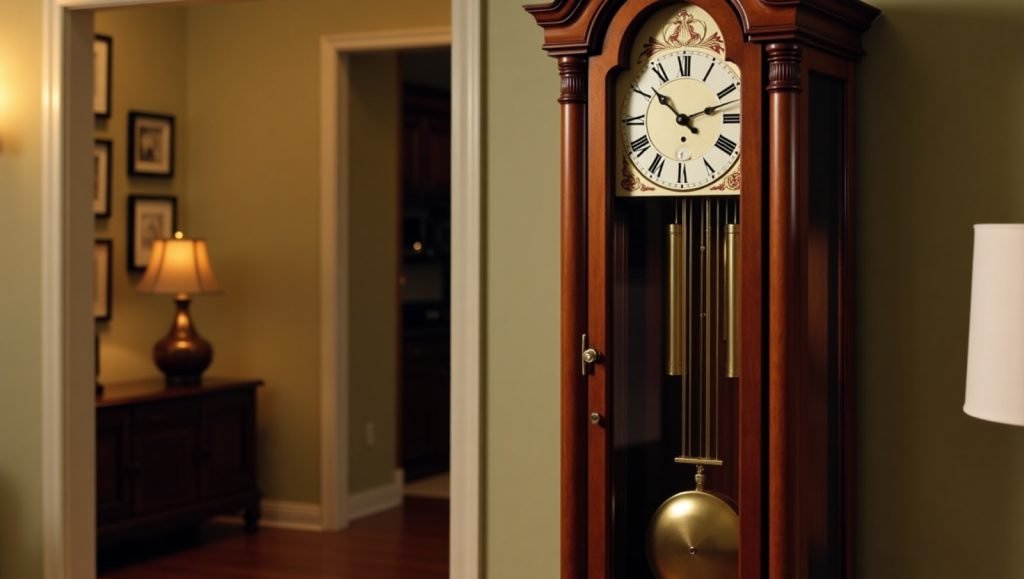
There’s this subtle elegance in the way the dial sits under the arch, especially the ones with the moon phase on top. I’ve seen plenty of grandfather clocks, but the Howard Miller ones, particularly the Tempus Fugit models from the ’80s and ’90s, have a sturdiness that’s rare now. Heavy, but not clunky. Glass panels that don’t rattle. Brass details that haven’t faded even after 30 years.
The one I own has that rich cherry finish that darkens with age. There’s a tiny dent on the side, probably from a kid’s toy truck, judging by the height, but I’ve never had the heart to fix it. It’s part of the story now.
The Chimes That Fill a Home
You don’t realize how much a clock can shape a room until you hear it chime during a quiet afternoon. The Howard Miller chimes aren’t loud or overly dramatic, just warm. Mine plays Westminster, and for some reason, it always makes my dog look up from his nap.
People often say things like, “Oh, it sounds just like my grandma’s house.” That’s not nostalgia, that’s sound design. These clocks were built for that.
Figuring Out if It’s the Real Deal
Here’s something I wish I knew earlier: Not all clocks that say Tempus Fugit are Howard Miller. That script above the dial is used on a lot of knockoffs. What you want to look for is a model number label inside the case, usually behind the swinging pendulum or on the backboard. If you’re lucky, you’ll also find the original instruction manual tucked behind the weights.
My tip? If the wood feels light or the pendulum doesn’t swing smoothly, it’s probably not the real thing. Trust your gut. And bring a flashlight when you go clock-hunting.
How Much Is It Worth?
The prices are all over the place. I’ve seen some sell for $600, others hit $3,000, especially if they’ve been serviced and still have that pristine finish. But honestly, it’s not just about market value. I wouldn’t sell mine even if someone offered double what I paid. It’s not just a unique Tempus clock; it’s a piece of the house now.
One of my neighbors, Jack, a retired Navy guy, has one too. His father gave it to him when he bought their family home back in ’97. Still runs like a dream. He swears he only oils it once every couple of years.
2. Ridgeway Tempus Fugit
When I first moved into my aunt’s old house in Charleston, South Carolina, a Ridgeway Tempus Fugit was standing silently in the corner of the hallway, tall, patient, and completely still. She used to keep a doily over the top of it and would say, “That’s the heartbeat of this house.” At the time, I didn’t understand what she meant. Now I do.
It took me almost a year to figure out how to get it running again. I called a retired clockmaker named Leonard, who lived about 40 minutes away. He showed up with a leather toolkit, smelled like pipe tobacco, and treated that clock like it was a living thing. We spent two hours just adjusting the weights and listening to it breathe life again.
Since then, I’ve come to appreciate just how quietly powerful these Tempus Fugit Ridgeway grandfather clocks are.
Details That Age Beautifully
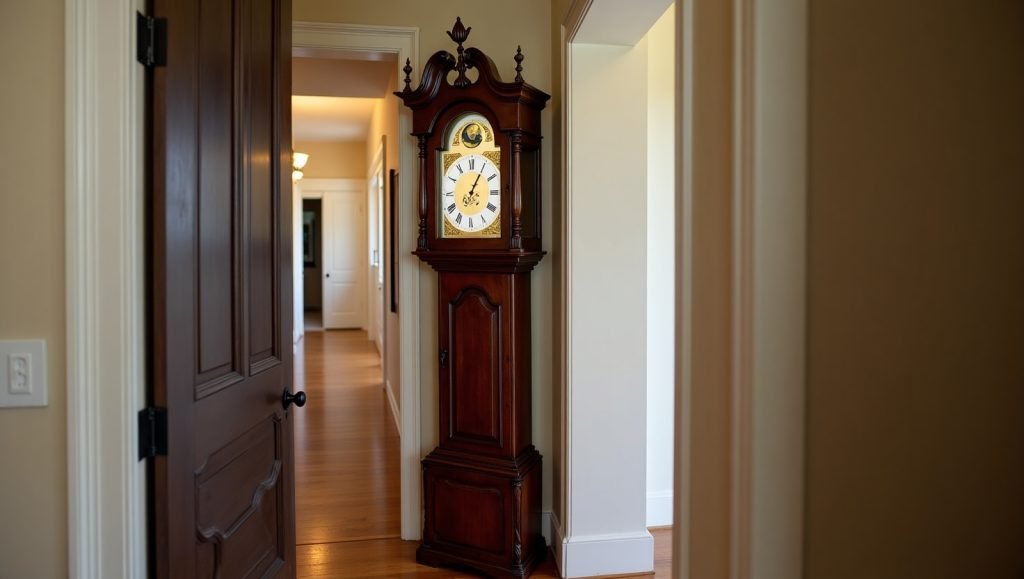
Most Ridgeway clocks, especially those made before the 2000s, have this unmistakable American craftsmanship. Real wood, not veneer. The Tempus Fugit line often features arched pediments, beveled glass, and that classic Roman numeral dial that always seems to catch light just right in the afternoon sun.
One of my favorite touches? The golden moon dial that slowly rotates with the lunar cycle. It’s not just decoration; it connects you to something timeless, almost poetic.
I once saw a similar vintage Ridgeway grandfather clock at a consignment shop in Asheville with carvings so intricate, they looked handmade. Turns out, some of them actually were.
Sound That Fills More Than Silence
If you’ve never heard a Ridgeway chime clock at dusk, you’re missing something. It’s not overly dramatic, more like the soft echo of a church bell in a quiet town. My aunt played Whittington chimes, and every time it rang, it was like the house exhaled.
That sound became part of the rhythm of living there. You’d be doing dishes or folding laundry, and the hour would gently interrupt you. Not annoyingly, just enough to remind you that time is moving, and you’re part of it.
What to Look for When Buying One
First tip: Not every clock labeled “Tempus Fugit” is a Ridgeway. That’s just a Latin phrase meaning “time flies,” and it was slapped on all sorts of copycats. A true Ridgeway will usually have a metal label inside the cabinet or stamped behind the case. Some models also have serial numbers etched into the back of the movement.
And about weight, real Ridgeway clocks are heavy. The kind of heavy that takes two people to move without tilting. If it feels flimsy or the wood is suspiciously light, you’re probably looking at a replica.
Are They Worth Anything Today?
Let’s be real, value can vary. A well-kept Ridgeway Tempus Fugit in original condition can go anywhere from $800 to $2,500, depending on the model, movement, and finish. The one I have? I’ve never thought of selling it. But out of curiosity, I checked with a local clock appraiser. He estimated $1,400 if I had it serviced.
Honestly, though, if you’re asking what it’s worth, you’re asking the wrong question. These clocks aren’t just collectibles, they’re companions. They witness birthdays, arguments, holidays, and quiet nights when nothing happens except the passing of time.
If someone asked me today what the best tempus fugit clock is for a family home, I’d tell them: start with Ridgeway. Not because it’s the most expensive or the flashiest, but because it feels like it belongs. Just like it did in my aunt’s hallway.
3. Emperor Tempus Fugit
I still remember the first time I saw an Emperor Tempus Fugit grandfather clock. It was in my father-in-law’s workshop in Dayton, Ohio. The man was a retired engineer who could fix anything, radios, toasters, and old carburetors. But this clock? He didn’t build it for fixing. He built it for peace.
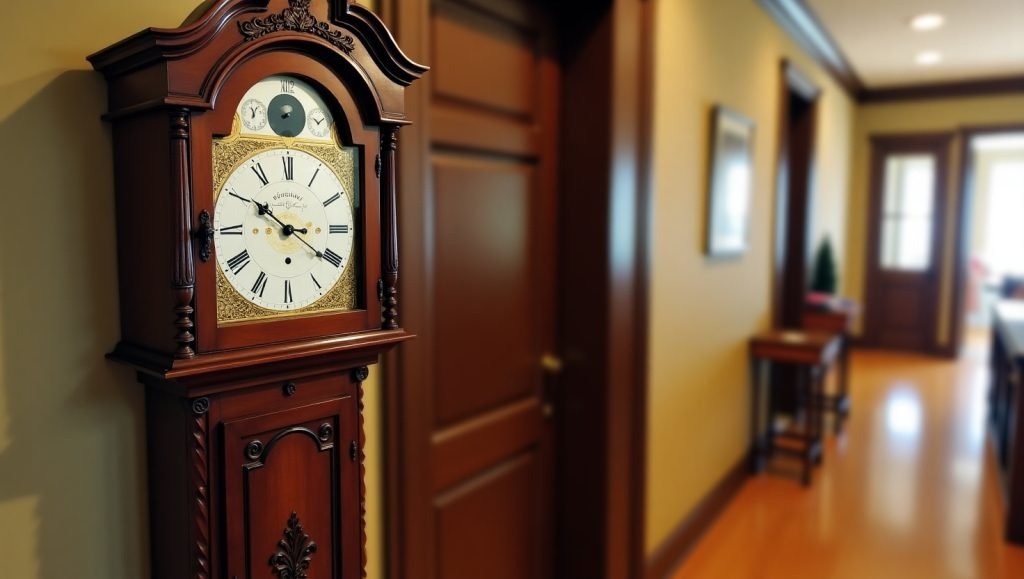
The clock stood tall at nearly 7 feet, dark walnut case gleaming, and that little brass “Tempus Fugit” plate up top. “It’s not just about telling time,” he told me once, wiping the dust off the pendulum. “It’s about feeling it.”
And he was right.
A Clock You Actually Build With Your Hands
Unlike many other grandfather clocks, most Emperor Tempus Fugit models came in kits. You had to assemble them yourself: case, movement, weights, dial, everything. For some folks, that sounds like a chore. But for my father-in-law, it was a project of pride.
He said the process taught him patience. “You don’t just buy time,” he’d say with a smirk, “you earn it.”
And I think that’s what makes these clocks unique. Every Emperor clock carries a bit of its owner’s spirit. Each one is slightly different. Built in someone’s garage, polished by hand, tuned with care. These aren’t mass-produced timepieces. They’re personal.
Craftsmanship You Can Hear and Feel
When his clock chimes at the hour, it’s deep and mellow, not too sharp, not too soft. Like the voice of a kind old friend. I used to sit beside it on cold evenings with a cup of coffee, just waiting for that sound.
The Emperor chime mechanism, especially when it’s the German Hermle movement (which many kits use), is incredibly reliable. You wind it, and it just works, week after week. No buzzing. No skipping. Just steady, calming rhythm.
Spotting a Real One (Not Just a Lookalike)
Since Tempus Fugit became a trendy label slapped on all sorts of clocks, a lot of people confuse Emperor models with cheaper brands. But there are a few signs to watch for:
- True Emperor clocks often have hand-signed internal panels from the builder.
- Their wood feels solid, oak, cherry, walnut, not like particleboard knockoffs.
- The dials typically have the Emperor logo near the moon dial or etched near the chapter ring.
And if you see little pencil marks or handwritten notes inside the case? That’s probably the original owner’s signature or assembly marks, a touch you won’t find on factory-made clocks.
What Are Emperor Tempus Fugit Clocks Worth?
Monetarily? You might see prices between $600 to $1,800, depending on craftsmanship, condition, and whether it uses the German movement. But again, and I can’t stress this enough, the real value is in the connection.
The Emperor clock in our family isn’t just a decorative piece. It’s part of our weekends. It chimed when my son took his first steps. It rang softly during quiet snowfalls. My wife says it still smells faintly of sawdust and aftershave when you open the glass door.
If you’re looking for the best Tempus Fugit grandfather clock with a personal soul, the Emperor Tempus Fugit is it. It’s not for everyone; it’s for those who like to build, to preserve, and to feel their home a little more deeply.
2. Sligh Tempus Fugit
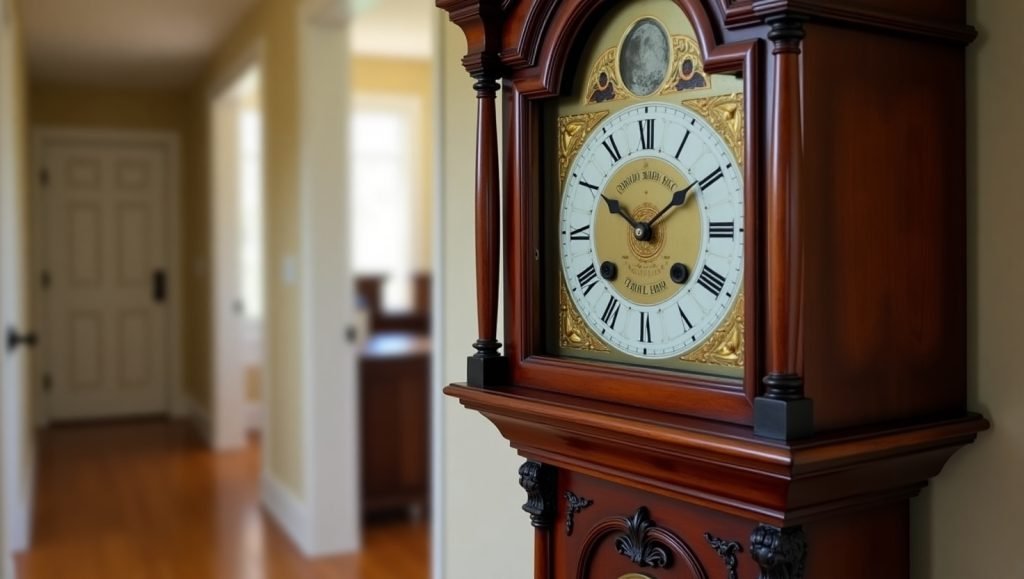
When I first moved to Indiana in 2004, I rented a little two-bedroom farmhouse on the edge of town. The living room had wood-paneled walls, an old cast-iron stove, and, tucked into one corner, a tall, dusty Sligh Tempus Fugit grandfather clock. I didn’t know much about clocks back then, but something about this one pulled me in.
It didn’t tick at the time. The pendulum hung still, weights tangled like a forgotten necklace. But even silent, it had presence. It was waiting patiently for someone to care again.
Built With Real American Heart
The Sligh Furniture Company started in Grand Rapids, Michigan, part of that golden era of American furniture. They didn’t just make cabinets or chairs. They made heirlooms. And when Sligh ventured into clocks, especially their Tempus Fugit series, they carried that same soul into every curve and chime.
These aren’t just showpieces. A Sligh Tempus Fugit clock was something families saved up for. Something you saw at your grandma’s house, chiming during Sunday dinner. They were proudly American-made, crafted with solid cherry and oak, often paired with German Kieninger movements, some of the best in the business.
Restoring Mine Was Like Fixing Time Itself
About a month after moving in, I decided to fix that old Sligh clock. Not professionally, I just Googled a few things, watched some videos, and took it slow. Cleaning the gears, replacing the suspension spring, and carefully untangling the chains. And then one morning, I gave the pendulum a push… and it ticked. Soft and steady.
I’ll never forget that sound. It felt like the house sighed with relief, as something had come back to life.
That’s the thing about Sligh Tempus Fugit clocks—they’re resilient. You can neglect them for years, but if you show them care, they forgive. They’re not just machines. They’re memory-keepers.
Design That Blends Elegance With Warmth
One of the things that stands out about Sligh is its balanced design. Not overly ornate like some European clocks, but not too plain either. They’ve got graceful bonnets, brass moon dials, beveled glass, all the details you’d expect from a premium clock, without being flashy.
They’re clocks you live with, not just look at. I’ve had friends walk into the room and pause mid-sentence just to admire it. One neighbor even called it “the heartbeat of your house.” And honestly? That’s exactly how it feels.
Are Sligh Tempus Fugit Clocks Valuable?
In today’s market, a well-kept Sligh Tempus Fugit might go for $900 to $2,500, depending on the wood, movement, and condition. But their real value isn’t what they’re worth, it’s what they witness.
Mine was ticking during my daughter’s first snow day. It chimed when I got the call about my new job. And it stood quietly in the background when we said goodbye to our dog, Max. It’s been there, through joy and grief, laughter and stillness.
If you’re looking for a clock that blends Midwestern reliability, handcrafted elegance, and a truly emotional connection, the Sligh Tempus Fugit is a name you’ll want to remember. It’s more than a piece of furniture — it’s a companion through time.
5. German Vintage Tempus Fugit Models
When it comes to clocks that feel like time itself lives inside them, nothing quite compares to a German Vintage Tempus Fugit. These aren’t your average decorative pieces. They’re heavy with history, quiet with precision, and usually come with a story, if not a secret or two.
My friend Karl, who grew up in Ohio, told me how his grandfather brought one back from a trip to the Black Forest in the 1960s. He said, “Every time it chimed, it felt like my granddad was still in the room.” I believe him. These clocks don’t just measure time; they carry it.
Movement Types Compared
One thing that separates German vintage models from others is the movement, mechanical, weight-driven, and built to last for generations. If you’ve ever wound a German clock, you know it’s not just an action, it’s a ritual.
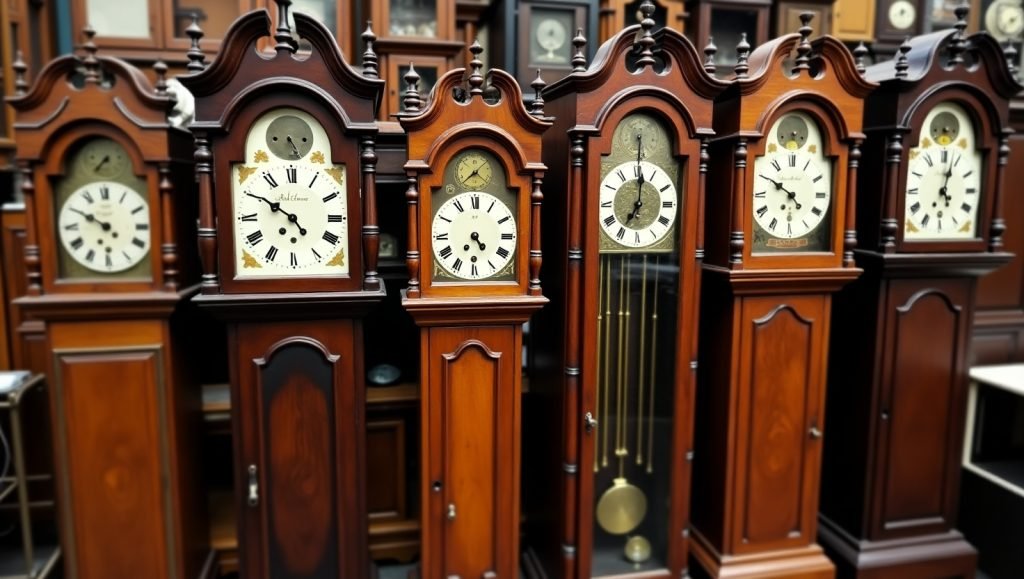
Most of these German Tempus Fugit clocks feature 8-day mechanical movements, some made by respected names like Hermle or Kieninger. Others may carry triple-chime features (Westminster, Whittington, or St. Michael), giving you the luxury of choice and tone.
I remember helping a neighbor set one up. We opened the back panel, and the craftsmanship in the movement gears looked like something out of a Swiss watch, but sturdier.
Signature German Craftsmanship
You can spot a German vintage Tempus Fugit from across the room. The casing? Almost always solid wood, not veneer. The detailing? Crisp carvings, polished brass dials, and moon phase wheels so detailed you’d think they belonged in a planetarium.
But here’s the kicker: They age beautifully. These clocks don’t just “hold up”, they mature, like fine wine or leather boots. Their weight, their feel, the way the chimes echo just a little longer than modern builds… It’s different. It’s soulful.
Maker Mark Identification
Finding the maker’s mark on one of these clocks is like discovering a signature in an old painting. Flip the clock around or lift the dial panel gently, and you might see an engraved “Made in West Germany,” a Hermle gear stamp, or even a sticker with hand-written numbers.
These hidden clues tell a story, not just about the brand, but the era. Post-war Germany, Black Forest artisans, precision engineering, all tucked inside a wooden box that ticks away like it’s whispering secrets.
Knowing how to spot these marks is essential if you’re collecting or restoring. And trust me, there are communities online and local clock repair shops in places like Chicago and Philadelphia that love helping identify these.
Restoration Potential
Let’s talk reality, some of these clocks have been through decades of moves, basements, and dust. But here’s the beauty: German Vintage Tempus Fugit clocks were built with such care that most of them can be brought back to life.
I’ve seen people restore these for under $150 using original parts sourced from eBay or specialist horology suppliers. One guy in Michigan even refinished his grandfather’s clock with his teenage son, turning it into a weekend project that connected three generations.
Restoring one of these clocks isn’t just about fixing something; it’s about bringing it back into the family story. And honestly? That’s worth more than anything you’ll find on Amazon.
Final Thought
There’s something quietly powerful about a Tempus Fugit grandfather clock; it doesn’t just tell time, it reminds you of it. Whether it’s the timeless grace of a Howard Miller, the heritage of Ridgeway, the distinctive build of a Sligh, or the silent strength of a vintage German model, each one carries more than chimes and gears; it carries stories.
In a world rushing toward digital everything, these clocks stand still, not in time, but in purpose. They invite us to slow down, to notice moments, and to hold on to legacies passed down through families, just like the one my neighbor dusts off every Sunday before dinner.
If you’re lucky enough to own one, or hoping to find the right piece, know this: a Tempus Fugit grandfather clock isn’t just decor. It’s a companion. A keeper of history. And in many homes, it’s the heartbeat of the room.
Whether you’re restoring a piece you found at a yard sale or protecting the one that’s ticked in your family for generations, just know: you’re not just keeping time, you’re keeping tradition alive.
FAQs About Tempus Fugit Grandfather Clocks
1. What does “Tempus Fugit” mean on a grandfather clock?
It means “Time Flies” in Latin. It’s a decorative phrase, not a brand name.
2. Are Tempus Fugit clocks valuable?
Yes, especially if made by brands like Howard Miller, Ridgeway, or German makers. Value depends on condition and originality.
3. How can I identify the maker of my Tempus Fugit clock?
Check inside the case for a label, serial number, or stamped logo, often near the movement.
4. Do these clocks need a lot of maintenance?
No. Just regular dusting, oiling every few years, and leveling if it’s mechanical.
5. Can old Tempus Fugit clocks be restored?
Yes, most can be repaired or restored by a clockmaker or restoration expert.












Post Comment