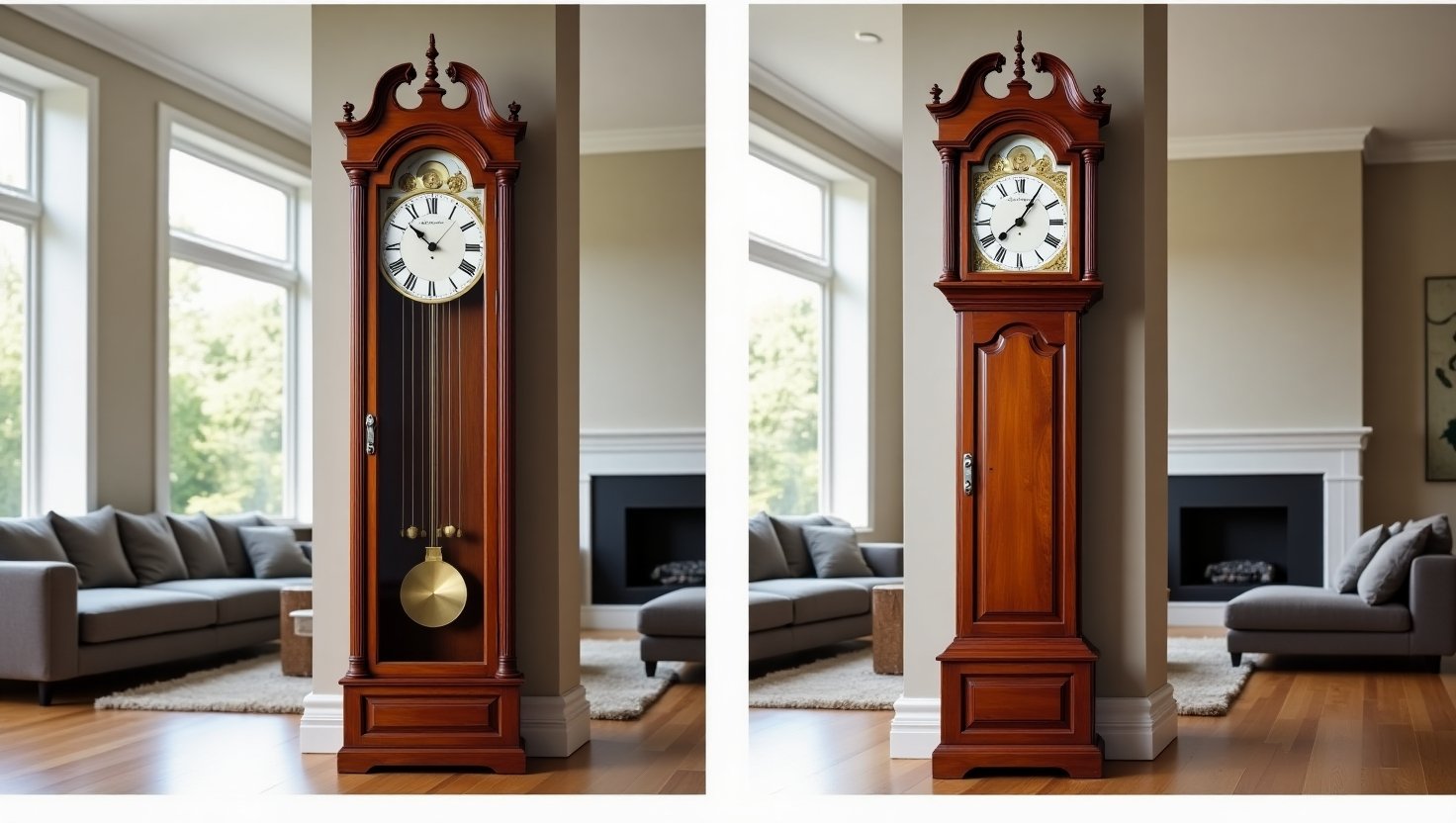
Granddaughter vs Grandfather Clock
Granddaughter vs Grandfather Clock Compact Elegance Meets Timeless Tradition
When it comes to choosing a traditional timepiece for your home, the debate between granddaughter and grandfather and granddaughter clocks has become increasingly relevant in modern interior design. While grandfather clocks have dominated homes for centuries with their imposing presence, granddaughter clocks are gaining popularity as a space-conscious alternative that doesn’t compromise on elegance or functionality.
The choice between these two timepieces goes beyond mere aesthetics. It involves understanding the practical implications of space, maintenance requirements, sound levels, and how each clock type integrates with contemporary living spaces. Whether you’re a clock enthusiast, interior design lover, or someone seeking the perfect statement piece, this comprehensive guide will help you make an informed decision that suits your lifestyle and home environment.
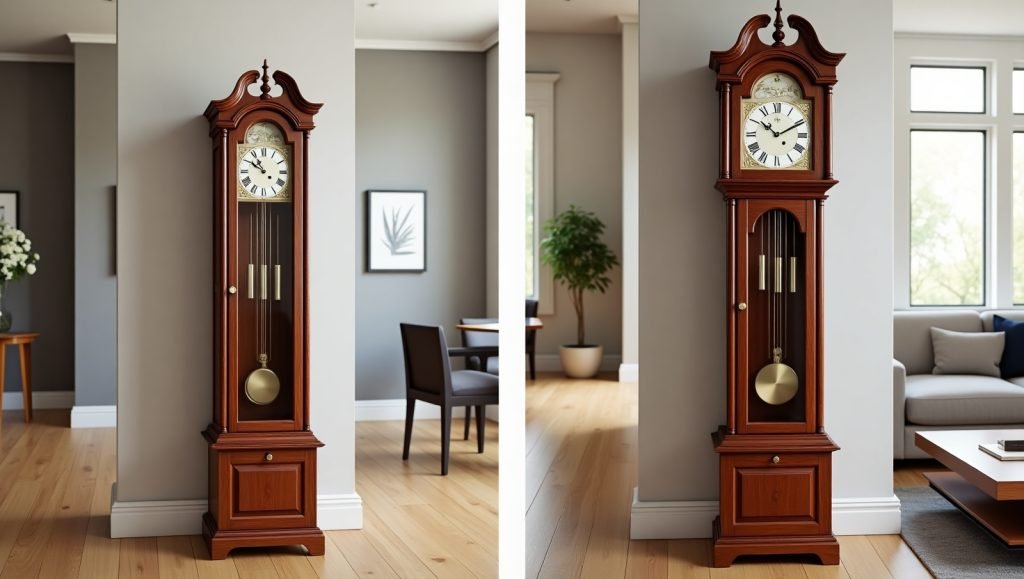
1. Understanding Granddaughter Clocks: A Brief Overview
What is a Granddaughter Clock?
A granddaughter clock represents the modern evolution of traditional longcase clocks, designed specifically to meet the demands of contemporary living spaces. Standing typically between 5 and 6 feet tall, these timepieces offer the same mechanical precision and aesthetic appeal as their larger counterparts while occupying significantly less floor space.
The term “granddaughter clock” emerged in the mid-20th century as clockmakers recognized the need for more compact versions of the beloved grandfather clock. These clocks maintain the essential elements that make longcase clocks special: the pendulum mechanism, chiming capabilities, and elegant wooden cases, but in a more manageable size that fits comfortably in apartments, condos, and smaller homes.
Unlike their towering relatives, granddaughter clocks are designed with modern households in mind. They typically feature quieter chiming mechanisms, making them suitable for bedrooms and study areas where a full-volume grandfather clock might be disruptive. The craftsmanship remains exceptional, with many manufacturers using the same high-quality materials and traditional techniques used in larger clocks.
How Granddaughter Clocks Work
The mechanical operation of a granddaughter clock mirrors that of a grandfather clock, utilizing a weight-driven pendulum system that has remained largely unchanged for centuries. The clock mechanism consists of three main components: the movement, the pendulum, and the weights that power the entire system.
The movement houses the intricate gear system that translates the energy from falling weights into precise timekeeping. As weights descend slowly over time, they turn the gears that move the clock hands and regulate the pendulum’s swing. The pendulum serves as the timekeeper, with its consistent back-and-forth motion ensuring accurate timekeeping when properly calibrated.
What sets granddaughter clocks apart mechanically is their scaled-down proportions. The pendulum is shorter than that of a grandfather clock, which means it swings at a slightly different rate. However, modern engineering ensures that this doesn’t compromise accuracy. Many granddaughter clocks achieve the same precision as their larger counterparts, with some high-end models featuring advanced escapement mechanisms that rival any traditional timepiece.
Key Features and Benefits
Granddaughter clocks offer several distinct advantages that make them increasingly popular among modern homeowners. Space efficiency stands as their primary benefit, requiring only about 60% of the floor space needed for a traditional grandfather clock while maintaining the same visual impact and functional capabilities.
The sound profile of granddaughter clocks is particularly appealing for contemporary living. Many models feature adjustable chiming mechanisms that allow owners to customize volume levels or even silence the chimes during specific hours. This makes them ideal for apartments, condominiums, or homes where noise considerations are important.
From a maintenance perspective, granddaughter clocks are generally easier to service and move. Their lighter weight makes relocation simpler, whether you’re rearranging furniture or moving to a new home. The smaller mechanism also means less oil is required for maintenance, and the compact size makes it easier for clock repair specialists to work on them in your home rather than requiring removal to a workshop.
2. Differences Between Granddaughter Clocks and Grandfather Clocks
Design and Aesthetics
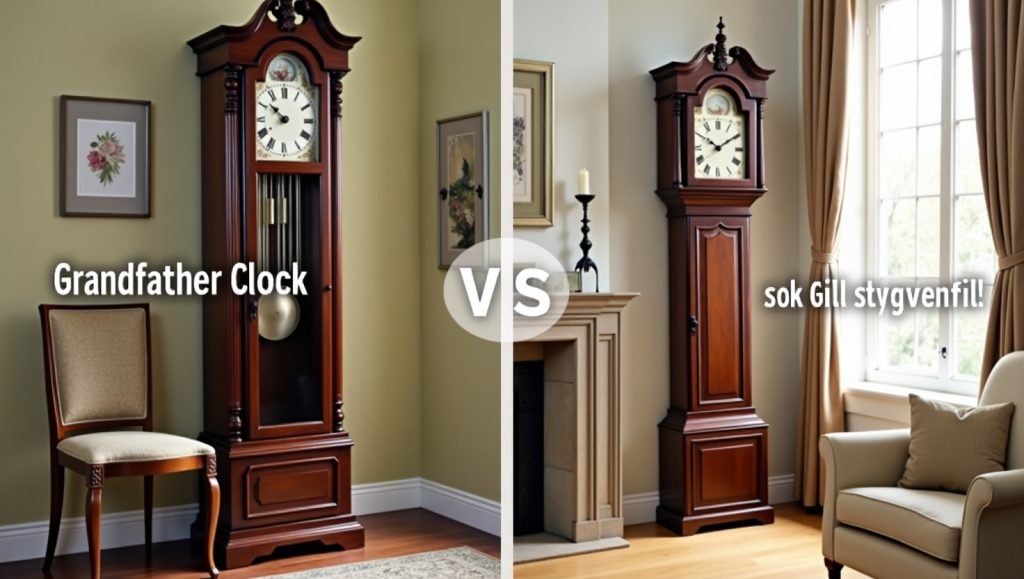
The most obvious difference between granddaughter and grandfather and granddaughter clocks lies in their physical dimensions and overall presence. Grandfather clocks typically stand 6 to 8 feet tall, creating a commanding focal point that can dominate a room’s visual hierarchy. Their substantial height allows for larger clock faces, more elaborate case designs, and additional decorative elements such as moon phase indicators or multiple chime selections.
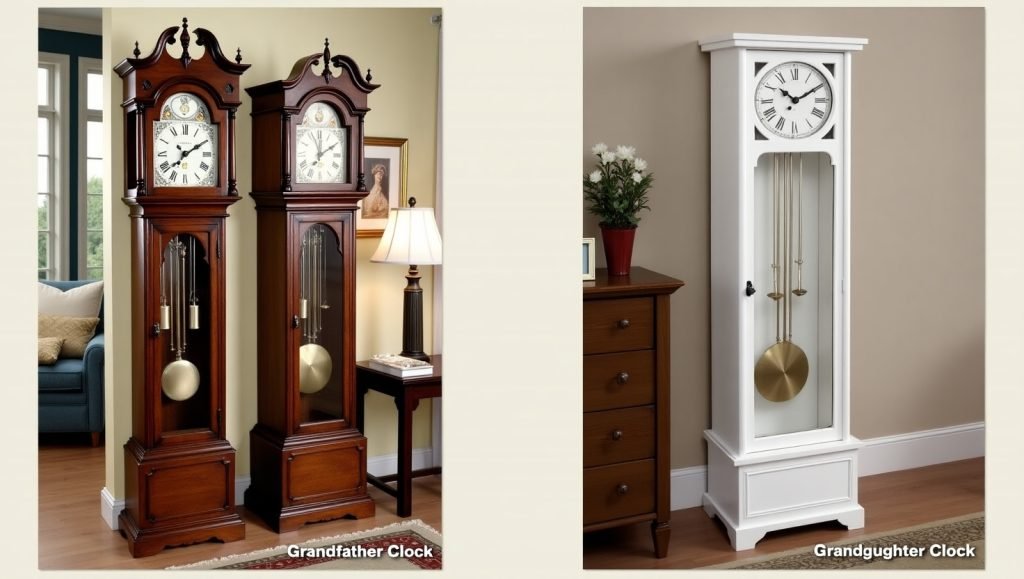
Granddaughter clocks, while shorter, compensate for their reduced height through refined proportions and elegant detailing. Designers often incorporate more intricate woodwork, sophisticated finishes, and carefully balanced proportions that create visual appeal without overwhelming smaller spaces. The case designs frequently feature slimmer profiles and more contemporary styling options that blend seamlessly with modern furniture.
The clock face size difference is noticeable but not necessarily disadvantageous. While grandfather clocks may feature faces up to 12 inches in diameter, granddaughter clocks typically have 8 to 10-inch faces that remain easily readable from across a room. Many manufacturers use larger numerals and bolder hands on granddaughter clocks to maintain excellent visibility despite the smaller overall size.
Color and finish options often favor granddaughter clocks, as manufacturers recognize their role in contemporary decor schemes. You’ll find granddaughter clocks available in a wider range of wood stains, painted finishes, and even mixed-material designs that incorporate metal or glass elements alongside traditional wood construction.
Functionality and Timekeeping
Both clock types deliver exceptional timekeeping accuracy when properly maintained, but their functional differences extend beyond basic time display. Grandfather clocks often feature more complex chiming systems, with options for Westminster, Whittington, and St. Michael chimes, plus hourly strike patterns that can be quite elaborate.
Granddaughter clocks typically offer simpler chiming options, focusing on the most popular Westminster chimes while providing better volume control. This simplified approach actually benefits many users, as it reduces the complexity of setup and maintenance while still providing the satisfying sound that makes longcase clocks so appealing.
The weight system in granddaughter clocks runs for the same duration as grandfather clocks, typically 8 days between windings. However, the smaller weights are easier to handle during the winding process, making regular maintenance less physically demanding. Some granddaughter clock models feature longer-running movements that can operate for up to 31 days between windings.
Temperature and humidity sensitivity remain similar between both clock types, but granddaughter clocks may be slightly less affected due to their smaller case volume and reduced wood surface area. This can translate to more consistent timekeeping in homes with variable climate conditions.
Maintenance and Durability
Maintenance requirements for both clock types follow similar schedules, but granddaughter clocks often present practical advantages for ongoing care. The lower height makes accessing the movement for routine oiling and adjustment much easier, eliminating the need for ladders or stools that grandfather clock maintenance sometimes requires.
Cleaning procedures are simplified with granddaughter clocks due to their more manageable size. Dusting the case, polishing the wood, and cleaning the glass panels can be accomplished more quickly and thoroughly. The smaller pendulum chamber also accumulates less dust and debris over time.
Professional servicing costs tend to be slightly lower for granddaughter clocks because repair technicians can often service them in place rather than requiring removal to a workshop. The lighter weight and smaller dimensions make transportation unnecessary for many types of repairs and adjustments.
Long-term durability is comparable between both clock types when quality construction is present. However, granddaughter clocks may experience less stress on their cases and mounting points due to reduced weight and smaller pendulum forces. This can translate to longer intervals between major mechanical overhauls.
3. Integrating Modern Features into Traditional Granddaughter Clocks
Contemporary Upgrades for Vintage Styles
Modern granddaughter clock manufacturers have successfully integrated contemporary features while preserving traditional aesthetics. LED lighting systems now illuminate clock faces and case interiors, providing better visibility and creating dramatic ambiance during evening hours. These systems often include dimmer controls and color temperature adjustment to complement different room lighting schemes.
Digital integration has also found its way into high-end granddaughter clocks through discrete sensors that monitor temperature, humidity, and even air quality. Some models include smartphone connectivity that allows owners to receive maintenance reminders and track the clock’s performance over time without compromising the traditional appearance.
Sound customization represents another significant modern upgrade. Advanced granddaughter clocks now offer digital sound libraries with dozens of chime options, volume scheduling that automatically adjusts throughout the day, and even the ability to play custom audio files for special occasions or personal preferences.
Case construction has benefited from modern materials science, with some manufacturers incorporating engineered woods that offer greater stability and resistance to environmental changes while maintaining the appearance of traditional hardwoods. These materials reduce the likelihood of case warping or cracking over time.
DIY Enhancement Tips
Clock enthusiasts can implement several DIY enhancements to modernize their granddaughter clocks without compromising their traditional character. Installing battery-powered LED strip lighting inside the case can dramatically improve face visibility and create stunning visual effects, especially in darker rooms or during evening hours.
Upgrading the pendulum bob with a decorative version can personalize the clock’s appearance. Many suppliers offer custom-engraved pendulum bobs that can include family names, special dates, or decorative patterns that reflect the owner’s style preferences.
Adding protective felt pads underneath the clock base prevents floor scratching and reduces vibration transmission, which can improve both timekeeping accuracy and noise levels. High-quality furniture pads also make repositioning the clock easier when cleaning or rearranging furniture.
Sound-dampening modifications can be particularly valuable in apartments or shared living spaces. Installing acoustic foam inside the case, adjusting hammer positions, or adding felt dampers to chime rods can significantly reduce volume levels without eliminating the satisfying chime sounds entirely.
Benefits of Modernization
Modernizing granddaughter clocks extends their functionality while preserving their traditional appeal. Enhanced lighting systems make these timepieces more versatile as decorative elements, allowing them to serve as ambient lighting sources during evening hours while maintaining their primary function as accurate timepieces.
Improved maintenance monitoring through modern sensors can prevent costly repairs by alerting owners to developing issues before they become serious problems. Temperature and humidity monitoring help maintain optimal conditions for both the clock mechanism and wooden case, potentially extending the clock’s lifespan significantly.
Sound customization capabilities make granddaughter clocks more adaptable to different living situations. The ability to adjust chiming schedules, volume levels, and even sound characteristics means these clocks can remain functional and enjoyable regardless of changing household needs or living arrangements.
Integration with smart home systems allows granddaughter clocks to participate in whole-house automation schemes. Some models can trigger lighting changes, security system events, or other automated responses based on time-of-day or special occasions, adding practical value beyond their traditional timekeeping function.
4. Common Issues with Granddaughter Clocks and How to Solve Them
Pendulum Adjustment Problems
Pendulum-related issues represent the most common problems granddaughter clock owners encounter. When a clock runs too fast or too slow, the solution typically involves adjusting the pendulum length through the regulation nut located at the bottom of the pendulum bob. Turning the nut clockwise shortens the effective pendulum length and speeds up the clock, while counterclockwise rotation lengthens the pendulum and slows the timekeeping.
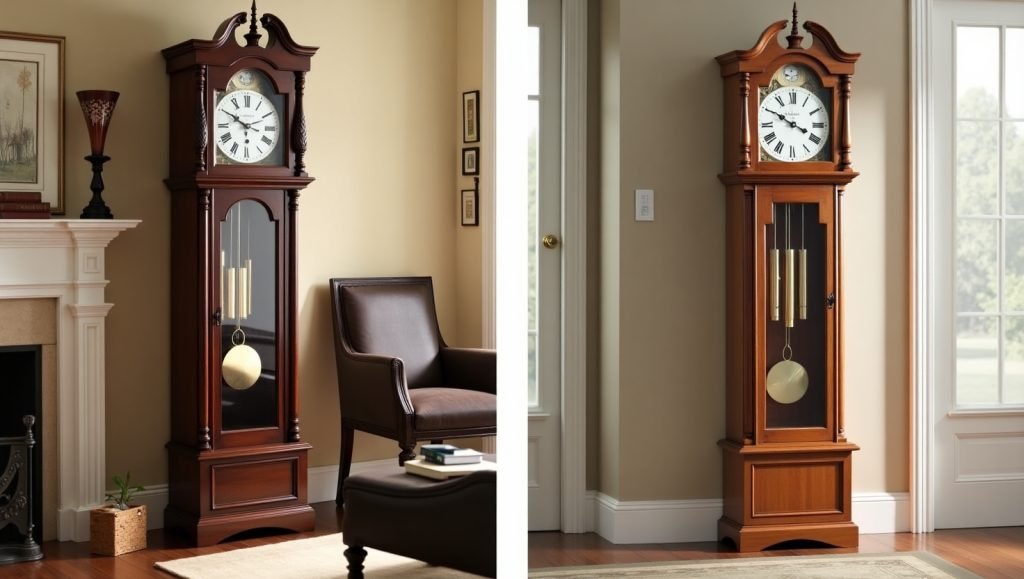
Environmental factors significantly impact pendulum performance in granddaughter clocks. Temperature changes cause the pendulum rod to expand or contract, affecting timekeeping accuracy. Most quality granddaughter clocks feature temperature-compensated pendulums that minimize this effect, but older or lower-quality models may require seasonal adjustments to maintain accuracy.
Pendulum amplitude problems occur when the pendulum swing becomes too narrow or too wide. Insufficient swing amplitude usually indicates that the clock needs winding, the weights are binding, or the escapement requires cleaning and lubrication. Excessive amplitude can cause timekeeping irregularities and may indicate that the clock case isn’t level or the escapement needs adjustment.
Stopping pendulum issues often stem from case stability problems or interference from nearby objects. Granddaughter clocks require perfectly level placement and sufficient clearance around the pendulum chamber. Even slight case movement from foot traffic or building settling can disrupt pendulum operation and cause the clock to stop running.
Chime Timing and Sound Issues
Chiming synchronization problems frequently affect granddaughter clocks, particularly when the chimes don’t align properly with the time display. This issue typically develops gradually as the chiming mechanism and timekeeping mechanism operate independently. The solution involves manually advancing the minute hand to the next chiming position and allowing the chimes to complete their sequence before continuing to set the correct time.
Volume inconsistencies in chiming can result from several factors including worn hammer pivots, accumulated dust on chime rods, or loose mounting hardware. Regular cleaning of the chiming mechanism and proper lubrication of moving parts usually resolves these issues. Some granddaughter clocks also allow hammer position adjustment to achieve more consistent strike intensity.
Chime rod tuning problems become apparent when individual notes sound flat, sharp, or muffled compared to others in the sequence. This typically requires professional attention, as chime rod adjustment involves precise measurements and specialized tools. However, simple cleaning with appropriate solvents can sometimes restore proper chime clarity.
Silent chiming periods may indicate problems with the chiming train mechanism or the night silence feature if equipped. Many granddaughter clocks include automatic chime silencing during nighttime hours, which can malfunction and cause extended silent periods. Checking the silence lever position and related mechanisms usually identifies and resolves these issues.
Case Stability and Weight Distribution
Case stability issues in granddaughter clocks often manifest as irregular timekeeping, pendulum stopping, or vibration problems during chiming sequences. The compact design of granddaughter clocks makes proper weight distribution critical for stable operation. Unlike grandfather clocks with their broader base, granddaughter clocks require careful attention to floor conditions and leveling.
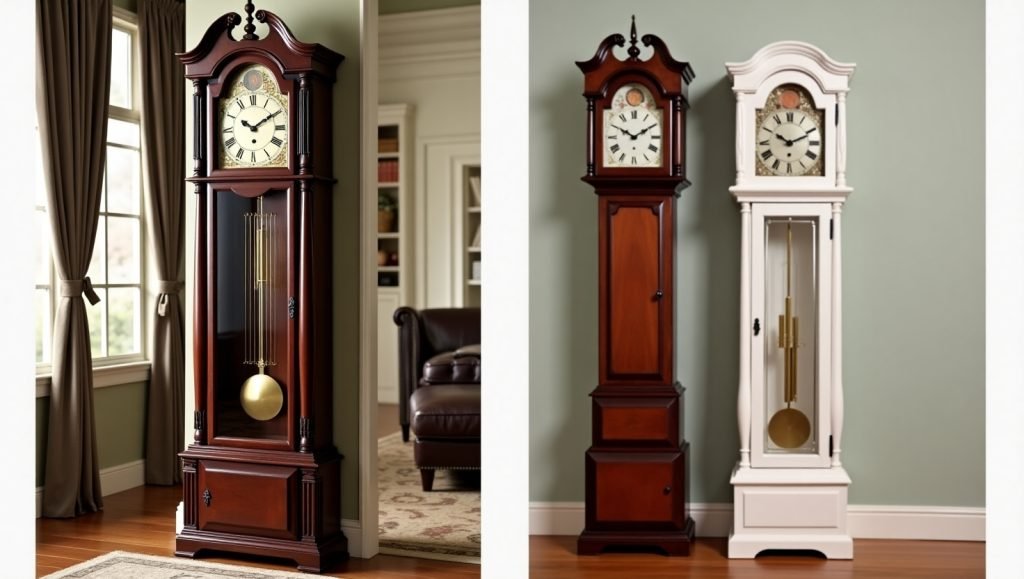
Foundation problems frequently affect granddaughter clock performance when placed on uneven floors or soft surfaces like thick carpeting. Installing leveling feet or a stable platform can resolve most stability issues. Some owners find that a heavy wooden base or stone platform provides the solid foundation needed for consistent operation.
Weight distribution within the clock case requires periodic attention as settling occurs over time. The weights themselves should hang freely without touching case sides, and their cables or chains should operate smoothly over their pulleys. Binding or friction in the weight system directly affects timekeeping accuracy and can cause the clock to stop unexpectedly.
Vibration transmission to surrounding furniture or walls can amplify chiming sounds and create unwanted noise issues. Isolation pads between the clock base and floor, combined with ensuring adequate clearance from walls and furniture, usually eliminates these problems while improving overall clock performance.
5. Why Clock Enthusiasts are Choosing Granddaughter Over Grandfather Clocks
Space-Saving Meets Elegance
Modern living spaces increasingly favor granddaughter clocks because they deliver the elegance and sophistication of traditional longcase clocks without overwhelming smaller rooms. Urban apartments, condominiums, and contemporary homes with open floor plans benefit from the granddaughter clock’s ability to create a focal point without dominating the available space.
The proportional relationship between granddaughter clocks and modern furniture scales works particularly well in today’s interior design trends. While grandfather clocks can appear oversized in rooms with standard 8-foot ceilings, granddaughter clocks maintain perfect proportional balance, enhancing rather than overwhelming the room’s visual composition.
Placement flexibility represents another significant advantage driving the popularity of granddaughter clocks. Their moderate height allows positioning in locations where grandfather clocks wouldn’t fit, such as beneath stairways, in corner nooks, or adjacent to built-in cabinetry. This flexibility makes them suitable for a wider range of interior design schemes and room configurations.
The visual impact of granddaughter clocks proves that size doesn’t determine presence. Well-designed granddaughter clocks command attention through refined details, quality craftsmanship, and elegant proportions rather than sheer scale. This approach appeals to design-conscious consumers who prefer sophisticated subtlety over imposing grandeur.
Innovation in Compact Design
Manufacturers have embraced the challenge of creating granddaughter clocks that maximize functionality within compact dimensions. Advanced engineering techniques allow modern granddaughter clocks to incorporate features previously available only in larger timepieces, including complex chiming systems, multiple time zones, and sophisticated mechanical complications.
Precision manufacturing has enabled granddaughter clock makers to achieve remarkable accuracy levels that often exceed those of larger clocks. Computer-controlled machining ensures perfect gear ratios and escapement geometry, while advanced materials provide greater durability and temperature stability than traditional components.
Case design innovation focuses on maximizing internal space efficiency while maintaining elegant external proportions. Modern granddaughter clocks often feature ingenious internal layouts that accommodate full-sized movements within compact cases, achieving performance levels that were impossible with earlier compact clock designs.
Customization options have expanded significantly as manufacturers recognize the diverse needs of granddaughter clock buyers. Modular designs allow customers to specify case styles, movement features, and finishing options that perfectly match their preferences and interior design requirements.
The Rise of Smaller Statement Pieces
Contemporary interior design trends increasingly favor curated collections of smaller statement pieces over single large focal points. Granddaughter clocks fit perfectly into this philosophy, providing significant visual impact while leaving room for other decorative elements and furniture arrangements that reflect personal style.
Lifestyle changes have also influenced the preference for granddaughter clocks among younger collectors and homeowners. The mobility required by modern careers makes lighter, more portable timepieces attractive. Granddaughter clocks can move with their owners more easily than massive grandfather clocks, making them practical investments for dynamic lifestyles.
Investment considerations favor granddaughter clocks for many collectors because they often provide better value propositions than their larger counterparts. Quality granddaughter clocks can be acquired for significantly less than comparable grandfather clocks, while still offering the same mechanical sophistication and craftsmanship quality.
Social factors contribute to granddaughter clock popularity as they’re less intimidating for first-time clock owners. Their manageable size and simpler maintenance requirements make them ideal entry points for people interested in mechanical timepieces but hesitant to commit to the space and maintenance demands of grandfather clocks.
6. Where to Buy Granddaughter Clocks vs Grandfather Clocks
Trusted Online Retailers
The digital marketplace has revolutionized clock purchasing, offering access to manufacturers and dealers worldwide. Established online retailers like Wayfair, Amazon, and specialized clock dealers provide extensive selections of both granddaughter and grandfather clocks with detailed specifications, customer reviews, and competitive pricing.
Manufacturer direct sales websites often offer the best selection of current models along with customization options not available through third-party retailers. Companies like Howard Miller, Hermle, and Ridgeway maintain comprehensive online catalogs with detailed technical information and customer support resources that help buyers make informed decisions.
Auction sites and estate sale platforms provide opportunities to acquire vintage and antique granddaughter clocks at potentially attractive prices. However, these purchases require more expertise to evaluate condition, authenticity, and restoration requirements. Professional inspection is often advisable before committing to significant purchases through these channels.
Online specialty clock retailers offer the advantage of focused expertise and customer service specifically tailored to clock buyers. These dealers typically provide more detailed technical support, better warranty coverage, and specialized shipping services designed to protect delicate timepieces during transport.
Local Antique and Clock Shops
Local clock shops provide invaluable advantages for granddaughter clock purchases, particularly the opportunity to examine timepieces in person before buying. Hearing the chiming characteristics, assessing case quality, and evaluating overall condition becomes much easier when dealing with physical specimens rather than online descriptions and photographs.
Established clock dealers often maintain repair services and provide ongoing maintenance support for their customers. This relationship can prove extremely valuable over the clock’s lifetime, ensuring access to qualified service technicians familiar with specific models and manufacturers.
Estate sales and antique shops frequently offer unique granddaughter clocks that aren’t available through commercial channels. These venues can be excellent sources for vintage models with character and history that newer clocks cannot match. However, careful evaluation of mechanical condition and restoration requirements is essential.
Clock collector networks and horological societies provide access to private sales and specialized dealers who focus on particular manufacturers or time periods. These connections often lead to exceptional pieces and valuable expertise that benefits both novice and experienced collectors.
Tips for Authentic Purchases
Verification of authenticity becomes critical when purchasing granddaughter clocks, particularly vintage or antique pieces. Reputable manufacturers typically mark their products with company names, model numbers, and production dates in discrete locations within the case or on the movement itself.
Documentation accompanying the clock should include warranty information, instruction manuals, and any available provenance details. Original paperwork significantly enhances both the clock’s value and the buyer’s confidence in its authenticity and history.
Professional appraisal services can provide peace of mind for significant purchases, particularly when buying vintage or antique granddaughter clocks. Qualified appraisers can verify authenticity, assess condition, and provide valuation information useful for insurance purposes.
Return policies and warranty coverage vary significantly between sellers, making careful review of purchase terms essential before committing to expensive timepieces. Reputable dealers typically offer reasonable return periods and comprehensive warranty coverage that protects buyers against manufacturing defects and shipping damage.
7. Maintenance Tips for Long-Lasting Granddaughter Clock Performance
Regular Oiling and Cleaning
Proper lubrication represents the most critical factor in maintaining granddaughter clock performance and longevity. Clock movements require specialized oils applied to specific pivot points, gear interfaces, and escapement components according to manufacturer schedules, typically every 3 to 5 years depending on environmental conditions and usage patterns.
Professional oiling services ensure that appropriate lubricants are applied in correct quantities to designated locations without contaminating surrounding components. Over-oiling can attract dust and debris that accelerates wear, while insufficient lubrication causes increased friction and potential damage to delicate mechanical parts.
Case cleaning requires regular attention to maintain appearance and prevent dust accumulation that can affect movement operation. Weekly dusting with appropriate cloths, monthly cleaning of glass panels, and periodic wood conditioning help preserve the clock’s aesthetic appeal while protecting mechanical components from environmental contamination.
Movement cleaning involves removing accumulated dust, old lubricants, and debris from gear trains, escapements, and weight systems. This process typically requires partial disassembly and should be performed by qualified technicians who understand the complex relationships between components and proper reassembly procedures.
Proper Placement for Best Performance
Location selection significantly impacts granddaughter clock performance and longevity. Ideal placement involves stable, level surfaces away from heat sources, air conditioning vents, and areas with significant temperature fluctuations that can affect timekeeping accuracy and case stability.
Environmental conditions should remain relatively consistent, with humidity levels between 35% and 50% to prevent wood movement and metal corrosion. Extreme dryness can cause case cracking and joint separation, while excessive humidity promotes rust formation and wood swelling that can bind mechanical components.
Clearance requirements around granddaughter clocks ensure proper ventilation and prevent interference with pendulum operation. Minimum clearances of 6 inches on all sides allow adequate air circulation while providing access for routine maintenance and winding operations.
Floor stability becomes critical for consistent timekeeping, as even minor vibrations can disrupt pendulum operation and affect accuracy. Solid floors, proper leveling, and isolation from high-traffic areas contribute to stable operation and reduce the likelihood of timing irregularities.
Seasonal Care and Adjustments
Temperature compensation may require seasonal adjustment in granddaughter clocks without automatic compensation mechanisms. As ambient temperatures change throughout the year, pendulum expansion and contraction affect timekeeping rates, potentially requiring minor regulation adjustments to maintain accuracy.
Humidity control becomes particularly important during seasonal transitions when indoor humidity levels fluctuate significantly. Using appropriate humidification or dehumidification equipment helps maintain stable conditions that preserve both mechanical components and wooden cases.
Weight adjustment and cable inspection should be performed seasonally to ensure proper operation and prevent mechanical problems. Cable stretch, pulley wear, and weight alignment can develop gradually and may require adjustment to maintain smooth operation and accurate timekeeping.
Case conditioning with appropriate wood care products helps protect against seasonal environmental changes that can cause cracking, warping, or finish degradation. Regular application of quality furniture wax or specialized clock case products maintains appearance while providing protection against humidity fluctuations.
8. How to Choose the Right Size Granddaughter vs Grandfather Clock
Measuring Your Available Space
Accurate space measurement involves more than simple height and width calculations. Effective granddaughter clock placement requires considering the visual relationship between the clock and surrounding furniture, ensuring adequate clearance for pendulum operation, and maintaining appropriate proportions within the room’s overall design scheme.
Ceiling height considerations become particularly important when choosing between granddaughter and grandfather clocks. Standard 8-foot ceilings work well with granddaughter clocks but may make grandfather clocks appear cramped or overwhelming. Higher ceilings can accommodate either size effectively, depending on other room proportions and furniture arrangements.
Floor space calculations should include not only the clock’s footprint but also the area needed for safe operation and maintenance access. Granddaughter clocks typically require a 2-foot by 3-foot floor area including clearances, while grandfather clocks may need 3-foot by 4-foot spaces for optimal placement and operation.
Traffic flow patterns within the room must accommodate the clock’s presence without creating obstacles or safety hazards. Granddaughter clocks’ smaller footprint makes them less likely to interfere with normal room circulation, an important consideration in smaller spaces or areas with multiple doorways.
Steps for Perfect Room Integration
Visual balance assessment involves evaluating how the selected clock size relates to existing furniture and architectural elements. Granddaughter clocks work particularly well in rooms with mixed furniture heights, while grandfather clocks may be more appropriate in spaces with consistently tall furniture pieces and higher ceilings.
Style coordination requires considering not only the clock’s physical dimensions but also its design aesthetic and how it complements existing décor elements. Many granddaughter clocks offer more contemporary styling options that integrate well with modern interior design schemes.
Lighting considerations affect both clock visibility and overall room ambiance. Granddaughter clocks’ lower height makes them less likely to interfere with ceiling lighting or create shadows that affect room illumination, while their position allows better integration with table and floor lamp arrangements.
Acoustic planning involves evaluating how chiming sounds will interact with room acoustics and adjacent spaces. Granddaughter clocks’ typically quieter chiming makes them more suitable for bedrooms, studies, and other spaces where sound control is important.
Finalizing and Testing Your Choice
Decision confirmation should involve visualizing the selected clock in its intended location using cardboard mockups or digital room planning tools. This process helps identify potential issues with proportions, clearances, or design conflicts before making the final purchase commitment.
Trial placement using temporary positioning allows testing the clock’s impact on room functionality and acoustics before permanent installation. This approach helps identify unexpected issues with traffic flow, sound levels, or visual balance that might not be apparent during initial planning.
Professional consultation with interior designers or clock specialists can provide valuable perspective on size selection and placement decisions. These experts can offer insights based on experience with similar installations and help avoid common mistakes that affect both functionality and aesthetics.
Return policies and exchange options should be confirmed before finalizing purchases, particularly for expensive timepieces. Understanding available remedies if the selected clock doesn’t work as expected provides security and confidence in the decision-making process.
Granddaughter vs Grandfather Clocks
| Feature | Granddaughter Clock | Grandfather Clock |
|---|---|---|
| Height | 5-6 feet | 6-8 feet |
| Floor Space Required | 2×3 feet | 3×4 feet |
| Weight | 80-120 lbs | 150-250 lbs |
| Clock Face Size | 8-10 inches | 10-12 inches |
| Chiming Volume | Moderate (adjustable) | Full volume |
| Price Range | $1,500-$8,000 | $3,000-$15,000+ |
| Best for Small Spaces | Excellent | Limited |
| Maintenance Accessibility | Easy | Requires ladder/stool |
| Moving/Relocation | Manageable | Difficult |
| Modern Home Integration | Excellent | Good |
Conclusion
The choice between granddaughter and grandfather clocks ultimately depends on your specific needs, space constraints, and personal preferences. Granddaughter clocks have emerged as the practical solution for modern living, offering all the elegance, craftsmanship, and mechanical sophistication of traditional longcase clocks in a more manageable package that fits contemporary lifestyles.
For homeowners with limited space, apartment dwellers, or those who appreciate refined elegance over imposing grandeur, grandfather clocks provide an ideal solution. Their compact dimensions, quieter operation, and easier maintenance make them particularly suitable for modern homes while preserving the timeless appeal of mechanical timepieces.
However, if you have adequate space and prefer the commanding presence of a traditional grandfather clock, these magnificent timepieces continue to offer unmatched visual impact and often feature more elaborate chiming systems and decorative elements. The choice isn’t necessarily about one being better than the other, but rather about which type better serves your specific situation and aesthetic preferences.
Consider your available space, lifestyle requirements, maintenance capabilities, and long-term plans when making this decision. Both granddaughter and grandfather clocks can provide decades of reliable service and enjoyment when properly cared for, making either choice a worthwhile investment in timeless elegance and mechanical artistry.
FAQs
What is the difference between a Granddaughter Clock and a Grandfather Clock?
The primary differences lie in size and proportions. Granddaughter clocks stand 5-6 feet tall compared to grandfather clocks at 6-8 feet. Granddaughter clocks feature smaller cases, quieter chiming, and more compact movements while maintaining the same mechanical principles and accuracy as grandfather clocks. They’re designed for modern homes with space constraints while preserving traditional clockmaking craftsmanship.
Can a Granddaughter Clock fit in smaller spaces better than a Grandfather Clock?
Absolutely. Granddaughter clocks require approximately 40% less floor space than grandfather clocks and work well in apartments, condos, and rooms with standard ceiling heights. Their compact design allows placement in areas where grandfather clocks wouldn’t fit, such as beneath stairs, in corners, or adjacent to built-in furniture, making them ideal for contemporary living spaces.
Which is more accurate: Granddaughter Clock or Grandfather Clock?
Both clock types achieve comparable accuracy when properly maintained. Modern granddaughter clocks often use the same high-quality movements as grandfather clocks, with precision manufacturing ensuring excellent timekeeping performance. The shorter pendulum in granddaughter clocks doesn’t compromise accuracy, and many models achieve precision levels identical to their larger counterparts.
Is it possible to convert a Grandfather Clock into a Granddaughter Clock size?
Converting a grandfather clock to granddaughter size isn’t practical or recommended. The conversion would require extensive case modification, pendulum adjustment, and movement recalibration that would likely cost more than purchasing a purpose-built grandfather clock. Additionally, such modifications could damage the clock’s value and structural integrity.
What are the maintenance needs for both the Granddaughter Clock and Grandfather Clock?
Both clock types require similar maintenance schedules, including professional oiling every 3-5 years, regular winding (typically weekly), and periodic cleaning. However, granddaughter clocks are easier to maintain due to their accessible height, lighter weight, and simpler mechanisms. Professional service calls may be less expensive since technicians can often work on granddaughter clocks in place rather than requiring workshop removal.
Do Granddaughter Clocks have chimes like Grandfather Clocks?
Yes, most granddaughter clocks feature chiming capabilities, typically including Westminster chimes and hourly striking. However, they often have more sophisticated volume control options and quieter operation than grandfather clocks, making them suitable for bedrooms and study areas. Some models offer multiple chime selections and programmable silence periods.
Which one is better for home décor: Granddaughter Clock or Grandfather Clock?
The choice depends on your space and design preferences. Granddaughter clocks integrate better with modern décor schemes and smaller spaces, offering more contemporary styling options. Grandfather clocks provide dramatic focal points in larger rooms with traditional décor. Both can enhance home aesthetics when properly sized and positioned for their intended spaces.
Are Granddaughter Clocks suitable for modern interior designs?
Granddaughter clocks are particularly well-suited for modern interiors due to their refined proportions, contemporary styling options, and space-efficient design. Many manufacturers offer granddaughter clocks with sleek cases, mixed materials, and finishes that complement modern furniture and architectural elements while maintaining traditional mechanical functionality.
How long does a Granddaughter Clock last compared to a Grandfather Clock?
Both clock types can last for generations with proper care and maintenance. Quality granddaughter clocks use the same durable materials and construction techniques as grandfather clocks. The smaller size may actually reduce stress on certain components, potentially extending service life. With appropriate maintenance, both types can provide reliable service for 50+ years.
Is it worth choosing a Granddaughter Clock over a traditional Grandfather Clock?
The decision depends on your specific needs and preferences. Granddaughter clocks offer excellent value for modern homeowners who want traditional clockmaking craftsmanship in a space-efficient package. They provide the same mechanical sophistication and timekeeping accuracy as grandfather clocks while being more practical for contemporary living situations. Consider your space constraints, maintenance preferences, and aesthetic goals when making this decision.










Post Comment